|
The HR Newsletter of the Council of Industry
February 10th, 2026
|
|
|
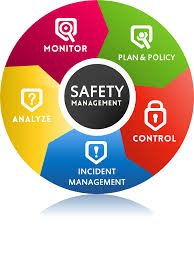
Safety is a Team Sport: Why Networking and Sharing Best Practices Matter
|
|
|
In the fast-paced world of manufacturing, we often focus on the machines, the metrics, and the floor right in front of us. But the most effective tool in any safety professional's kit isn't a piece of PPE—it’s shared knowledge. Safety should never be a trade secret. Here is why stepping out of our silos and connecting with peers is vital for a zero-incident workplace:
1. Don't Reinvent the Wheel - Every facility faces unique challenges, but many hazards are universal. By sharing best practices, we save time and resources. If a peer at another plant has mastered a lockout/tagout procedure for a specific type of machinery, learning from their success allows you to implement proven solutions immediately rather than through trial and error.
2. Perspectives Save Lives - We can sometimes become "blind" to the risks in our own environment simply because we see them every day. Networking with other safety professionals provides a fresh set of eyes. Discussing "near misses" and safety wins with a broader community helps us identify blind spots before they turn into injuries.
3. Staying Ahead of the Curve - Regulations and technologies evolve. Whether it’s new OSHA standards or the latest in wearable safety tech, being part of a professional network ensures you are informed rather than reactive.
The Bottom Line: When we share what works, we raise the safety standard for the entire industry. Networking isn't just about career growth; it’s about ensuring every worker returns home exactly the way they arrived.
Join the Conversation - Ready to connect with your peers in the Hudson Valley? We invite you to become an active member of the Council of Industry’s Health and Safety Council. Don't miss our next meeting on March 24th, where we will discuss current regional trends and share actionable insights to keep our workforce safe.
|
|
|
2026 Manufacturing Champions Close February 20 - Submit Yours Today!
|
|
|
The Council of Industry is seeking nominations for the 2026 Manufacturing Champions Award. The Manufacturing Champions Award is presented annually to individuals and/or organizations that work in the sector or provide direct support to the manufacturing sector in the Hudson Valley. The Awards will be presented at the Champion's Breakfast and Workforce Developers Expo on May 7th at West Hills Country Club in Middletown.
Nominations will be accepted through close of business February 20, 2026
The Manufacturing Champions Award is presented to individuals or organizations which have “Through vision, dedication and tireless involvement have worked in manufacturing, built a manufacturing business, or worked to overcome some of the many obstacles faced by manufacturers in the Hudson Valley and in so doing they have made it possible for manufacturers and their employees to prosper.”
Past champions include founders of manufacturing businesses, owners of manufacturing businesses, key employees, teachers and educators, economic development leaders, educational institutions, economic development organizations elected officials and agencies supporting the manufacturing workforce pipeline. Click here for a list of past champions.
|
|
|
Lean Six Sigma Training Begins Next Month - Here are 5 Reasons Its a Certification Worth Earning
|
|
|
Lean Six Sigma is a set of principles that are used to improve processes and reduce waste. Six Sigma also uses data-driven decision-making, allowing companies to make decisions based on solid data instead of guesswork or assumptions. Six Sigma helps organizations identify opportunities for improvement, measure performance against customer requirements, and develop solutions to address issues quickly and effectively.
Six Sigma certification is a well-known and respected way for individuals to demonstrate their knowledge, skills, and abilities to lead projects or roles.
Here are 5 Reasons to Earn a Six Sigma Certification:
1. Improves Business Processes & Sustains Quality Improvement - The Six Sigma certification enables you to improve a company’s production and business operations. You can also analyze existing procedures to see how they affect quality. Certification shows employers that you can maintain the industry’s high standards of quality improvement, which includes monitoring processes to ensure they depart as little as possible from the norm and applying corrective steps when necessary.
2. Helps Reduce Risk, Errors, and Defects - Identifying and correcting potential problems before they arise saves businesses time and money on rework. This leads to more profitability and lower operating expenses. For example, GE saved $8 billion by finding and removing flaws using Six Sigma methodologies.
3. Proves Your Qualified for Six Sigma-related Positions - A Six Sigma certification involves real-world project experience. It provides you with business-related experience. As a Six Sigma professional, you’ll have industry expertise before entering. This will offer you an advantage over newcomers and give you valuable results you can share as you search and interview for jobs.
4. Excellent Salary and Room for Growth - Six Sigma-certified experts are among the world’s highest-paid professionals. You can increase your salary by attaining different levels of certifications by bringing value to your employer.
5. Increase Your Skill Set and Value as an Employee - No matter what business you’re in, you can apply Six Sigma methods since its industry-agnostic. Six Sigma professionals are well-versed in a wide range of techniques for improving business operations, increasing employee satisfaction, lowering expenses, and boosting revenue. In any industry, these all make you a valuable asset for businesses.
Lean Simulation & Overview is March 3rd & 4th
Yellow Belt starts March 10th
Green Belt starts March 2nd
|
|
|
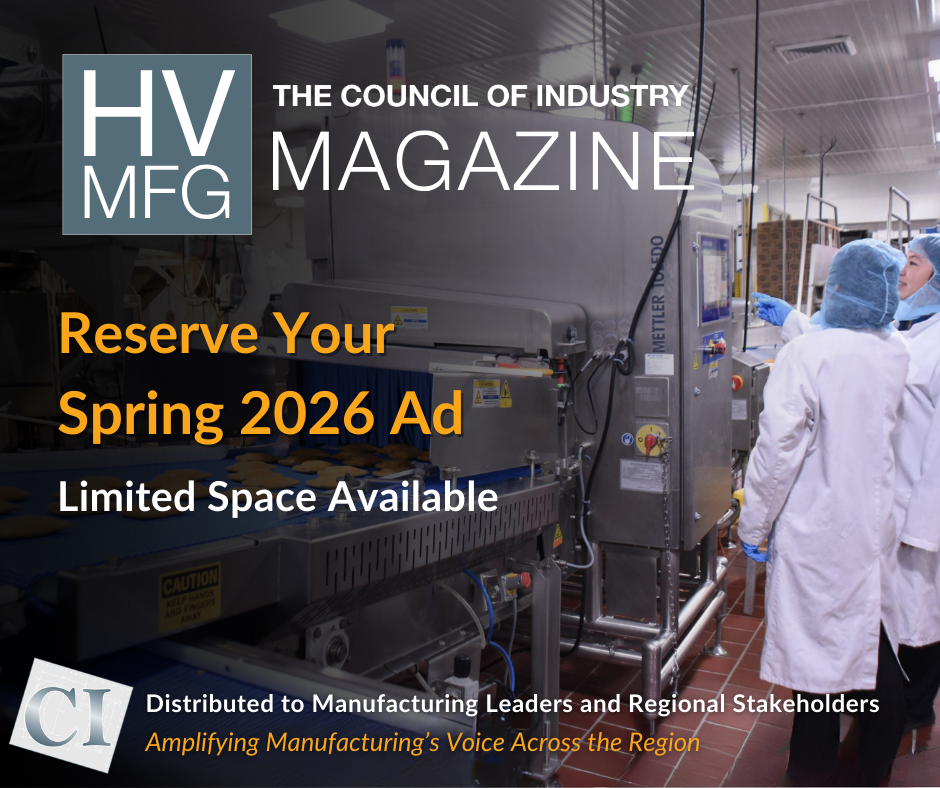
Secure Your Ad in the Spring 2026 HV MFG!
Deadline is Fast Approaching
|
|
The Electro-Mechanical Technician (EMT) Trade is Rapidly Growing In Council of Industry Apprentice Program
|
|
|
Electro-mechanical and mechatronics technologists and technicians combine knowledge of mechanical technology with knowledge of electrical and electronic circuitry. They operate, test, and maintain unmanned, automated, robotic, or electro-mechanical equipment.
Work Processes (Skills learned on the Job) Approximate Hours for Electro-Mechanical Technician:
- Safety and Workplace Orientation: 250 hours
- Mechanical Repair: 2,000 hours
- Electrical Repair: 950 hours
- Electronic Repair: 1,900 hours
- Preventative Maintenance : 2,750 hours
- Miscellaneous: 150 hours
Total Hours: 8,000
Minimum of 144 Hours of Related Instruction (Classroom Learning) Required for Each Apprentice for Each Year:
- Safety & Health
- Engineering Drawings
- Mathematics
- Trade Theory and Science
- Computer Fundamentals
- Welding (if performed on-the-job)
- Working on High-Voltage Manufacturing Equipment
- Interpersonal Communications: oral and written
- Sexual Harassment Prevention
If you want to know more about the EMT trade and if it might be right you’re your company contact Emma Olivet
|
|
|
Subscribers to the Manufacturing Career Hub can view candidate resumes and contact information by searching the Candidate ID Number in the iCIMS platform.
Not yet a participant of the Career Hub? Contact Emma Olivet directly for additional candidate details or to learn more about the recruiting initiative.
|
|
|
Candidate ID: 41810
Position Interest: Electrical / Electronics Engineering
Level: Entry-Level
Skills: Strong foundation in analog and digital electronics, embedded systems, and circuit analysis. Experience with PCB design and prototyping, circuit simulation using LTspice and MATLAB, soldering and rework, Arduino-based development, and CAD tools including Fusion360. Proficient in C, C++, MATLAB, and Assembly. Familiar with signal processing, power regulation, semiconductor devices, and microcontroller-based system design.
Education: Bachelor of Science in Engineering – Electrical Engineering (Expected May 2026)
Availability: Open to Interviews
Location/Commute: Resides in Wappingers Falls, NY
Electrical engineering student graduating in May 2026 with hands-on experience designing, building, and validating electronic systems from schematic through functional testing. Proven ability to work on multi-semester engineering projects involving PCB design, embedded signal readout, and system-level integration.
Experienced with laboratory instrumentation, documentation, and collaborative design reviews. Brings strong problem-solving skills, technical curiosity, and leadership experience from high-responsibility operational roles. Results-driven purchasing and supply chain professional with over 20 years of progressive leadership experience in the specialty chemical industry. Proven success managing multi-million-dollar global spend categories across packaging, raw materials, and contract manufacturing. Skilled in strategic sourcing, vendor negotiation, and cost reduction initiatives that consistently drive profitability.
Experienced in ISO quality programs, contract development, and working capital improvement. Hazmat certified and proficient in SAP and related business systems. Holds a BBA-equivalent in Procurement Management, along with additional certifications in logistics and transportation.
|
|
|
Candidate ID: 42678
Position Interest: Welding / Manufacturing
Level: Entry-Level
Skills: Skilled in SMAW, GMAW (MIG), GTAW (TIG), and FCAW welding processes; blueprint reading; pipe welding in all positions; oxy-acetylene torch use; purging techniques; familiarity with safety-regulated work environments; and strong attention to quality and safety standards.
Education:
Alfred State College, NY – Associate’s Degree in Welding; Welding Certificate; AWS D1.1
The Mount Academy, NY – High School Diploma; Welding Certificate; AWS D1.1
Availability: Open to Interviews
Location/Commute: Resides in New Windsor, NY
Entry-level welding professional with hands-on training across multiple welding processes and certifications aligned with AWS D1.1 standards. Experience performing structural and pipe welding in all positions, interpreting blueprints, and following safety and quality requirements. Background includes work in regulated environments and operating equipment in fast-paced settings. Motivated, safety-conscious, and eager to continue developing skills in a professional welding or manufacturing environment.
|
|
|
News for HR and Workforce Professionals
|
|
|
The Great Reinvention of Human Resources Has Begun
|
|
|
Human Resources (HR) has always struggled with two identities. Is HR a strategic partner, a driver of organizational value and inspired human capital growth? Or is it an administrative function, acting as the “company police,” here to enforce rules, policies, legal, and labor regulations? The first is a value creator and demands human skills; the second is an administrative function, which should be automated as much as possible. This dual role has defined the profession for years. In fact there is a meme out there called “Don’t Trust HR,” which tried to convince employees that HR was the bad guys.
We are now entering a transformational time. Starting in 2026, the HR profession is undergoing a massive, AI-driven reinvention that will resolve this conflict, moving HR away from administrative overhead and toward a truly strategic, “full-stack” model. In HR and other business functions transformation is taking place. We started with assistants, then moved to agents (automation tools for individuals), and now move to Superagents to manage an entire process. This won’t happen overnight, but it’s now happening fast.
Read more at Josh Bersin
|
|
|
Disruption Hits HR Leaders Hard
|
|
|
CHROs are no longer fighting for a seat at the C suite table. They’re the ones holding the map while everyone else at the table is still reading yesterday’s news. The data, based on consulting firm AlixPartners’ Disruption Index 2026, proves this. The report included 3,200 executives across multiple industries, with 1,000 respondents from North America, 1,200 from EMEA and 1,000 from APAC. Sixty percent of CHROs surveyed report that their companies face high disruption, a rate that mirrors that of CEOs exactly.
Meanwhile, the executives you’d expect to be most attuned to disruption—chief technology officers, chief data officers, chief information officers—register just 46%. CFOs come in at 37%. And chief operating officers? A mere 21% say disruption is intense, with only 14% believing their companies are leaders in navigating it. According to HR Executive’s recent What’s Keeping HR Up at Night? survey, human resource leaders spend nearly 23% of their time on change management, which registers more than any other responsibility. For CHROs, this means managing, not just facilitating, organizational change, including the psychological toll of perpetual disruption on leadership teams themselves.
Read more at HR Executive
|
|
|
HR Leaders Face a New Compliance Burden as AI Expands
|
|
|
For years, artificial intelligence in HR was considered a pure productivity win. Faster hiring. Smarter performance reviews. Round-the-clock employee support. And for a while, that framing worked: AI was a tool that promised efficiency in departments long burdened by manual processes. But as AI becomes embedded across nearly every HR function, the conversation is shifting. In 2026, HR must now contend with an evolving web of regulations governing AI. HR managers are being pushed beyond AI adoption and optimization, and toward something far more demanding: governance. This includes deciding how AI tools are approved, what data they can use, how decisions are reviewed, and who is accountable when something goes wrong.
While compliance can feel like a burden in an evolving regulatory landscape, it can also serve as a critical framework for responsible AI adoption. When used correctly, compliance doesn’t have to block progress. Instead, compliance can be a guide for deploying AI in ways that are defensible, fair, and sustainable. The challenge is that many HR departments have not been given the tools, visibility, or mandate required to govern AI effectively.
Read more at Unite AI
|
|
|
The Supervisor’s Crucial Role in Safety Performance
|
|
There’s an unofficial rule of safety management that goes like this: a safety program will only be as strong as the least effective shift supervisor. Every rule has its exceptions, but it’s exceedingly difficult to achieve sustained safety success in a workplace where supervisors and other leaders lack the skills and knowledge to support the company’s safety efforts. Supervisors may not set an organization’s direction but they’re the ones who are ultimately responsible for translating a company’s policies and intentions into action. Even when a new safety initiative is driven by the safety officer, at most workplaces it’s up to team leaders to oversee it on a daily basis. To put it simply, supervisors are where the rubber meets the road.
The most commonly cited workplace safety challenges include recurring injuries, a lack of worker engagement and buy-in, employees taking shortcuts or not following rules, a lack of personal accountability for safety, and competing organizational priorities. Pick any one of these issues and consider how the problem’s impact would change if every supervisor in the workplace had strong communication skills, understood advanced safety concepts like human factors, and had experience with empowering their team to improve on the issue. It’s not hard to imagine that safety-oriented supervisors would result in employees taking fewer shortcuts and more personal accountability for their own safety. Workers would feel more engaged and more capable of focusing on production without casting safety by the wayside. And, essentially, supervisors could be an effective liaison between the safety manager and workers in an effort to root out repeated injuries.
Read more at Safe Start
Learn More about the Council of Industry’s Risk Management Course for Supervisors
|
|
How to Critically Review an AI-Generated Resume
|
|
AI is everywhere in today's hiring process, including in the resumes landing in your inbox. 46% of job seekers are using ChatGPT to write resumes or cover letters (Resume Builder). With tools like ChatGPT and resume generators now common, more candidates are using AI to write, revise or completely build their application materials. Sometimes that helps a strong candidate present their work clearly. Other times it hides gaps, inflates achievements or creates resumes that look polished but fall apart when you dig in.
Hiring teams now face a new reality: You're not just assessing a candidate; you're evaluating the accuracy of what an AI tool produced for them. Best practices for reviewing ai-influenced resumes include:
Check for Plagiarism - Tools like Copyleaks, Grammarly or originality.ai can help you verify originality. This is especially useful for senior roles that rely on specialized experience.
Compare the Resume With Your Job Description - Scan for candidates who echo your job posting too closely. If the resume looks like a copy-paste of your listing, it might be AI at work.
Look at Their Communication Style - How do they write in emails or during follow-up communication? If it feels less confident or coherent than the resume, that's worth exploring.
Verify Experience in Detail - Verify what they say. Did they really manage that project? Work with that tool? Lead that team? Ask for specifics. Many inaccuracies surface when candidates are asked to describe the work in their own words.
Use the Resume as a Starting Point in Interviews - Treat the resume as a map. Use it to guide the conversation and test whether the candidate's experience holds up.
Read more at Council Associate Member Here’s Help Staffing & Recruiting
|
|
|
Emotional Intelligence May Be A Key Skill For Overall Company Performance
|
|
|
Students who begin developing emotional intelligence in school can move into the workforce with a measurable advantage, according to a new white paper by Chanell Russell, a research fellow with the University of Phoenix’s Center for Organizational Wellness, Engagement and Belonging. The research found that while employers still value technical knowledge and credentials, “graduates who can communicate clearly, adapt to change, collaborate effectively, and navigate complex interpersonal dynamics” may have a competitive edge.
Emotional intelligence can shape how a person responds to feedback as well as how they manage pressure, resolve conflict and build relationships, per the white paper. In addition, students who strengthen their emotional intelligence “are better prepared to handle ambiguity, adjust to organizational expectations, and engage productively within diverse teams.” “Emotional intelligence is not a ‘soft skill’ — it is a structural leadership capability that influences trust, psychological safety and long-term organizational effectiveness, when leaders are equipped to recognize emotional dynamics and respond intentionally, they can reduce preventable strain and create conditions where people are more engaged, resilient and able to perform at their best.”
Read more at Manufacturing Dive
|
|
|
AI + HI Is The Wrong Equation, And HR Knows Why
|
|
|
AI doesn’t just scale productivity. When deployed without intention, it also scales confusion and chaos. This outcome gets less press. It’s no surprise that AI is moving faster than most organizations can absorb. Decisions that once played out over five-year strategic roadmaps are now compressed into weeks, driven by competitive pressure and the constant pull of what everyone else is implementing or automating to avoid being left behind.
That compete-or-become-obsolete mindset is fear disguised as strategy. And in the rush to stay relevant, human judgment is often the first thing to go. When decisions are driven by fear rather than intention, someone has to protect the human system. That’s not IT’s job. It’s HR’s. There’s no shortage of commentary on AI, particularly the idea of AI + HI (artificial intelligence plus human intelligence). But after countless articles, podcasts and panels, I think we’re framing the equation wrong. What many organizations are experiencing isn’t AI + HI. It’s AI − HI. When AI initiatives fail, the failure isn’t technical. It’s human. And it’s usually predictable: The work changes faster than the roles. Tools roll out before expectations are reset. Managers chase efficiency while trust slips through the cracks.
Read more at Forbes
|
|
|
An Adaptive Workforce Planning Framework Can Help Address Uncertainty And Increase Skill Requirements
|
|
|
The top concern for more than a third of the 600 manufacturing executives in a 2025 Deloitte survey was “equipping workers with the skills and knowledge they need to maximize the potential of smart manufacturing and operations.” The skill sets that companies require may also shift if they adjust their product portfolios to maximize profitability in response to fluctuating tariff costs. Shifting immigration policies may further impact the labor pool, since immigrant workers filled nearly one in four US manufacturing production jobs in 2024.41
The potential for ongoing economic uncertainty in 2026 could compound these challenges. Following a “build, buy, or borrow” framework for workforce planning could help manufacturers remain agile while continuing to build and strengthen their workforce for the future, even if it potentially means higher upfront costs. This concept involves:
Build: Investing in the talent that is most important to the core of the business, including their wages, skills, and employee experience. Nonwage investments are becoming increasingly important, including potential support for childcare, transportation, and housing.42 Leveraging technology to make jobs more flexible, supportive of employee growth, and technologically appealing can also make them more attractive to current and potential employees.43
Buy: Recruiting external personnel with critical expertise that may take longer or cost more to develop internally.
Borrow: Hiring temporary workers or third parties to help meet fluctuating demand for roles that have less impact on the core of the business.
Manufacturers could also leverage technology to enhance their talent sourcing, screening, and training processes, including a shift to granular, skills-based workforce modeling and planning.
Read more at Deloitte
|
|
|
HR Leaders Say They Are Facing Self-Inflicted Skills And Talent Crises
|
|
|
Sixty-two percent of HR leaders said their industry was facing a self-inflicted talent crisis and attributed the problem to outdated hiring practices, according to the sixth annual HR trends report from human capital management tech company Isolved. In the report, 48% of HR leaders also said they’re dealing with a self-inflicted skills crisis due to a lack of agility, meaning they’re not adapting fast enough to technology and industry shifts. They added that they felt this challenge “a bit more acutely than the talent crisis.”
Meanwhile, 65% of HR leaders said artificial intelligence helped them work more efficiently, as teams increasingly use AI-powered assistants to navigate common questions about PTO, holidays and benefits eligibility. More than half of HR leaders said they spend four or more hours per day answering redundant questions. The report focused on how HR leaders viewed their roles within the current labor market, and the results were complicated. Sixty five percent of HR leaders said power is shifting back to employers, and while they understand they don’t have full control over labor fluctuations, they know they’re responsible for upskilling their employees, the report said.
Read more at HR Dive
|
|
|
iCIMS January Insights – More Year End Openings Buck Seasonal Trend
|
|
|
Job openings rose 6% month over month in December and 8% year over year — bucking the typical seasonal slowdown. The concern is how long the friction between rising openings and lower hiring rates can be sustained. Sectors that saw some of the biggest increases in openings month over month included Manufacturing (2%), Healthcare (8%) and Transportation (12%).
· Internal applications rose 8% year over year in December, while internal hires dipped 1%. This indicates increased interest in internal mobility amid more cautious promotion and transfer decisions. This gap aligns with the “job-hugging” trend. Employees are exploring options and signaling ambition while choosing stability over risk.
· Applicants under 25 dropped to 40% (down from 44% last year), while mid-career and later-career shares held steady — suggesting a slowdown for entry-level talent, even as experienced candidates maintain their presence.
· In the year-end job seeker survey, 45% of respondents said they plan to look for a new role in 2026, up from 42% last year.
Read the Report
Learn more about the Council of Industry’s Manufacturing Career Hub Driven By iCIMS
Check out the MIAP Apprentice Program
|
|
|
Insight Exchange: Expert-Led Video Series for Manufacturers
|
|
|
Insight Exchange: Expert-Led Video Series for Manufacturers
The Insight Exchange is a new video series from the Council of Industry, offering manufacturers expert insights and strategies—accessible anytime. Each session features industry professionals covering key topics like workforce development, regulatory updates, and emerging technologies.
|
|
|
|
S1:EP7 Building a Strong Manufacturing Talent Pipeline, Presented by Insperity
|
|
|
|
Join Jennifer Libby and Andrell Gautier of Insperity in this episode of Insight Exchange as they dive into one of the most pressing challenges in manufacturing today: attracting and retaining top talent. Hosted by the Council of Industry, this presentation offers seven actionable strategies to help manufacturers strengthen their talent pipelines and build resilient, future-ready workforces.
Drawing on decades of HR and manufacturing experience, Jennifer and Andrell explore practical ways to improve recruitment, optimize job descriptions, address skills gaps, and boost employee retention in a competitive labor market.
About Insperity
- Since 1986, Insperity has helped businesses succeed by delivering customized HR support, talent strategy, and workforce optimization services. Learn more at www.insperity.com.
|
|
|
If you’re part of a Council of Industry member company and not yet subscribed, email us. If you’re not a Council member, become one today
|
|
|
|
|