|
The Monthly Newsletter of the Council of Industry
February 25th, 2026
|
|
|
Council of Industry Updates
What's Happening in Your Association
|
|
|
Council of Industry Members And Staff Push Pro Manufacturing Agenda at Advocacy Day
|
|
|
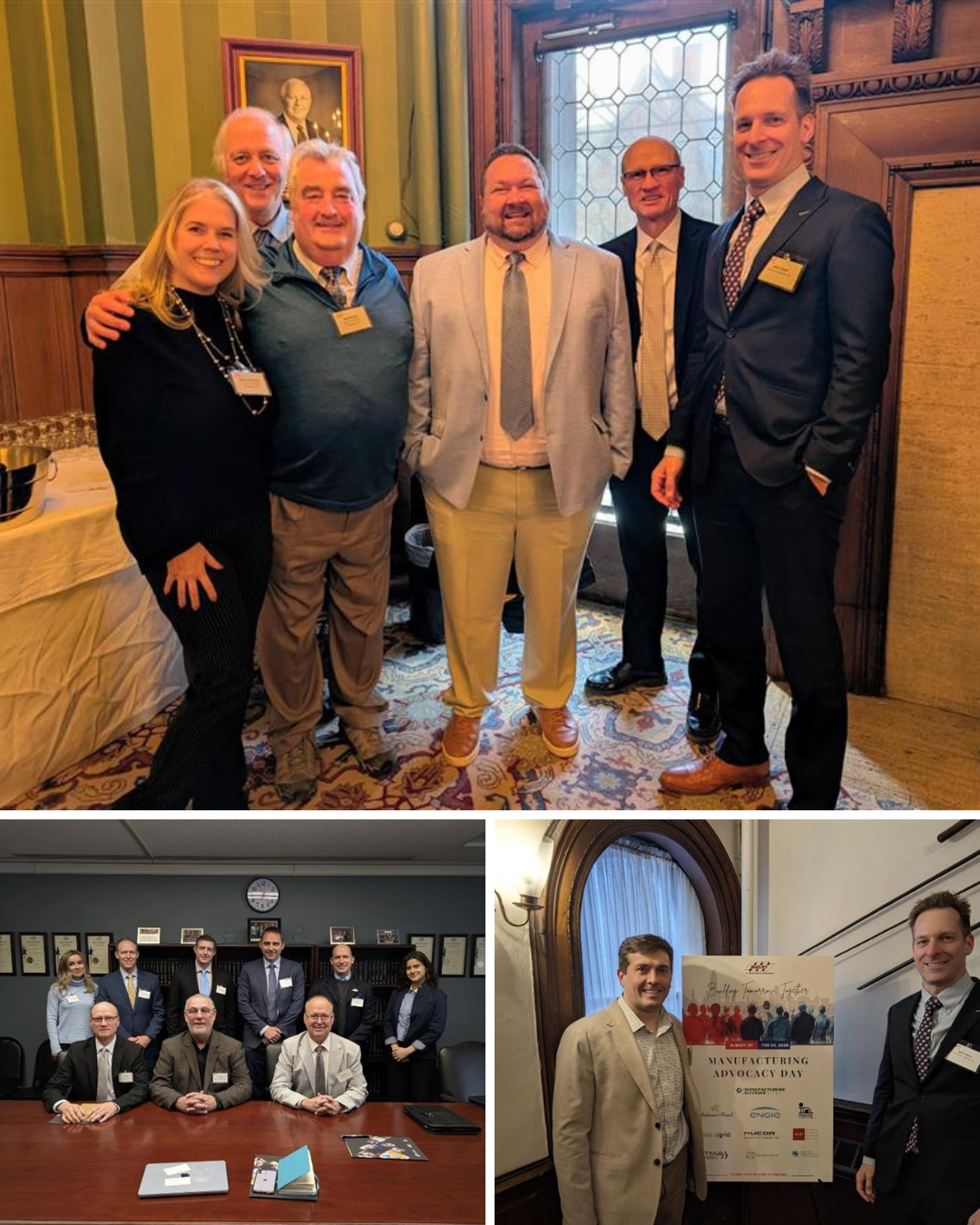
More than 60 people from manufacturing firms and associations across the state, including 8 Council of Industry members and staff, visited Albany Tuesday for the Manufacturing Alliance of New York’s Advocacy Day.
Participants, who met with key legislative leaders, were divided into issue groups focusing on Energy, Workforce Development, Apprenticeship, Tax Policy and Health Care Insurance.
Assembly Member Pamela Hunter (D-128) who represents the Syracuse Area, and is Assistant Majority Leader, kicked off the event by celebrating New York manufacturing and underscoring her commitment to apprenticeship and pre-apprenticeship to promote workforce development. She encouraged the group to speak frankly with the legislators they will be meeting with and to ‘tell their stories.”
The Luncheon Keynote was delivered by NYSERDA Chief Policy Officer John Williams. Mr. Williams highlighted the changing energy environment in the state which is now expecting electricity usage to double to 60 Gigawatts by 2050. This will require innovative solutions and the Agency is working with government and industry to develop them.
The Council of Industry Supports a competitive, innovative, and resilient regional manufacturing sector by strengthening the workforce pipeline, modernizing infrastructure and energy, and ensuring policies that keep supply chains and investment local. Advocacy Day is one important tool we employ to support that goal.
Learn more about Manfuacturing Advocacy Day
|
|
|
Champions Award Breakfast is May 7th
|
|
|
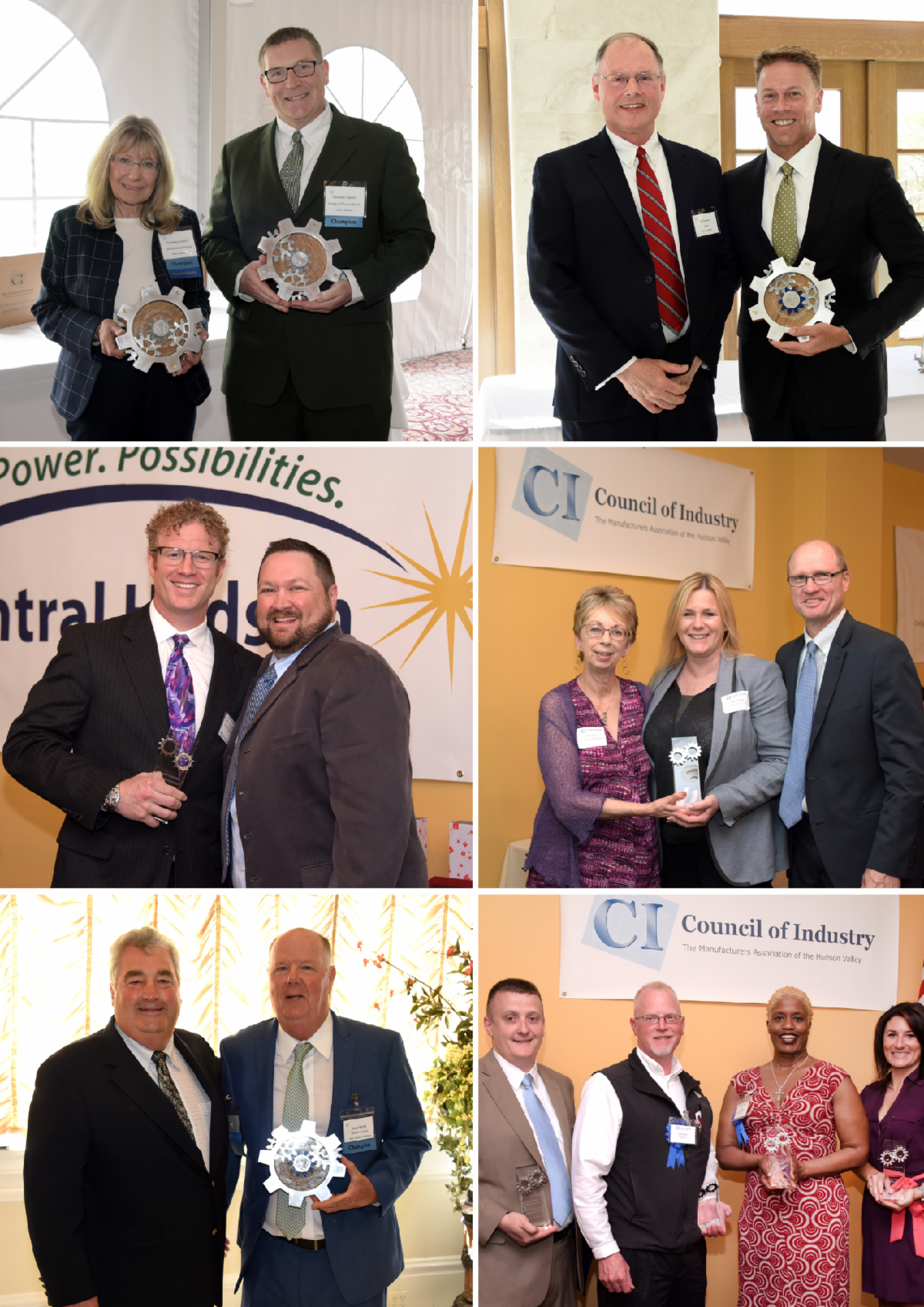
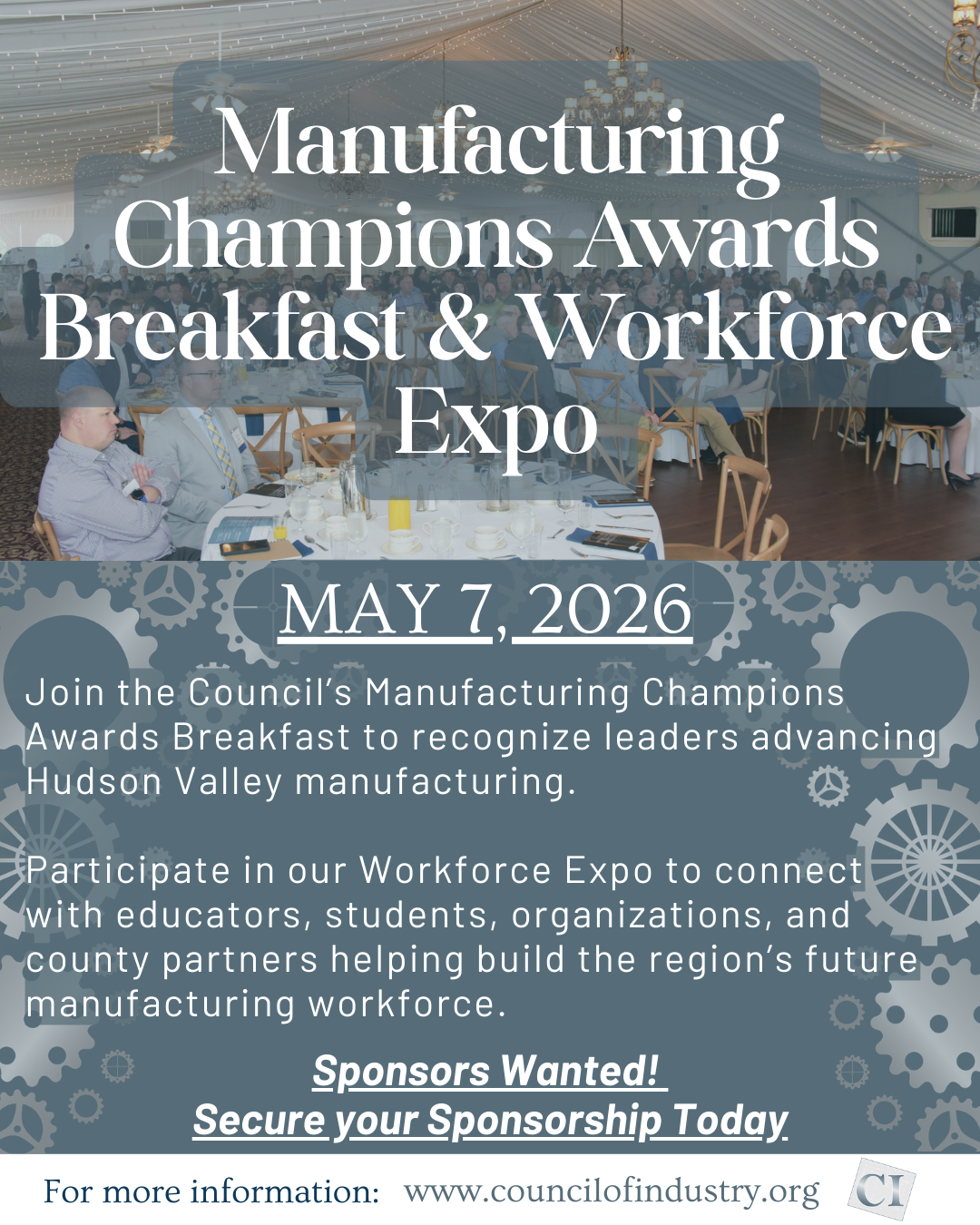
The Manufacturing Champions Award is presented annually to individuals and/or organizations that work in the sector or provide direct support to the manufacturing sector in the Hudson Valley.
The 2026 Manufacturing Champion Nominations are closed and the committee is in the process of reviewing the many worthy candidates.
Past champions include founders of manufacturing businesses, owners of manufacturing businesses, key employees, teachers and educators, economic development leaders, educational institutions, economic development organizations elected officials and agencies supporting the manufacturing workforce pipeline. Click here for a list of past champions.
Please join us in celebrating this year’s honorees, as well as attending our Workforce Developers Expo, on Thursday, May 7, at the West Hills Country Club in Middletown.
Click here to learn more about the event and available Sponsorship Opportunities.
|
|
|
Engineers Week: Council Members Talk Manufacturing Career Pathways with SUNY New Paltz Engineering Students
|
|
|
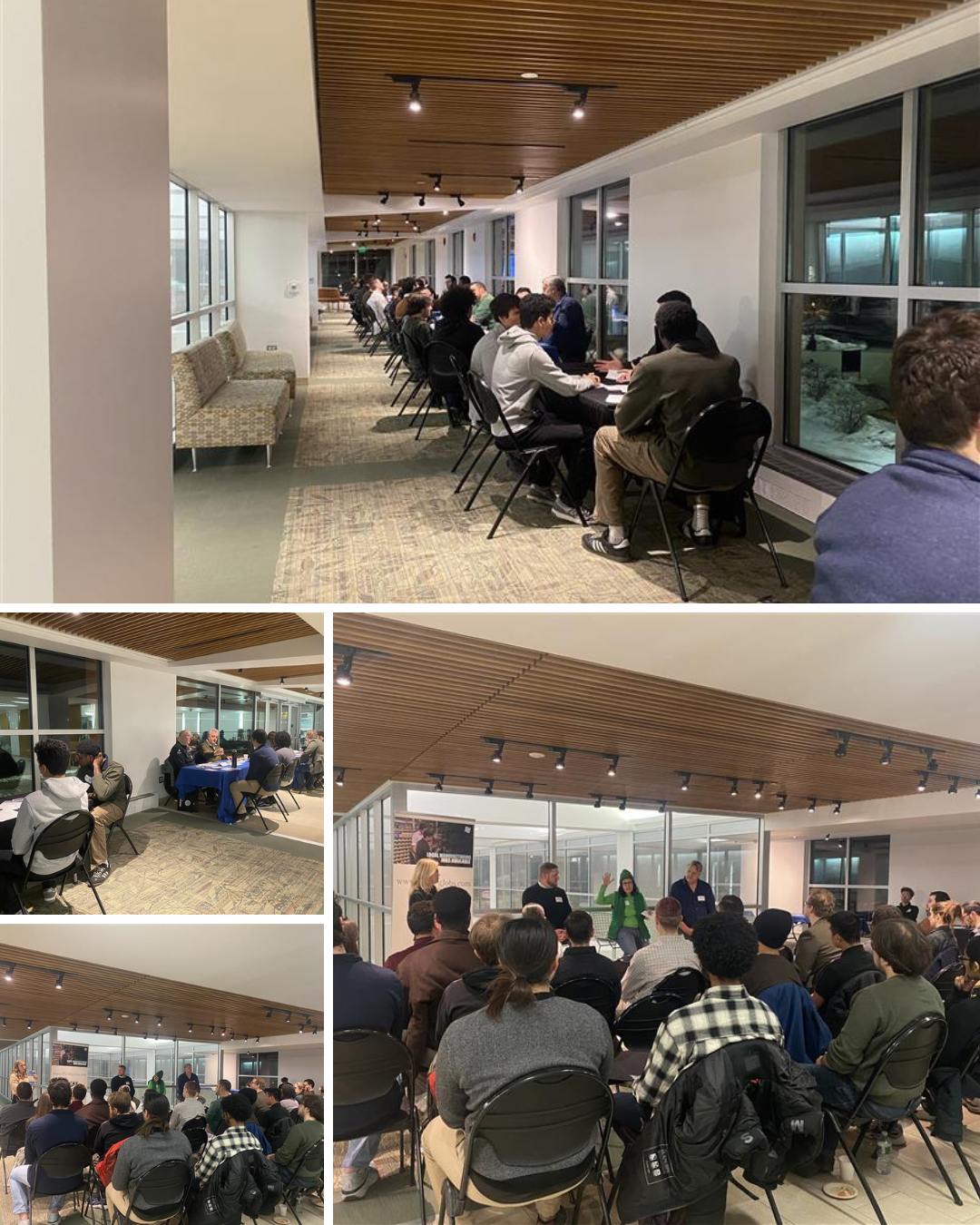
On Thursday, February 19th, more than 20 industry leaders came together at SUNY New Paltz to speak with Engineering students about future career pathways and how to navigate the job market after college.
The event, held with SUNY New Paltz's American Society of Mechanical Engineers Chapter, brought in students just starting their studies in Engineering all the way to those finishing their final year.
Student ASME members gave industry leaders a tour of the Engineering School, along with Seniors showing our members their design projects.
The tour was followed with a panel of three of our members, from Sono-Tek Corporation, Motion Laboratories and Selux Corporation, who gave their retrospective advice on going into the workforce from college.
Our members then took the time to sit down with the engineering students one-on-one to answer their questions about their education, best practices on finding work after college, internships, interview do's and don'ts, and more.
Thank you so much to our members who took the time to speak with these students and provide such insightful advice!
SUNY New Paltz's School of Science & Engineering is seeking companies to sponsor the Annual Engineering Design EXPO on May 1st, 2026. All Sponsorships go towards supporting Senior Design Projects.
Click here to learn more!
|
|
|
Bridging the Gap: Council of Industry and SUNY Launch Regional Internship Initiative
|
|
The Council of Industry is thrilled to announce a strategic collaboration with the State University of New York (SUNY) to expand career opportunities for students across our region. In a bold move toward workforce development, SUNY has set an ambitious goal: to provide every student within its system the opportunity to complete a paid internship. And the Council of Industry is going to help.
Serving as Your Strategic Intermediary
Drawing on our successful track record as an intermediary for Department of Labor (DOL) apprenticeship programs, the Council will now play a similar role in the collegiate space. We are bridging the gap between SUNY’s vast student talent pool and the specific needs of our regional businesses.
This partnership isn’t limited to just one field. We are seeking opportunities for students across all disciplines, including:
· Engineering & Manufacturing
· Management & Operations
· Marketing & Communications
· Accounting & Finance
· Human Resources
· More
Seamless Recruitment via the Career Hub
To make this process as efficient as possible, the Council will utilize our specialized Career Hub. This digital platform allows member businesses to post job openings and browse student resumes with ease. By leveraging these tools, we aim to streamline the "matchmaking" process, ensuring that local companies gain fresh perspectives while students gain invaluable professional experience.
Whether you are a small firm or a large manufacturer, this initiative offers a turnkey solution to build your talent pipeline. We look forward to helping you connect with the next generation of SUNY leaders.
Want to know more? Contact Emma Olivet
|
|
|
Insight Exchange: Expert-Led Video Series for Manufacturers
The Insight Exchange is a video series from the Council of Industry, offering member manufacturers expert insights and strategies—accessible anytime. Each session features industry professionals covering key topics like workforce development, regulatory updates, and emerging technologies.
|
|
Get Involved
Want to share your expertise? Contact Johnnieanne Hansen at info@councilofindustry.org to learn more.
|
|
Manufacturing Industry News
|
|
Supreme Court Invalidates Global Tariffs, What Impacted Business Should Do Next
|
|
After months of legal challenges and mounting uncertainty, the Supreme Court has struck down the Trump administration’s global tariffs imposed under the International Emergency Economic Powers Act (IEEPA), including reciprocal tariffs and targeted import taxes tied to fentanyl enforcement. For manufacturers, distributors, middle-market importers, and other business owners who may have been impacted, the ruling is significant. But it is not the end of tariffs; there is still much to be determined. Here’s what happens next:
While the Court invalidated the use of IEEPA for broad-based tariff authority, it did not establish how previously collected duties should be handled. That responsibility now shifts to lower courts, setting the stage for additional litigation over refund eligibility, procedural requirements, and timing.In practical terms, that means uncertainty remains. Companies may have a pathway to pursue refunds, but the process could be complex, slow-moving, and highly technical. Meanwhile, tariffs imposed under Section 232 (national security, such as steel and aluminum) and Section 301 (trade practices, including many China-origin goods) were not included in this decision.
Trade policy volatility remains a structural risk. The possibility of refunds is enticing, but it will require technical expertise, including analysis and document review, potentially requiring defense and substantiation.
Businesses should prepare for several possible scenarios:
· Tariffs replaced under new authority. The administration pivots to Section 232, Section 301, or other statutory mechanisms, resulting in revised, but continuing, tariff exposure.
- Partial refunds. Specific time periods or tariff categories may qualify for recovery, depending on how lower courts interpret the ruling.
- Broader refund opportunities. If courts determine duties were unlawfully collected, companies could pursue larger claims, though likely with significant administrative burden and strict documentation requirements.
Each path carries implications for cash flow forecasting, financial statement treatment, duty drawback strategies, transfer pricing, and customs compliance.
What you should do now
Regardless of the direction of future policy, companies should act proactively:
- Assess potential refund exposure and preserve documentation
- Specifically review all tariff payments made dating back to early 2025 and identify which were made under IEEPA tariffs, because they are the primary tariffs
- Model financial impacts under multiple tariff replacement scenarios
- Review customs compliance processes and internal controls
- Evaluate sourcing strategies and contract pricing provisions
- Last week’s’s ruling reshapes the legal framework, but it does not eliminate operational complexity.
Read more at UHY
|
|
Adaptive Manufacturing: Reconfiguring for Resilience and Local-Global Balance
|
|
Global manufacturers are shifting from a focus on low-cost, globalized supply chains to a model of "adaptive manufacturing" in response to persistent geopolitical and environmental disruptions. Driven by new tariffs, shipping crises in the Red Sea and Panama Canal, and rising cyberattacks, companies are moving toward regionalized networks, nearshoring, and supplier diversification to ensure business continuity. At the core of this transition is the integration of Advanced Technologies on the shop floor:
Artificial Intelligence: Acts as the "nervous system" of the factory, allowing for real-time decision-making, predictive maintenance, and the ability to pivot to backup suppliers before production halts.
Digital Twins: Virtual replicas of the manufacturing process enable managers to simulate and test changes safely before implementing them in the physical world.
Intelligent Automation: Systems like computer vision and smart robotics automate complex tasks, improving accuracy and freeing human workers for higher-value roles.
Ultimately, the most successful manufacturers will be those who balance global reach with local resilience. By utilizing "cloud-based" and "AI-driven" approach, factories can remain flexible enough to handle sudden market volatility and trade policy shifts without sacrificing productivity or quality.
Read more at EE Times
|
|
|
How a Small-Town Factory Keeps Manufacturing Jobs in the US
|
|
|
There’s no shortage of discussion about how to keep manufacturing jobs in the U.S. But while others talk about it, my small-town factory has been doing it successfully for decades. We’re a small plant in Vincennes, Indiana, an American arm of the Schott international technology group. For more than 35 years, our Schott Ceran facility has employed skilled manufacturing workers to produce the glass-ceramic cooktop panels used in more than half the cooktops sold in the U.S. And, no, we haven’t done it by always being the cheapest. We did it by following a few rules that can help make any manufacturer stronger.
Specialize and Innovate to Compete - For us, competing globally starts with focus. We specialize in one thing: the cook panels, which are made of an advanced material originally used to protect spacecraft from the heat of re-entering the earth’s atmosphere and built to withstand extreme temperatures and years of daily use. Every year, we work to improve our process. Our intense focus helps us move fast when our appliance partners need something new.
Make Responsibility Part of your Strategic Business Plan - Years ago, we developed a patented glass process for melting that doesn’t use toxic heavy metals like arsenic or antimony. More recently, we created a high-performance coating that’s fired permanently into the glass. It’s an environmentally friendlier method that avoids etching with hydrofluoric acid.
Invest in Your People - Our workforce of 129 people in Vincennes, Indiana is small, but it’s steady. Many of our employees have been here for more than 15 years. Some of them work alongside their husbands or wives, nieces and nephews, even their grown children.
It’s Never Been About Chasing Low Cost - Every manufacturer is looking for ways to stay competitive. For us, it’s about doing what we do best, and doing it better every day.
Read more at Industry Week
|
|
|
How To Improve Near Miss Reporting In Manufacturing Facilities
|
|
|
Near misses are incidents where potential harm could have occurred but didn’t, serving as crucial indicators for potential safety hazards. For instance, imagine an employee nearly slips on a puddle formed from condensation dripping off an uninsulated pipe. This scenario, if reported, highlights a clear opportunity for preventive action, such as insulating the pipe to eliminate the risk. Ignored, it might lead to a serious accident, like another employee slipping on the same puddle later, resulting in a traumatic brain injury. This example underscores the importance of recognizing and acting on near misses to enhance workplace safety.
Near misses offer significant opportunities for improvement. Safety professionals and management can use them to drive thorough investigation and analysis, identifying corrective actions and informing broader safety initiatives. From site-wide communication to targeted training and process reassessment, near misses drive comprehensive safety enhancements across the organization.
Read more at Safety Management Group
Join the Council’s Health & Safety Sub-Council Meeting 3/24 to learn more about near misses
|
|
|
Quiet Quitting Isn’t The Problem, Quiet Managing Is
|
|
|
Companies are focusing on curing the latest epidemic to hit the workplace—quiet quitting. Instead, they should be focusing on the real issue of quiet managing. Quiet managing is what happens when leaders go quiet when their people need them to be loud and clear. Instead of direct feedback, they offer vague comments. Rather than setting clear expectations, they assume people “should just know.” Underperformance gets ignored, while co-workers pick up the slack.
Tough conversations are pushed off indefinitely and being liked quietly wins out over being effective. If you think about this in another way, quiet quitting is a symptom. Quiet managing is the disease.
This is more common than most executives want to admit. Many managers dislike conflict as much as their employees do. Most have never been trained on how to have a difficult conversation, so they avoid them at all costs. Senior leaders often tolerate low levels of accountability if the numbers look decent, which leaves managers with very little incentive to change their behavior.
Read more at Forbes
|
|
|
Manufacturers Are Turning to Rolling Forecasts for Greater Flexibility
|
|
Owners of manufacturing businesses constantly face challenges when planning for the year ahead. These challenges are magnified by rapid shifts in economic conditions, supply chains, labor markets and customer demand. Indeed, volatile interest rates, fluctuating material costs and global disruptions can quickly derail even your best projections. As a result, you may be rethinking how to model your forecasts. One option to consider is moving away from traditional static forecasts toward more flexible rolling forecasts. Manufacturers typically prepare a static forecast annually, and it remains fixed for the entire fiscal year. It’s based on assumptions about sales volumes, costs and market conditions at a single point in time. While this approach can be useful for setting an initial budget, it doesn’t adapt as circumstances change.
A rolling forecast, by contrast, is updated regularly — often monthly or quarterly. Instead of locking management into assumptions made long ago, rolling forecasts incorporate the latest actual results and expectations. Rolling forecasts can provide earlier visibility into potential cash flow constraints, allowing owners to address financing needs before they become urgent. They also support better capacity and inventory planning by aligning projections with current demand trends rather than outdated assumptions. Perhaps most important, rolling forecasts encourage ongoing strategic conversations. Instead of treating forecasting as a once-a-year exercise, manufacturers can regularly reassess pricing, staffing, capital expenditures and growth initiatives as conditions evolve.
Read more at Dannible and McKee, LLP
|
|
|
GE Aerospace Turns to Robots and 'Lean' Methods to Tackle Jet Engine Repair Crunch
|
|
|
GE Aerospace technician Suresh Sinnaiyan has spent more than a decade repairing jet‑engine compressor blades by guiding them across a sanding belt with practised precision. Now, at the aerospace giant's new automation lab in Singapore, he is teaching a robot to do the same job. The switch is part of GE's push to prepare the next wave of industrial development and ease one of aviation's biggest bottlenecks: overloaded repair shops and scarce parts.
Unexpected wear and tear in the latest generation of jet engines across the industry has idled many jets and led airlines to keep older jets flying longer, stretching maintenance lines into months as engines wait their turn in repair queues. The company's 2,000-employee repair hub is being upgraded with more automation, digital tools and AI as part of a plan that GE has said could total up to $300 million in investment. The company aims to lift repair volume in Singapore by 33% without expanding the site's footprint — by reorganising work, reshaping floor space and automating tasks where it is efficient.
Read more at US News
|
|
Siemens Tests Humanoid Robots in Industrial Logistics
|
|
|
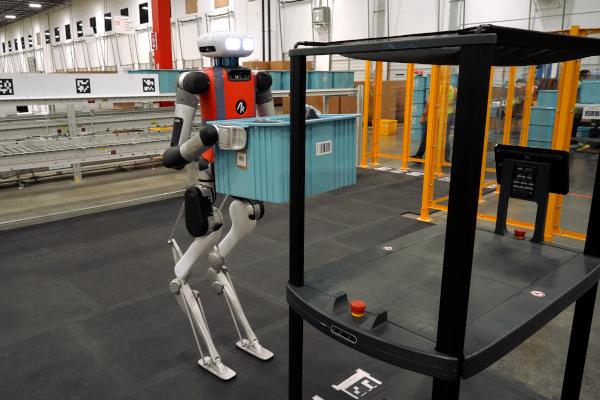
A proof of concept to test humanoid robots in industrial logistics has been successfully completed by Siemens and Humanoid, a UK-based AI and robotics company. Humanoid’s HMND 01, a wheeled robot, was deployed in real operations at a Siemens facility, marking a significant step toward the deployment of humanoid robots in industrial settings. It is the first step in a broader partnership between the two companies to test and validate how humanoid robots can be used in real-world environments.
In this use case, the robot autonomously picked totes from a storage stack, transported them to a conveyor, and placed them at the designated pickup point for human operators. This sequence was repeated until the stack was fully empty. “Working closely with industrial and technology partners allow us to validate our systems against real operational requirements and understand which use cases matter outside the lab. This joint POC with Siemens showed clear potential for practical deployment of humanoid robots,” noted Artem Sokolov, founder and CEO of Humanoid.
Read more at Assembly Mag
|
|
|
Deere and Mercedes-Benz Invest in Humanoid Robots
|
|
|
John Deere and Mercedes-Benz are among several companies that are investing more than $500 million in Apptronik Inc, a startup that has developed a humanoid robot called Apollo. With the fresh capital, Apptronik plans to ramp up production and expand its global network of commercial and pilot deployments. The funding will also help pave the way for a highly anticipated next-generation machine that is scheduled to be unveiled later this year. In addition, Apptronik plans to invest in projects that support long-term R&D, such as building state-of-the-art facilities for robot training and data collection.
According to eff Cardenas, CEO of Apptronik, Apollo is “designed to revolutionize human-robot interaction” by taking on “physically demanding work and labor-intensive operational processes in manufacturing and logistics—working alongside human counterparts to transport components, sort and kit, among other tasks. Together, we’re transforming work flows, reimagining factory floors and writing a new chapter for next-generation humanoid robots that are designed and built to drive meaningful societal progress,” adds Cardenas.
Read More at Assembly
|
|
|
US Unveils ‘World’s First’ Irradiated Molten Salt Research Facility For Next-Gen Reactors
|
|
|
The National Reactor Innovation Center (NRIC) has officially unveiled its Molten Salt Thermophysical Examination Capability (MSTEC). The state-of-the-art facility is scheduled to begin full operations in March 2026. It aims to provide a critical infrastructure bridge for the commercialization of next-generation molten salt reactors (MSRs). “The establishment of MSTEC marks a major achievement in our quest to advance next-generation nuclear reactor technologies,” said Brad Tomer, director of NRIC.
Several MSR concepts are currently under development globally. However, a significant barrier to their deployment has been the need for precise data on fuel salt performance. MSTEC is specifically designed to fill these gaps by delivering reliable, reproducible data essential for the design, licensing, and eventual operation of advanced reactors. “MSTEC provides specialized equipment to measure how materials behave under different conditions, and flexible laboratory spaces for small-scale experiments,” explained the researchers.
|
|
|
Council of Industry 2024 Annual Lunch Speaker Ken Girardin Writes on Soaring Energy Prices
|
|
|
Until shortly before the coronavirus pandemic, real electricity costs for most American families had been declining for a decade. From 2009 to 2019, the fully loaded cost—that is, the total price per kilowatt-hour including generation, transmission, distribution, and surcharges—rose from 11.5 cents to 13 cents, an increase of 13 percent, well below the 19 percent growth in the Consumer Price Index. Despite inflation, the average annual national rate even ticked down in a few of those years.
That changed in 2019. From that year through 2024, residential rates jumped 27 percent (faster than inflation) to an average of 16.5 cents nationally. These recent price shocks have not been evenly distributed. Most states still saw rates rise more slowly than CPI, meaning that they fell in real terms. The fully loaded cost of a kilowatt-hour today varies more than ever. In 2024, it ranged from 11.5 cents in Nebraska, Idaho, and North Dakota to 29.4 cents in Massachusetts, 32 cents in California, and 42.9 cents in Hawaii.
Read more at City Journal
Learn more about the Council of Industry’s energy consortium (where you can lock in a fixed price to avoid price spikes)
|
|
|
Multimaterial 3D Printer Builds Fully Functional Electric Motor From Scratch In Hours
|
|
|
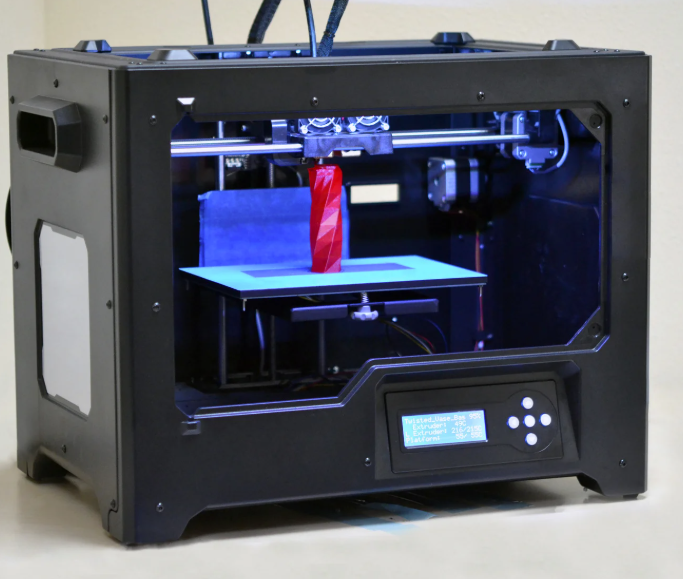
MIT researchers have built a 3D-printing platform that can fabricate fully functional electric machines in a single process, potentially allowing factories to produce replacement motors on-site within hours. The system uses multimaterial extrusion to print complex devices made of conductive, magnetic, and structural materials without the need for specialized manufacturing facilities.
In a demonstration, the team printed a working electric linear motor in about three hours. “There were significant engineering challenges. We had to figure out how to marry together many different expressions of the same printing method — extrusion — seamlessly into one platform,” says Luis Fernando Velásquez-García, a principal research scientist in MIT’s Microsystems Technology Laboratories and senior author of the study. The researchers see the motor as a proof of concept rather than the final goal. The broader vision is distributed manufacturing of complex electronic and electromechanical systems, reducing reliance on global supply chains.
Read more at Interesting Engineering
|
|
|
The Council of Industry focuses on advancing manufacturing excellence, workforce innovation, advocacy, and strategically positioning its members within the Hudson Valley region and beyond. It is the premier manufacturers' association for Southeastern New York, representing over 160 member firms. Grow, Train, and Succeed with the Council of Industry.
|
|
|
If you’re part of a Council of Industry member company and not yet subscribed, email us. If you’re not a Council member, become one today
|
|
|
|
|