|
The HR Newsletter of the Council of Industry
March 10th, 2026
|
|
|
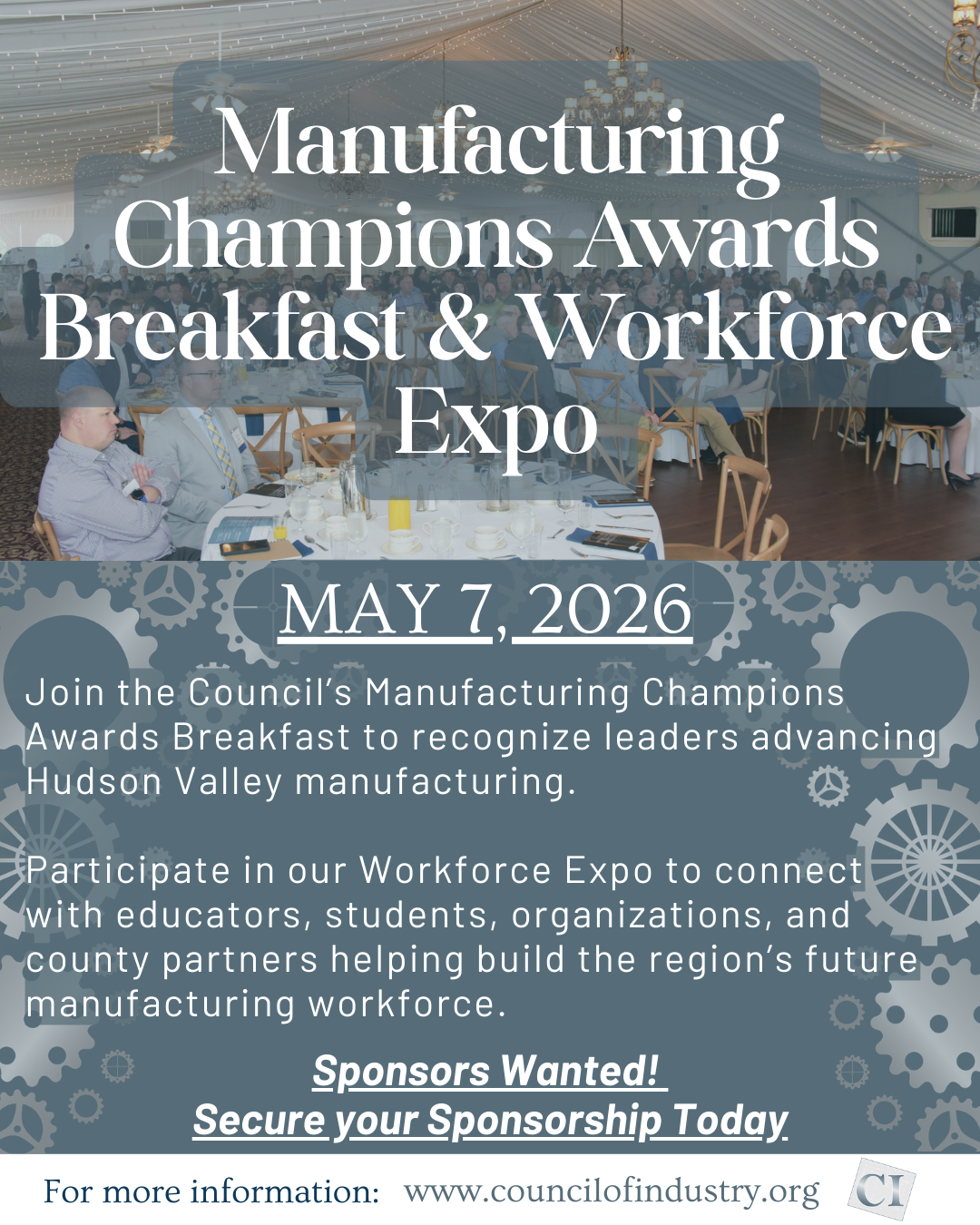
2026 Manufacturing Champions Awards Breakfast Will Again Feature Workforce Developers Expo
|
|
|
The Workforce Developers Expo has been a part of the Manufacturing Champions Awards Breakfast for the past five years.
This Expo seeks to highlight the ecosystem that prepares young people for careers in Manufacturing, as well as upskilling the current workforce.
Over the years, the Workforce Developers Expo has become a "can't miss event" for our members and partners, said Johnnieanne Hansen, CEO of the Council.
The event helps the current and future manufacturing workforce secure internships, jobs, and even full careers, as students connect with decision makers and industry leaders.
"Manufacturers value the opportunity to meet teachers, students, and workforce partners and to see firsthand the talent coming up in the next generation," she continued. "For students and educators, the experience is priceless. Networking is not always easy for students, but this environment gives them a real competitive advantage."
If you are an educator, student, nonprofit, economic development agency, or county partner actively engaged in training the future, or current, manufacturing workforce, we invite you to participate!
The expo allows attendees to see the great work being done to build and develop the skilled pipeline necessary for manufacturers success.
Following the Expo will be our Annual Manufacturing Champions Awards Breakfast - Champions to be announced later this month!
Click here to register & learn more.
|
|
|
Bridging the Gap: Council of Industry and SUNY Launch Regional Internship Initiative
|
|
|
The Council of Industry is thrilled to announce a strategic collaboration with the State University of New York (SUNY) to expand career opportunities for students across our region. In a bold move toward workforce development, SUNY has set an ambitious goal: to provide every student within its system the opportunity to complete a paid internship. And the Council of Industry is going to help.
Serving as Your Strategic Intermediary
Drawing on our successful track record as an intermediary for Department of Labor (DOL) apprenticeship programs, the Council will now play a similar role in the collegiate space. We are bridging the gap between SUNY’s vast student talent pool and the specific needs of our regional businesses.
This partnership isn’t limited to just one field. We are seeking opportunities for students across all disciplines, including:
· Engineering & Manufacturing
· Management & Operations
· Marketing & Communications
· Accounting & Finance
· Human Resources
· More
Seamless Recruitment via the Career Hub
To make this process as efficient as possible, the Council will utilize our specialized Career Hub. This digital platform allows member businesses to post job openings and browse student resumes with ease. By leveraging these tools, we aim to streamline the "matchmaking" process, ensuring that local companies gain fresh perspectives while students gain invaluable professional experience.
Whether you are a small firm or a large manufacturer, this initiative offers a turnkey solution to build your talent pipeline. We look forward to helping you connect with the next generation of SUNY leaders.
Want to know more? Contact Emma Olivet
|
|
|
In-Person Certificate in Manufacturing Leadership Series begins April
|
|
|
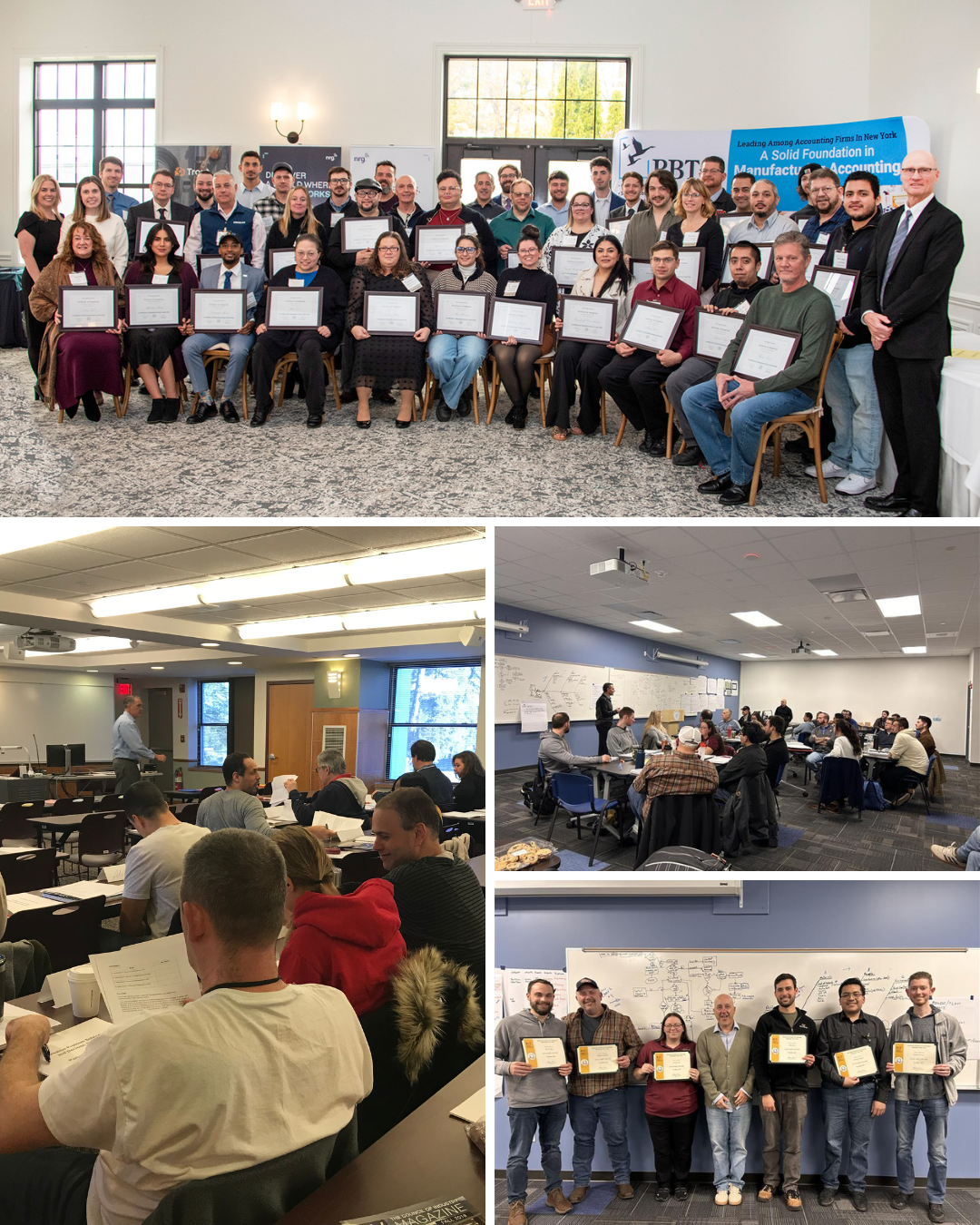
Registration is now open for our Spring Certificate in Manufacturing Leadership Series, running from April through July at Ulster BOCES' Career Academies and Technical Center in Kingston.
CML has provided a practical development program for supervisors, team leads, and emerging leaders in local manufacturing for more than 25 years.
These courses are designed to provide hands-on learning and discussion opportunities that reflect the challenges and realities of manufacturing leadership.
This series is ideal for those interested in both individual growth and broader leadership development within their organization.
Participants who complete the series are recognized at our annual Luncheon each Fall.
Click here to secure your spot!
|
|
|
HR, Health & Safety Sub-Councils Schedule to Meet this Spring
|
|
|
The Health and Safety Sub Council meeting has been rescheduled and will now take place on March 24.
Our March Health & Safety Sub-Council meeting will be held at Ulster BOCES' new state of the art Career Academies at iPark 87, in Kingston. Following the meeting, there will be an optional tour of the 105,000 square-foot facility.
The meeting will feature a presentation by David Garner from Walden Environmental Engineering, who will be discussing best practices and the importance of addressing near misses.
Participation in the Health & Safety Sub-Council is open to EHS professionals, operations leaders, and anyone responsible for environmental, health, or safety programs within our manufacturing member companies.
Space is limited, so early registration is encouraged.
Register Here
|
|
|
HR Sub-Council Meeting - April 23rd
Our April HR Sub-Council meeting will be held at April 23rd at a site TBD.
This sub-council is open to business owners, HR professionals, and individuals managing HR responsibilities from manufacturing member companies.
Space is limited, so please register early.
If you are an associate member or part of our extended community, please reach out to Johnnieanne Hansen to discuss possible arrangements.
Register Here
|
|
Council of Industry Adds Project Manager to List of Trades Offered Through Apprentice Program
|
|
|
Project management is emerging as one of the most essential disciplines in modern manufacturing. Organizations are increasingly dependent on skilled project professionals who can translate strategy into execution, balance complexity with clarity, and deliver measurable value. The Council of Industry’s one year long project management trade will help you develop Project Mangers who possess these necessary skills.
Work Processes (Skills learned on the Job) Approximate Hours for Electro-Mechanical Technician:
- Initiating Projects: 500 hours
- Planning Projects: 500 hours
- Executing Projects: 300 hours
- Electronic Repair: 1,900 hours
- Controlling Projects: 250 hours
- Closing Projects: 250 hours
- Professional Responsibility: 140 hours
- Miscellaneous: 60 hours
Total Hours: 2,000
Minimum of 144 Hours of Related Instruction (Classroom Learning) Required for Each Apprentice for Each Year:
- Safety & Health
- Project Management Components
- Professional Development
- Other Topics as Necessary
If you want to know more about the Project Management trade and if it might be right you’re your company contact Emma Olivet
|
|
|
Subscribers to the Manufacturing Career Hub can view candidate resumes and contact information by searching the Candidate ID Number in the iCIMS platform.
Not yet a participant of the Career Hub? Contact Emma Olivet directly for additional candidate details or to learn more about the recruiting initiative.
|
|
|
Candidate ID: 42778
Position Interest: Chemical Engineering
Level: Internship
Skills: MATLAB, SolidWorks; Microsoft Office and Google Suite; knowledge of thermodynamics, fluid mechanics, chemical processes, and material science; strong communication and tutoring experience.
Education: Manhattan University, NY – Bachelor of Science in Chemical Engineering (Expected June 2028) | GPA: 3.35
University of Ireland Maynooth, Ireland – School of Engineering (Spring 2025 Semester)
Availability: Open to Interviews
Chemical Engineering student at Manhattan University with coursework in thermodynamics, fluid mechanics, and chemical processes. Has experience in customer service, tutoring, and leadership roles, along with familiarity with MATLAB and SolidWorks. Interested in gaining hands-on experience through an internship while continuing to develop engineering and problem-solving skills.
|
|
|
Candidate ID: 42806
Position Interest: Mechanical Engineering
Level: Internship
Skills: Python, SQL, VBA, Java, Arduino C; statistical data analysis and SPC; SolidWorks and CAD; Advanced Excel and Microsoft 365; Git, GitHub, VS Code; blueprint reading and GD&T; process performance measurement; continuous improvement (Lean); process standardization; Agile principles; ISO 9001; root cause analysis.
Education: State University of New York at New Paltz, NY – Bachelor of Engineering in Mechanical Engineering (Expected December 2027); Minor in Computer Science
Availability: Open to Interviews
Location/Commute: Resides in Highland, NY
Mechanical Engineering student at the State University of New York at New Paltz with experience in quality engineering, manufacturing processes, and data analysis. Skilled in SolidWorks, Python, SQL, and statistical process control, with hands-on experience supporting ISO 9001 quality standards and process improvement initiatives. Seeking internship or entry-level opportunities to apply engineering and analytical skills in a manufacturing or engineering environment.
|
|
Candidate ID: 42948
Position Interest: Computer Engineering
Level: Internship
Skills: Java, C/C++, Verilog, ARM Assembly (STM/RISC-V), Arduino, Linux; microcontrollers, digital logic system design, circuits and electronics, embedded systems, VLSI design; technical presentations, engineering reports, and collaborative engineering projects.
Education: State University of New York at New Paltz, NY – Bachelor of Engineering in Computer Engineering (Expected May 2026)
Availability: Open to Interviews
Computer Engineering student at the State University of New York at New Paltz with experience in coding, microcontrollers, and embedded systems through coursework and engineering projects. Familiar with C/C++, Java, Verilog, and Arduino, as well as circuit design and VLSI concepts. Interested in opportunities to continue building technical skills and gaining experience in engineering or technology environments.
|
|
Candidate ID: 42949
Position Interest: Electrical Engineering & Computer Engineering
Level: Internship
Skills: C/C++, Python, Verilog, VHDL, Assembly; MATLAB, LTSpice, EasyEDA, ModelSim, CAD; oscilloscopes and Agilent test equipment; FPGA (Intel DE10-Lite); PCB layout; soldering; 3D printing; embedded systems; power electronics; BJT/MOSFET device physics; statistical data analysis.
Education: State University of New York at New Paltz, NY – Master of Science in Electrical Engineering (Expected Dec. 2027)
State University of New York at New Paltz, NY – Bachelor of Science in Computer Engineering (Expected Dec. 2026)
Availability: Open to Interviews
Location/Commute: Resides in Cornwall, NY
Electrical and Computer Engineering student at the State University of New York at New Paltz currently pursuing both a B.S. and M.S. degree. Has experience with hardware systems, embedded devices, and circuit design through coursework, engineering projects, and IT support work. Familiar with programming, PCB design, and testing equipment, and interested in opportunities to continue building practical engineering experience.
|
|
|
News for HR and Workforce Professionals
|
|
|
Today’s HR leaders face multiple challenges: Evolving employee expectations, a global labor shortage and a growing skills gap. And with AI disrupting the business landscape at such a rapid pace, HR departments stand to play a significant role in managing change. According to research from the IBM Institute for Business Value, only 20% of executives say HR owns the future of work strategy at their organization. Which begs the question: If HR doesn’t own the future of work, who will? The technology, with its promise to upend the business landscape, is as much an HR initiative as an IT concern.
In the coming years, the use of AI will impact HR departments in two significant ways: First, by streamlining HR operations and leveraging workplace data to improve the talent planning and management process. Secondarily, AI will require HR departments to foster a change-minded culture capable of embracing new ways of working. This shift requires some realignment, but the potential benefits are immense.
Read more at IBM Think
|
|
|
Fostering AI-Human Collaboration – 7 Steps to Success
|
|
|
Bring in AI, then tell employees to start working alongside it, right? That’s a sure recipe for resentment and chaos. A successful human-AI collaboration requires thinking through the processes to be reshaped or redirected. Business leaders need to consider the possibilities of human-AI collaboration beyond simple task replacement, urges Brian Solis, global head of innovation for ServiceNow and a highly regarded digital analyst and anthropologist. “Left to their own devices, executives gravitate toward eliminating costs as AI’s primary use case,” Solis writes. "If cost-cutting and automation are the priorities for C-suites, boards, investors, and shareholders, then AI will deliver those very well – and not much else."
To assure more productive human-AI collaboration, Solis walks through a seven-phase process:
Phase 1: Define intent and create a business case. The problem is companies are simply attempting to repeat automation endeavors that may have worked in the past. Instead, Solis says. Shift your mindset to value creation powered by the unprecedented capacity of AI to augment human capability."
Phase 2: Clarify which activities require human attention and which can be delegated to machines. Ask: “‘How frequently does the activity occur and how much capacity does it consume in hours, handoffs, bottlenecks?’’ Solis states. ”’How much unique human value, creativity, judgment, and trust does it generate for the business?’"
Phase 3: Designate human and agent roles. Build job descriptions pairing people and agents. “Estimate the ‘human-to-AI ratio’ for each role,” Solis advises. Ask: “'How many agents are needed for which roles and tasks?’
Phase 4: Build AI fluency. Encourage programs, sessions and coaching to help employees understand AI better.
Phase 5: Design strategic pilots. Test the arrangement to see if it actually delivers positive results. “Partner an agent with a person, outline metrics, and run a 30-day A/B comparison against the old process," says Solis.
Phase 6: Scale and govern. Here, agents should be managed by an AI resources office, consisting of IT and HR.
Phase 7: Once AI agents are deployed, shift focus to performance. “Agents should be managed, not installed and forgotten,” says Solis.
The bottom line is that humans can only do so much, and AI can only do so much, But together, they can deliver, as Solis puts it, “exponential outcomes that neither humans nor AI can achieve alone.”
Read more at Forbes
|
|
|
Retention Is Top Of Mind For Employers, Monster Report Finds
|
|
Companies are putting more focus on retention than hiring, according to Monster’s 2026 Hiring WorkWatch Report. Fifty-two percent of employers listed retention as their top workforce priority in 2026, while only 45% cited hiring talent, Monster found. The survey of 800 U.S.-based hiring decision-makers found that 64% of employers said it was hard to find qualified candidates. Monster said that this “helps explain why many organizations are investing more in internal development and skills-building.”
On the other hand, hiring leaders said their top workforce concerns were economic uncertainty, retaining talent, attracting qualified candidates, pressure to raise wages, skills gaps and keeping up with artificial intelligence and automation. Monster’s survey found that employers are thinking about AI, with 74% saying they plan to invest in AI training or upskilling for employees this year and 41% saying they already use AI in hiring or workforce management. Another 31% said they planned to adopt AI tools soon.
Read more at HR Dive
|
|
Frontline-First HR: Engaging The 80% That Power Your Business
|
|
Today, we talk as if every single job requires a desk, a laptop and a Teams login—as if knowledge work is the only real work. But of course, that framing makes no sense when you consider that 70% or more of the employees in the United States are not in any kind of office at all. They’re on the front lines, serving customers and doing the actual work that keeps things running. Was this oversight for good reasons? Maybe. Frontline workers have always been more challenging to capture and understand within traditional HR systems. They’re often paid hourly, their schedules are less predictable and their work involves real shift and staffing complexity. Unlike salaried employees, their pay isn’t a single field in a spreadsheet; it fluctuates with overtime, shift swaps and variable earning opportunities.
But organizations can no longer afford to overlook these workers. When replacing frontline workers was easy, organizations could afford this approach. Not anymore. CHROs who don’t know how to work with frontline employees are putting their organizations at risk. These roles are becoming strategically vital to survival, which means action can’t wait. That means adopting tools grounded in frontline reality, spanning everything from recruiting and sourcing, development, coaching, employee experience, productivity, and pay and rewards. Aligning organizational efforts to fully support this vital class of employees will be easier if you:
· Adopt a frontline-first mindset by investing in higher wages, flexible schedules, safer workplaces and clear career pathways.
· Strengthen frontline management by the provision of targeted development, peer support networks and integrated tools for planning, scheduling and engagement.
· Leverage unified technology and connect payroll, HR, scheduling and workforce management systems instead of maintaining silos.
· Harness AI for the frontline by looking to enable conversational (gen AI-supported) employee experiences, dynamic scheduling, personalized coaching and real-time feedback.
· Focus on culture by actively seeking to learn from frontline colleagues’ insights to create an environment they want to grow and thrive in for the long term.
· Measure and benchmark performance by continuously assessing progress and buy-in with surveys and workforce data to optimize support of a frontline-first HR orientation that finally aids the 80%, not just the favored 20.
Read more at HR Executive
|
|
|
Survey: Frontline Managers are So Critically Important, And Underappreciated
|
|
|
Across industries, the most effective leaders acknowledge their frontline workers as their most valuable asset. Those same leaders also realize that superb frontline managers play an oversized role in protecting this asset. This has been borne out by numerous studies, including an important 2023 survey of 11,000 workers from the United States and seven other countries.
Released in December 2023, the survey from BCG found that the quality of frontline management has a huge impact on several critical factors—including employee motivation, job satisfaction, and retention—that impact the bottom line. “When employees who are very satisfied with their managers [were compared] with those who are very unsatisfied,” the survey showed, the great managers were associated with:
· a more-than 300% increase in employee motivation,
· a nearly 1,400% increase in employee job satisfaction, and
· a 72% decrease in employee attrition.
In other words, strong managers produce strong results.
Read more at Forbes
Learn More about the Council of Industry’s Certificate in Manufacturing Leadership Series for Front Line Supervisors
|
|
|
Fatal Occupational Injuries Decline Second Year in Row
|
|
|
The U.S. Bureau of Labor Statistics' 2024 fatal occupational injuries data showed 5,070 worker deaths – a second consecutive year of decline. The fatal work injury rate was 3.3 fatalities per 100,000 full-time equivalent (FTE) workers in 2024, a decrease from a rate of 3.5 in 2023. "Every decline in workplace fatalities represents a life saved and a family kept whole,” said Lorraine Martin, NSC CEO, in a statement. “This progress shows that when employers focus on serious injury and fatality risks, invest in prevention and build strong safety cultures, lives are protected.
The decrease in fatal injuries in 2024 was largely driven by a 16.2% drop in fatalities due to exposure to harmful substances or environments (to 687 cases from 820). This decrease was in turn driven by a decline in drug or alcohol overdoses, which accounted for 59.7% of fatalities in this category, dropping to 410 fatal injuries in 2024 from 512 fatalities in 2023. Workers in transportation and material moving occupations represented the occupational group with the most fatalities with 1,391 fatal work injuries in 2024, though this was a 7% decrease from 2023(1,495).
Read more at EHS Today
|
|
|
Why Gen Z Is Adrift At The Office
|
|
|
The workplace can be a tricky place to navigate. Almost everything we do at work—identifying the experts, managing tough feedback from a boss, figuring out how to work in teams made up of different personalities—comes down to our ability to manage relationships. And to do so, we need savvy social skills. Most employees acquire those skills over time—by learning from their nonwork relationships, watching how colleagues behave in the office, and by seeing what happens when they stumble in their own workplace interactions.
But the newest workplace generation—Gen Z—is unlike anything we’ve seen. Through a combination of having fewer real-world relationship experiences, spending their education years in remote environments, and learning to communicate largely through asynchronous methods, these 20-somethings have missed opportunities to develop the skills needed to navigate the complex world of work. The result is that many are woefully unprepared for surviving—let alone thriving—in their jobs.
Read more at The WSJ
|
|
|
Why Are So Many CHROs Leaving?
|
|
|
In the first quarter of 2025, 53 chief human resources officers departed their roles globally. This is the highest single-quarter exit total recorded in six years of tracking by Russell Reynolds Associates (RRA). Big firms like CSX, Everest Group and DHI Group have all announced new heads of HR this year. For a function that spent much of the past decade running on all cylinders to manage change, the data raises a new question: Has the CHRO role become one of the most volatile positions in the C-suite precisely at the moment it has become one of the most consequential?
The answer, according to the firm’s latest Global CHRO Turnover Index, is complicated. The numbers tell a story of a role under serious pressure, but also one that some organizations are rethinking from the ground up. One of the most consistent findings in the data is the increasing predictability of CHRO tenure. Outgoing CHROs globally have averaged roughly 4.5 to 5.5 years in the role across nearly every quarter in the dataset. That consistency suggests structure rather than situation is driving exits at that inflection point.
Read more at HR Executive
|
|
|
iCIMS February Insights – More Openings and Applications Both Rise – But Hiring is Stuck
|
|
|
Labor market momentum strengthened into early 2026, with all three key metrics — applications, openings and hires — rising month over month. However, the year-over-year increases are smaller than those of 2025, suggesting a softer start as both applicants and employers adjust to shifting market dynamics.
· The healthcare sector continues to lead the rebound, showing strong applicant growth and steady gains in openings for clinical roles compared to late 2025.
· Although the positive trend from December continued into January, openings and hiring remains lower year over year. This signals that candidate interest is outpacing employer demand and conversions.
· In the year-end job seeker survey, 45% of respondents said they plan to look for a new role in 2026, up from 42% last year.
· After hovering in a tight 22–24 range through most of 2025 and softening slightly in Q4, APO spiked to 25 in January (+12% MoM) — the highest level in the 13-month view. So what? Candidate supply per opening is improving, creating room to raise the quality bar without sacrificing speed.
Read the Report
Learn more about the Council of Industry’s Manufacturing Career Hub Driven By iCIMS
Check out the MIAP Apprentice Program
|
|
|
Insight Exchange: Expert-Led Video Series for Manufacturers
|
|
|
Insight Exchange: Expert-Led Video Series for Manufacturers
The Insight Exchange is a new video series from the Council of Industry, offering manufacturers expert insights and strategies—accessible anytime. Each session features industry professionals covering key topics like workforce development, regulatory updates, and emerging technologies.
|
|
|
|
S1: E4 Top 10 OSHA Violations and Updates Presented by Walden Environmental Engineering
|
|
|
|
This episode of Insight Exchange features a presentation from David Garner, Environmental Health and Safety Director at Walden Environmental Engineering. With over 30 years of experience serving industrial clients, Walden provides regulatory guidance and technical expertise in environmental, health, and safety matters.
David discusses the Top 10 OSHA Violations and updates, including rule changes, reporting requirements, and how to prepare for potential inspections.
About Walden Environmental Engineering
Walden Environmental Engineering is a multidisciplinary consulting firm with over 30 years of experience providing environmental, health, safety, and civil engineering services.
Their team of experts helps organizations navigate complex regulatory environments by offering services such as OSHA compliance support, environmental permitting, site remediation, safety audits, training programs, and engineering design. Walden is known for its practical, cost-effective solutions that enhance safety, reduce risk, and ensure environmental compliance.
|
|
|
If you’re part of a Council of Industry member company and not yet subscribed, email us. If you’re not a Council member, become one today
|
|
|
|
|