|
The Monthly Newsletter of the Council of Industry
May 27th, 2026
|
|
|
Council of Industry Updates
What's Happening in Your Association
|
|
|
Council of Industry Celebrates 2026 Manufacturing Champions
|
|
|
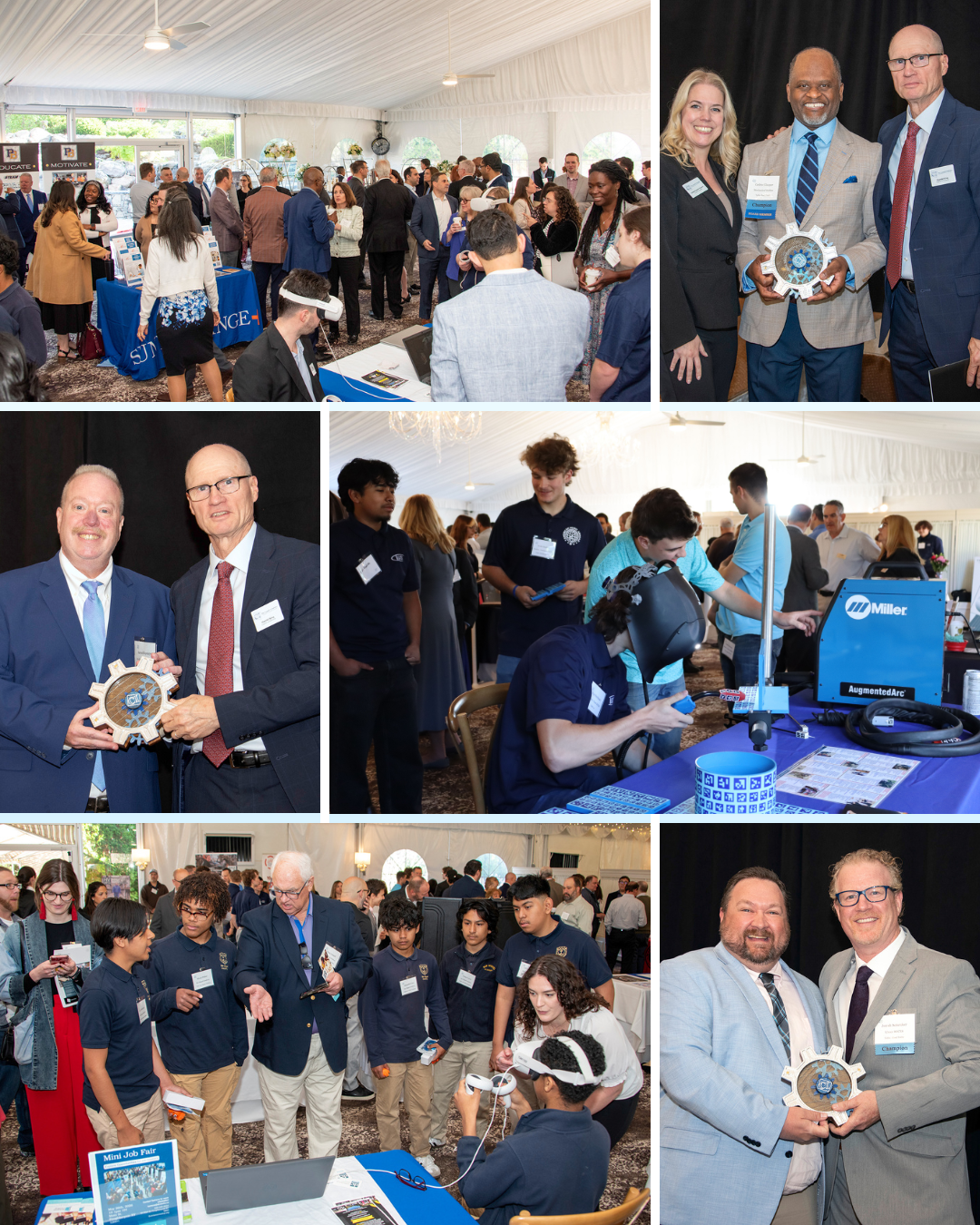
On May 7th, the Council of Industry held it's 2026 Manufacturing Champions Awards Breakfast & Workforce Expo.
Joined by nearly 300 attendees and 25 Workforce Developers Expo participants - ranging from K-12 students and educators, local college's and trade schools, along with workforce development agencies - the morning was filled with purposeful networking and connection between the current and future manufacturing community.
Following the expo, we celebrated this year's Manufacturing Champions, including Mechanical Rubber's President & CEO, Cedric Glasper, Ulster BOCES' District Superintendent Dr. Jonah Schenker, Star Kay White's President & CEO, Benjamin Katzenstein, and the Gene Haas Foundation.
The Manufacturing Champions Awards Breakfast celebrates the inspiring achievements of this year’s Champions and engage with the region's manufacturing community, along with the people and programs building the region's workforce pipeline.
Thank you again to our Event's Sponsors! This event would not be possible without your continued support. Click here to see some photos from the event!
|
|
|
Dutchess Community College Breaks Ground on Fishkill Career Center Expansion
|
|
|
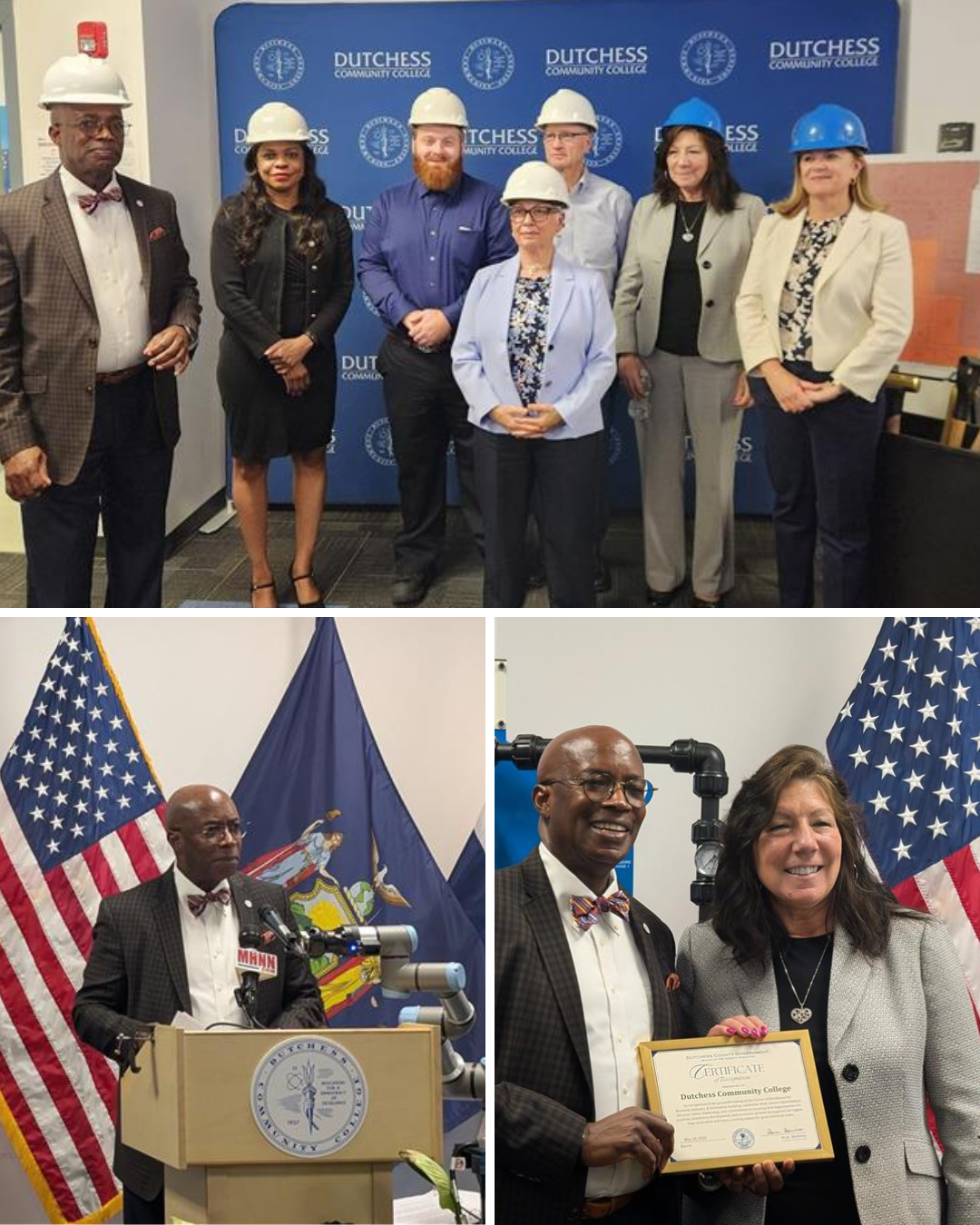
The Council of Industry was proud to be part of Dutchess Community College’s groundbreaking of it's planned Fishkill Campus expansion, continuing the investment in workforce development and advanced manufacturing education.
This expansion will help strengthen the talent pipeline for Hudson Valley manufacturers and provide students with hands-on training for in-demand careers in advanced manufacturing, HVAC, electrical technology, and clean energy.
Empire State Development awarded the college a $3 million upstate revitalization initiative grant, while the Office of Strategic Workforce Development contributed nearly $2 million in March. Academic and industry partners from across the county celebrated the announcement Wednesday, with electrical automation and geothermal equipment displayed in the room.
The state grants will enhance educational opportunities at the Fishkill campus, adding about 75,000 square feet to the facility at the former Dutchess Mall near the I-84 corridor. College officials said construction is underway at the site, with phase one of the project expected to be completed by fall.
The expansion includes an updated HVAC program and the addition of more students to the Mechatronics and Electrical Technology cohort, which includes high school students through a P-TECH partnership program.
Phase two will develop lab space for cybersecurity, architecture, construction and chemistry as well as faculty offices, event space and quiet areas for students to work and study. During that same period, the first floor will undergo construction to establish the Automotive Technology facility with vehicle bays and specialized lab space.
Read more at Mid-Hudson News
|
|
|
Annual Golf Outing August 24th at the Powelton Club
|
|
|
The Council of Industry will hold its Annual Golf Outing on the last Monday in August at the Powelton Club in Newburgh. The Powelton is a beautiful course conveniently located just off of Route 9W in Newburgh, NY.
Last year’s event drew 112 golfers from manufacturing firms throughout the Hudson Valley.
Registration and lunch will begin at 11:30 followed by a shotgun start at 12:30. Cocktails and a light dinner will follow at approximately 5:15 p.m.
The fee includes lunch, golf, cart, cocktails, hors-d'oeuvres, dinner, prizes and giveaways. Dinner only option for non-golfers. Sponsorships are available!
Sponsors help make this event possible and one of the most enjoyable of the golfing season. Please support the Council of Industry and Hudson Valley Manufacturing by becoming a sponsor.
Register Here
|
|
|
FuzeHub Events Support New York State Manufactures
|
|
As part of the Council of Industry's new role as the Mid-Hudson Manufactuing Extension Partner (MEP), we are supporting and promoting FuzeHub events and programs. These events connect New York State manufacturers and technology companies with industry experts, resources, and networks designed to solve productivity, commercialization, research and development, and growth challenges.
|
|
Insight Exchange: Expert-Led Video Series for Manufacturers
The Insight Exchange is a video series from the Council of Industry, offering member manufacturers expert insights and strategies—accessible anytime. Each session features industry professionals covering key topics like workforce development, regulatory updates, and emerging technologies.
|
|
C3PAO's Perspective
Key Aspects of Your Compliance Journey
- Presented by Nick DeLena, PKF O'Connor Davies
In this episode of Insight Exchange, Nick DeLena, Partner of PKF O’Connor Davies, provides an overview of CMMC and what it means for manufacturers and contractors handling sensitive government information.
The discussion also covers the rollout timeline, common challenges companies face in achieving compliance, the risks of falling short, and the key steps organizations can take to prepare—from documentation to cloud and emerging technology considerations.
Learn More
PKF O'Connor Davies: www.pkfod.com
For more info, visit www.councilofindustry.org
|
|
Want to share your expertise?
Contact Johnnieanne Hansen at info@councilofindustry.org to learn more.
|
|
Manufacturing Industry News
|
|
Data Is The ‘Number One Challenge’ As Manufacturing Tech Evolves
|
|
As manufacturers increasingly invest in digitization, automation and artificial intelligence, they’re also learning how to manage an exponential increase in data. Speakers at multiple panels during a May 6 event hosted by the Massachusetts Institute of Technology’s Initiative for New Manufacturing discussed how they’re thinking about data standardization and analytics. They’re also trying to be strategic about how best to approach this evolution in technical capabilities. “Automation, AI, analytics ... by themselves, do not create value. I believe they actually increase the flexibility or the domain of what’s possible, and they’ll only create value when they’re applied to a well-defined problem,” said Swamy Kotagiri, CEO of automotive supplier Magna International. “Otherwise, I like to say you’re experimenting and you’re not transforming.”
Ford and other manufacturers described throughout the event how managing disparate sources of data is an ongoing task. Carpenter Technology, a global alloys manufacturer, hired its first chief digital officer in 2021 with this in mind. “Data has always been a byproduct of manufacturing, and that’s how it has been treated. We need to start treating data as an asset,” said Chief Digital Officer Shakthi Logasundaram, citing data as “the number one challenge” for the company’s technical operations.
Read more at Manufacturing Dive
|
|
Quantum Computing: What Manufacturers Need to Know
|
|
Quantum computing is an emerging technology that excites computer scientists and confounds manufacturers. It seems abstract, theoretical, and far-removed from the realities of production, logistics, and materials engineering. Yet quantum computing isn’t science fiction. This early and evolving discipline will eventually reshape industries that depend on process optimization, physical simulation, and complex decision-making.
Quantum computers are well-suited to solving optimization problems because they can explore many possible solutions simultaneously. That’s why Wall Street firms are using them to explore portfolio optimization. For example, Goldman Sachs has developed and deployed quantum algorithms that could allow the firm to price financial instruments at quantum speeds. In financial markets, computing speed is a tremendous advantage. Someday soon, small-to-medium manufacturers could use quantum computers to solve problems such as how to route parts, schedule production, minimize downtime, and allocate limited resources. Simulating fluid flow is another potential application. Aerospace, automotive, turbomachinery, chemical processing, and semiconductor crystal manufacturers could all benefit since even small improvements in simulation accuracy can lead to major gains in performance and efficiency.
Read more at FuzeHub
|
|
|
Humanoid Robots Tested For Real-Time Plant Monitoring
|
|
|
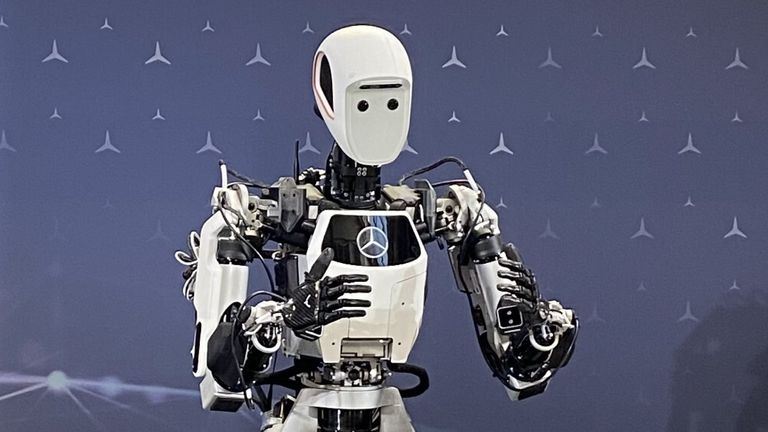
Humanoid robots equipped with physical AI are being piloted by Accenture, SAP and Vodafone Procure & Connect to perform inspection and safety monitoring tasks in industrial environments. The pilot focuses on using humanoid robots to identify inefficiencies, safety risks and process issues by performing visual inspections and reporting findings into enterprise systems in real time. The robots are designed to operate alongside existing automation and human workers, providing additional visibility into day-to-day operations.
During testing, the robots detected issues such as improperly handled materials, inefficient use of space and potential safety hazards, while feeding recommendations directly into enterprise systems to support faster decision-making and improved process control. The systems are integrated with enterprise software, allowing inspection data to be tied to operational workflows, including maintenance reporting and compliance tracking. The approach reflects a broader effort to connect robotics with existing production systems rather than deploying them as standalone solutions. “Our work in collaboration [with] SAP is a great example of how holistic deployment of humanoid robots... creates a closed loop with transactional systems.” said Prasad Satyavolu, global lead for manufacturing, operations and physical AI at Accenture.
Read More at Assembly Magazine
|
|
|
CEOs Are Getting Ruthless About Worker Performance
|
|
|
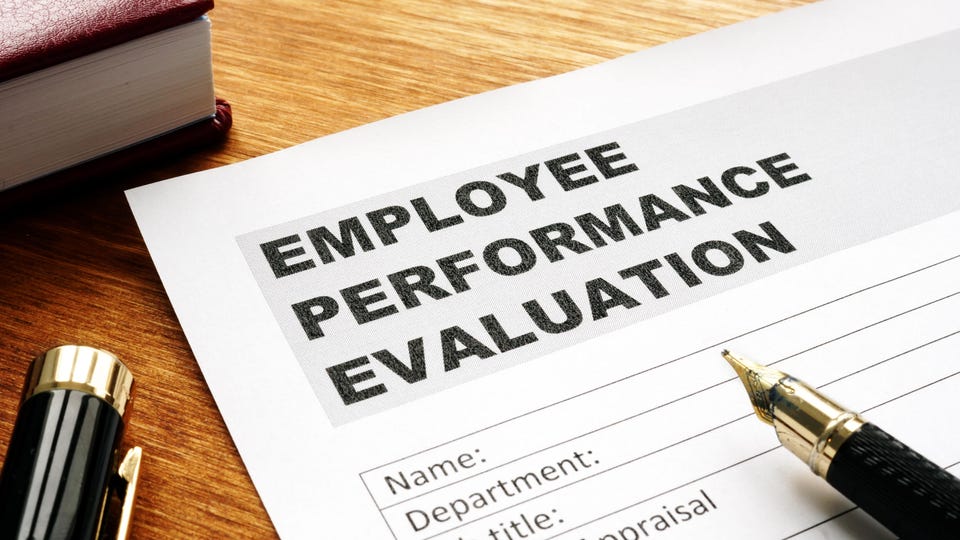
Before saying hello Unilever Plc Chief Executive Officer Fernando Fernandez starts every meeting by saying: ‘Volume growth, positive mix, consistent growth margin expansion for profit growth in hard currency,’” the CEO told an industry analyst in a recorded appearance last year. Fernandez acknowledged it’s a strange way to greet people, but it’s how he ensures employees understand what’s important: He wants results and he’s holding people accountable for them.
While hardly a new mantra in the business world, the approach marks a contrast from the corporate ethos of the previous decade, when labor was in short supply and leaders tried putting empathy and warmth out front while quietly wishing employees worked harder. Now, as the looming threat of artificial intelligence gives employers more leverage in an already sluggish white-collar job market, a growing chorus of CEOs in every major sector is saying the quiet part out loud, and frequently underscoring the point with layoffs. “We will be ruthless in assessing our talent, our people,” Nestlé SA’s Philipp Navratil pledged to investors and analysts soon after he became CEO last year. At Citigroup Inc., CEO Jane Fraser reminded staff that they’re judged on results, not effort. 3M Co. CEO Bill Brown routinely uses the word “relentless” when discussing his company’s culture. Leaders at companies including Novo Nordisk A/S and HSBC Holdings Plc have been similarly blunt.
Read more at Yahoo Finance
|
|
|
NASA's Employee Retention Driven By Leadership, Culture, Training
|
|
|
In an era when employee retention dominates the HR agenda, NASA's numbers are remarkable. Jerry Traster is the Director of the Human Capital Office at NASA's Glenn Research Center. He estimates Glenn's annual turnover rate sits somewhere between 2 and 5%, and the majority of that is retirements. Voluntary departures are rare enough to barely register. He himself has worked at NASA since 2007. According to Mercer's 2025 Workforce Turnover Survey, the average voluntary turnover rate across U.S. industries sits at 13.5%. In technology and engineering, it runs higher still. NASA, by comparison, is operating in a different world entirely, competing for highly specialized talent against well-funded private aerospace companies that can offer salaries the federal pay structure simply cannot match.
And yet people stay. Traster doesn't hesitate when asked about NASA's retention secret. It comes down to culture, and at Glenn, culture has a tagline. "We have a tagline, it's: mission first, people always. And we really live by that," he said. "I think people here feel like they're heard. They feel like they have a say in what happens on the day to day." NASA's own internal surveys back that up. Employees consistently rate their first line supervisors highly, according to Traster, who says that reflects something genuine about the culture. NASA invests deliberately in leadership development programs designed to build not just technical competence in managers, but emotional intelligence. "We have a lot of leadership programs in place to make sure that people have not just smart supervisors, but they have that emotional intelligence side as well," he said.
Read more at Human Resources Director
|
|
|
Manufacturers Rethink Inventory as Shortages Persist on Assembly Lines
|
|
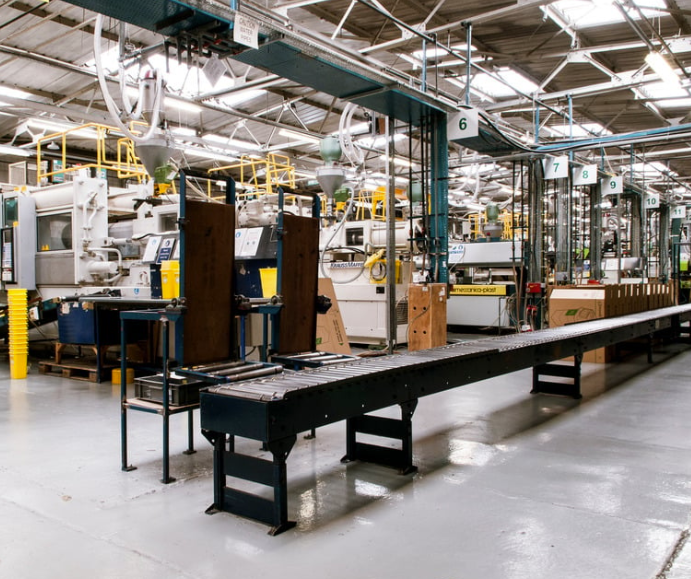
For years, manufacturers were taught to treat inventory as waste. Lean manufacturing principles emphasized just-in-time delivery, minimal stock and tightly scheduled production. But on today’s assembly lines, that approach is increasingly under strain. According to manufacturing consultant Mark Woeppel, many plants are now caught in a cycle of missed deliveries, part shortages and constant expediting, not because they lack effort, but because their systems are fundamentally misaligned with how production actually works.
“I get called when somebody has a problem,” says Woeppel, who has spent more than 30 years improving manufacturing operations. “They’re missing delivery dates… customers are crying, and in some cases threatening to pull business for missing dates. At the same time, the plant is spending significant money just to keep the line moving.” That disconnect often shows up physically on the factory floor. In one case, a fire truck manufacturer had dozens of partially assembled units sitting idle, waiting for missing components. To keep production moving, workers would strip parts from unfinished units to complete others, creating what Woeppel describes as a cycle of “doom” that reinforces delays rather than solving them.
Read more at Assembly Magazine
|
|
|
How Manufacturers Are Testing Physical AI Before Making Big Investments
|
|
|
As manufacturing companies across the U.S. increasingly adopt artificial intelligence, the workflow is shifting from text-generating models to physical systems that use robots, sensors and processing capabilities. Despite the potential this presents, there’s a huge gap between experimenting with AI tools and wide-scale implementation of fully automated systems. One way companies are starting to bridge this divide is through testing sites. These sites allow manufacturing companies to test physical AI and explore use cases before making any major shifts.
The models differ based on what the manufacturing company is looking for and what the testing center can provide. Most of these collaborations tend to be project-based, focused on exploring new technological possibilities and solving specific operational challenges. The centers offer an immersive learning environment by connecting digital, physical and experimental elements on a fully operational production line, said Rohini Prasad, a principal at Deloitte’s Smart Manufacturing Business, via email. “Manufacturers get to experience firsthand how cutting-edge solutions can be integrated and deployed with their own operations,” said Prasad.
Read more at Manufacturing Dive
|
|
|
Why Operational Discipline Determines Agentic AI Success
|
|
|
Joint research by GEP and the University of Virginia's Darden School of Business, surveyed 180 senior supply chain executives and found that fewer than 1 in 10 organizations have scaled AI pilots into enterprise-wide operations. However, it did find a small group of "Performance Elite" organizations that are doing things differently. These leaders have achieved remarkable outcomes, doubling productivity, reducing error rates, and compressing response times. It turns out their advantage is not better technology; it is operational discipline.
The study introduces the GEP Agentic Scaling Framework, a proprietary maturity matrix evaluating 10 critical vectors across three developmental horizons and identifies six dimensions that consistently separate successful scalers from those stuck in "pilot purgatory." Among the findings:
Organizations that scaled AI were far more likely to have a dedicated AI steering committee with formal governance, while one-third of those without such a structure had no systematic view of opportunities at all.
Data discipline is a decisive differentiator: scaled organizations are multiple times more likely to invest in automated data cleaning, real-time dashboards, and digital audit trails.
The hardest use cases to scale share a common root cause that is human, not technical.
Even the Performance Elite have yet to fully address stakeholder engagement and talent management, suggesting the next competitive advantage will come from a better-prepared workforce, not a better model.
Read more at Material Handling & Logistics
|
|
|
US’ Nuclear Project Clears Key NRC Environmental Milestone, To Cut Emissions By 440,000 Tons
|
|
|
The U.S. Nuclear Regulatory Commission (NRC) has completed the environmental assessment for the proposed Long Mott Generating Station in Texas, which is a major step forward in licensing what could become North America’s first grid-scale advanced nuclear reactor deployed at an industrial site. The project, planned at Dow’s Seadrift manufacturing complex in Texas, would use four X-energy Xe-100 high-temperature gas reactors. The plant is designed to provide both electricity and industrial steam to support operations at the site, which manufactures billions of pounds of materials annually for sectors including food packaging, pharmaceuticals, solar technology, and electrical applications.
The project is expected to reduce emissions from Dow’s Seadrift site by roughly 440,000 ton s of carbon dioxide annually. If built, Long Mott would serve as an important demonstration project for deploying advanced nuclear technology in industrial settings. The facility has been described by Dow and X-energy as the first grid-scale advanced nuclear installation in North America specifically intended to serve an industrial operation. The project is also supported by the U.S. Department of Energy’s Advanced Reactor Demonstration Program, which backs commercialization efforts for next-generation nuclear technologies.
Read more at Interesting Engineering
|
|
|
NRG’s 2026 U.S. Summer Market Outlook – It Is Going to Be a Hot One
|
|
|
During NRG’s U.S. Summer Market Outlook, moderator, Jeff Kopala and presenters, Jon deJong, Erik Listor, and Bruce Murray discussed market trends shaping seasonal electricity and natural gas markets across the U.S. They also touched on purchasing strategies to confidently manage risk during a challenging season.
Hot weather combined with ongoing drought, low snowpack leading to low hydroelectric output, and wildfire risk are all expected to stress the power system this summer. In the Northeast, temperatures are expected to be 1–2 degrees higher than average from June to August, and the number of 90-degree days is predicted to be near or above the historical average. Last summer, temperatures rose to 90 degrees or above for 14 days in New York City and 37 days in Philadelphia. This summer, those numbers are forecasted to be 16–22 days for NYC and 32–38 days for Philadelphia.
Watch the Webinar at NRG
Learn more about the Council of Industry’s energy consortium (where you can lock in a fixed price to avoid price spikes)
|
|
|
Students Compete For National Drone Soccer Title In Daytona Beach
|
|
|
Students from across the country are battling for a national championship in one of the fastest-growing STEM-based competitions: drone soccer. The U.S. Drone Soccer National Championships, known as the “Battle at the Beach,” are taking place this week at Embry‑Riddle Aeronautical University in Daytona Beach, Fla. To newcomers, the competition can look like a mix between a cage match and a scene from Star Wars. But behind the flying drones and fast-paced action is a serious test of engineering, teamwork and piloting skill.
Each team consists of five players — four defenders and one striker — competing to maneuver a drone through the opposing team’s goal. More than 300 teams nationwide competed throughout the season for a spot in the tournament, with only 24 advancing to the national stage. Unlike many traditional sports, where equipment is ready to go, competitors in this event are responsible for building, programming and maintaining their own drones within regulation specifications. Organizers say the experience can help students pursue future careers in STEM-related fields. Roberts said some former competitors have gone on to attend colleges such as Embry‑Riddle Aeronautical University with scholarships tied to their drone soccer experience.
Read more at, Watch the Video at KTBS
|
|
|
The Council of Industry focuses on advancing manufacturing excellence, workforce innovation, advocacy, and strategically positioning its members within the Hudson Valley region and beyond. It is the premier manufacturers' association for Southeastern New York, representing over 160 member firms. Grow, Train, and Succeed with the Council of Industry.
|
|
|
If you’re part of a Council of Industry member company and not yet subscribed, email us. If you’re not a Council member, become one today
|
|
|
|
|