|
The Monthly Newsletter of the Council of Industry
April 21st, 2026
|
|
|
Council of Industry Updates
What's Happening in Your Association
|
|
|
Council of Industry Recognizes 2026 Manufacturing Champions
|
|
|
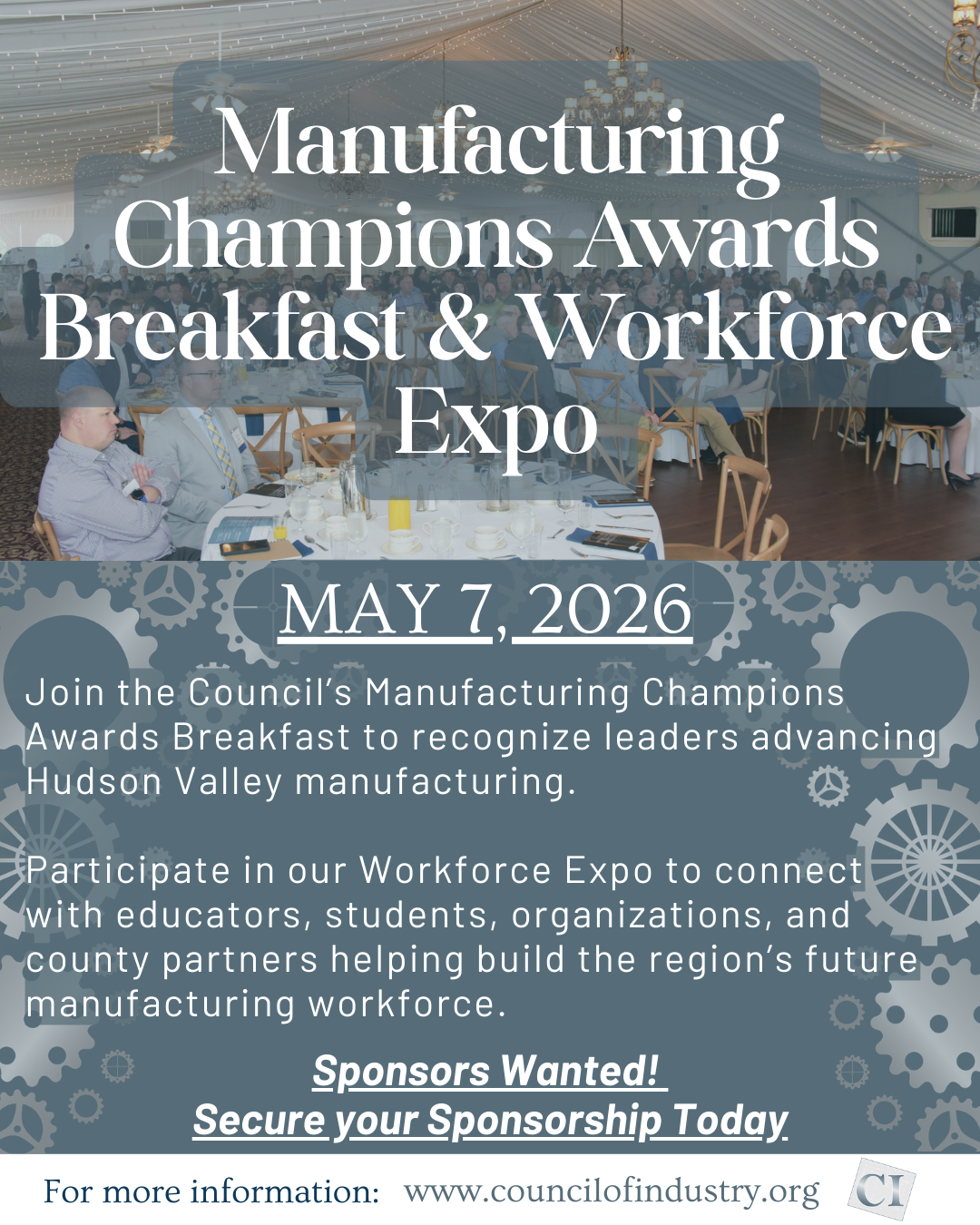
The Council of Industry’s Manufacturing Champions Awards Breakfast and Workforce Developers Expo shines a spotlight on the strength, innovation, and collaboration within the Mid-Hudson region's manufacturing community.
This highly anticipated event brings together business leaders, educators, workforce partners, and advocates for a morning of meaningful connection and shared purpose.
Attendees have the opportunity to celebrate the inspiring achievements of this year’s Champions and engage with the region's manufacturing community, along with the people and programs building the region's workforce pipeline.
By sponsoring or attending, you’re not just showing support; you’re stepping into a network of changemakers helping manufacturing and its workforce thrive.
Read about this year's Champions here
|
|
|
Join Us in Celebrating this Year's Manufacturing Champions on May 7th, at the West Hills in Middletown!
The Event begins at 7:45 am with the Manufacturing Workforce Developers Expo.
The Workforce Developer's Expo includes educators, students, nonprofits, economic development, and county partners actively engaged in training the future manufacturing workforce. The expo allows attendees to see the great work being done to build and develop the skilled pipeline necessary for manufacturers' success.
If you are interested in participating email Emma Olivet
|
|
|
Thank you to our Sponsors!
|
|
|
Ulster BOCES Cuts Ribbon on Gene Haas Machining Lab
|
|
|
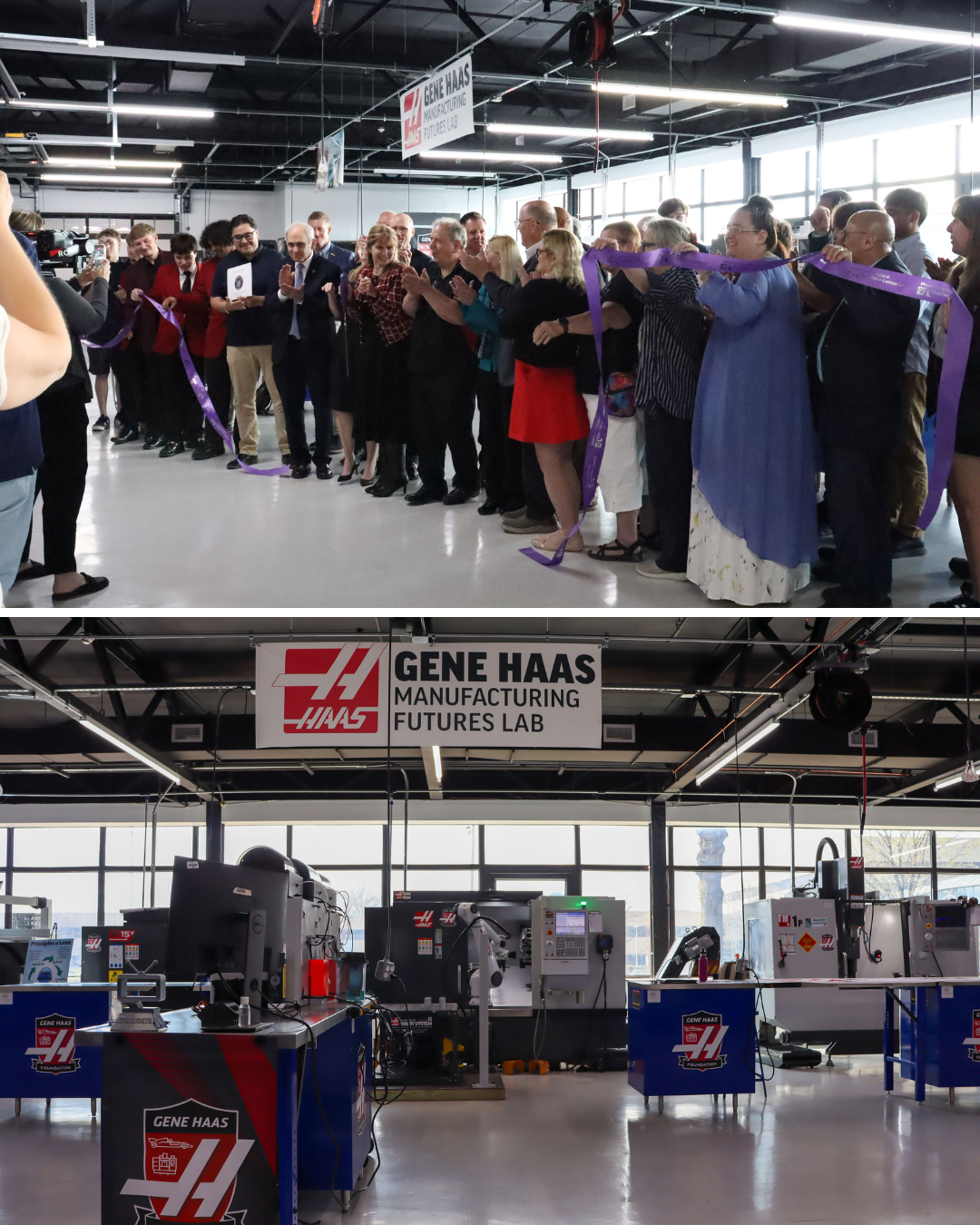
The Gene Haas Manufacturing Futures Lab officially opened April 14th at Ulster BOCES Career Academies at iPark 87. The lab is supported by a $1 million partnership with the Gene Haas Foundation and Council member Allendale Machinery, and it will give students access to advanced manufacturing training, so it can prepare as the next generation of skilled professionals. Many other Council members who supported the project were also on hand to celebrate the opening including Fala Technologies, Elna Magnetics, Dorsey Metrology, Viking Industries, Millbrook Machine.
“Manufacturing education is a fantastic lens to look at,” said Pete Harris, assistant superintendent of Career Pathway Programs for Ulster BOCES. “So, what we do through our partners here, manufacturing partners, is find challenges to real world problems that they see or they find and solve them using our additive or reductive machinery,” he said.
The Council of Industry is a proud partner of Ulster BOCES and is especially proud to have played a role in the creation of the Gene Haas Manufacturing Futures Lab at Ulster BOCES Career Academies at iPark 87.
Read more at Mid-Hudson News
|
|
|
Council Presents Its Champions Award to the Gene Haas Foundation
|
|
At the Ulster BOCES Ribbon Cutting, joined by partners from the Mid-Hudson manufacturing community, we honored the Gene Haas Foundation as this year's Manufacturing Community Leadership Champion.
In its role the Gene Haas Foundation has been a driving force in supporting our high school, BOCES, community colleges and Universities throughout the Hudson Valley. To date, over $7 million have been distributed to our schools within the Hudson Valley.
The Gene Haas Foundation is instrumental in promoting the Haas Technical Education Community (HTEC) throughout the United States and Europe.
The HTEC organization brings schools together to focus on technical education programs and best practices, and within the Hudson Valley many schools are HTEC members.
Congratulations to the Gene Haas Foundation!
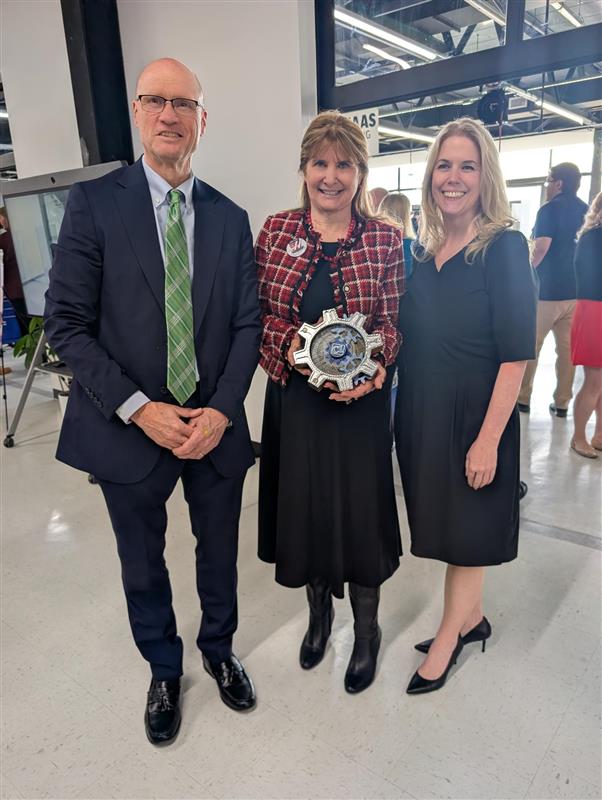
Caption: Kathy Looman, Executive Director of the Gene Haas Foundation (center) accepted the 2026 Manufacturing Champions award at the ribbon cutting of the Gene Haas Machining Lab at Ulster BOCES April 14th
|
|
|
Last Chance CML Starts April 29th in Kingston, Just a Few Seats Remain
|
|
|
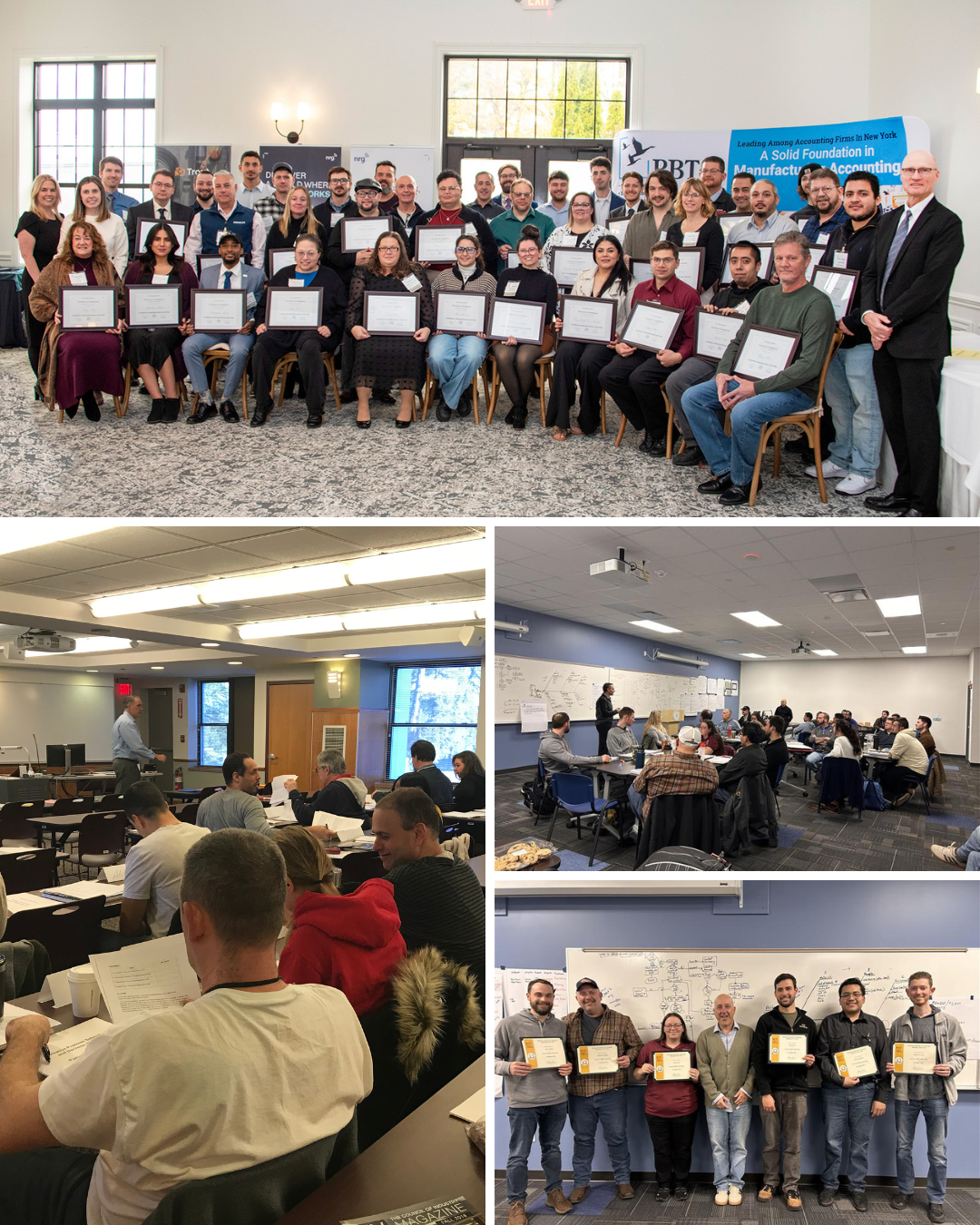
There are only a few spots left in our Spring Certificate in Manufacturing Leadership Series, running from April through July at Ulster BOCES' Career Academies and Technical Center in Kingston.
CML has provided a practical development program for supervisors, team leads, and emerging leaders in local manufacturing for more than 25 years.
These courses are designed to provide hands-on learning and discussion opportunities that reflect the challenges and realities of manufacturing leadership.
This series is ideal for those interested in both individual growth and broader leadership development within their organization.
Participants who complete the series are recognized at our annual Luncheon each Fall. Classes begin April 29th!
Click here to secure your spot!
|
|
|
Insight Exchange: Expert-Led Video Series for Manufacturers
The Insight Exchange is a video series from the Council of Industry, offering member manufacturers expert insights and strategies—accessible anytime. Each session features industry professionals covering key topics like workforce development, regulatory updates, and emerging technologies.
|
|
CMMC for Legacy Equipment
Securing Specialized Assets with Zero Trust Micro-Enclaves
- Presented by Marc Hoover, Trout Software
In this episode of Insight Exchange, Marc Hoover of Trout Software discusses the challenges manufacturers face when meeting CMMC requirements for their legacy machines and other specialized assets.
Learn More
Trout Software: https://www.trout.software/
For more info, visit www.councilofindustry.org
|
|
Want to share your expertise?
Contact Johnnieanne Hansen at info@councilofindustry.org to learn more.
|
|
Manufacturing Industry News
|
|
The Reshoring Wave Is Real. Is Your Business Positioned to Catch It?
|
|
The U.S. supply chain is shifting. Buyers who spent decades asking "can you match offshore pricing?" are now asking about lead times, capacity, and certifications. Reshoring is (hopefully) here to stay. Get a clear-eyed look at the latest reshoring trends, including the top industries coming back and what U.S. manufacturers need to do right now to win their share. For a U.S. manufacturer evaluating whether to invest in capacity, pursue a specific type of work, or position for reshoring demand, these are the four variables that determine how strong the tailwind is in a given category.
Labor Intensity - The math is straightforward. The higher the labor content as a share of total production cost, the harder it is for a U.S. manufacturer to compete with offshore suppliers on price, and the more a buyer will have to pay a premium to bring production back. For manufacturers in capital-intensive or precision-driven categories, including machined components, specialty fabrications, tooling, and precision castings, the labor intensity concern is largely already solved. The work was never primarily a labor cost story to begin with, and the current tariff environment has shifted the remaining cost comparison in your favor.
Logistics Complexity and Weight-To-Value Ratio - This is where U.S. manufacturers hold an advantage that often gets underappreciated in sourcing analyses. For manufacturers of heavy industrial components, structural parts, specialty vessels, or anything where dimensional size makes shipping genuinely expensive, this is one of the most powerful arguments you can make to a customer who is running a sourcing comparison. The unit price is not the right comparison. The total cost of ownership, including freight, safety stock, and the cost of supply disruption risk, is the right comparison, and on that basis, domestic manufacturing wins far more often than buyers realize.
Quality and IP Sensitivity - The higher the cost of a quality failure, the stronger the case for domestic sourcing, and the stronger your position as a domestic manufacturer when talking to buyers in those categories. Medical devices, defense subcomponents, aerospace parts, industrial safety equipment, and products where a single field failure triggers a recall or a line stoppage all belong in this tier. Buyers in these categories are increasingly prioritizing domestic sourcing not because it's cheaper but because it's auditable, traceable, and legally accountable in ways that offshore sourcing isn't. If your shop holds relevant certifications, including ISO 9001, AS9100, IATF 16949, or NADCAP, and you produce for any of these markets, reshoring demand in your category is real and worth pursuing aggressively. IP protection is a related factor.
Tariff and Regulatory Exposure - For any category currently subject to Section 232 or Section 301 tariffs, your competition isn't the offshore invoice price. It's the offshore invoice price plus the tariff. In several categories, that math has already moved the needle to where domestic production is price-competitive or close to it, without requiring the buyer to pay a premium for domestic sourcing. Know the tariff situation in your category. If a buyer is currently paying 25% tariffs on a Chinese-origin product that you produce domestically, you have a 25-point price advantage that many buyers either haven't fully calculated or haven't factored into their sourcing reviews. Making that math explicit, clearly, in writing, in your sales conversations, is one of the most direct ways to open reshoring conversations that convert.
Read more at Industry.net
|
|
The Next 250 Years of Manufacturing in America
|
|
“Manufacturing made America what it is,” NAM CEO Jay Timmons said during a recent interview. “The greatness of America has been really embedded in the ability of our people to create, to build. … As we set the stage for the next 250 years … we want to make sure that our federal legislators are focused on a comprehensive manufacturing strategy.” To continue its success for at least another 250 years, American manufacturing needs several things, some of which the administration has delivered already. These include the following:
A favorable tax environment: The strengthening of tax reforms in 2025 was really the rocket fuel that manufacturers needed to give us a boost in terms of investment, job creation and wage growth.
Permitting reform: While we have a commitment to energy dominance, we still have an issue with getting projects off the ground.
Immigration reform: We … need to look at a credible system of [legal] immigration” to help fill open manufacturing jobs.
Workforce development: We have an obligation to make sure that our workers are trained appropriately in [new] skills, such as interacting with artificial intelligence.
Watch the speech and interview
|
|
|
Why Organizations Pick The Wrong Leaders
|
|
|
In many organizations, leadership potential is assessed using signals that are easy to observe. These could be confidence, charisma or communication style – rather than the traits that actually produce effective teams. This creates a persistent problem. Organizations promote people who look like leaders rather than those who demonstrate the capabilities required to lead. While confidence and visibility are essential attributes in leadership, they are not core drivers of success.
Research shows other capabilities can matter more. These include sound judgement, the ability to help others develop, emotional intelligence and the capacity to build an environment where employees feel valued. This might mean staff feeling free to share ideas or raise concerns, for example. Teams perform more effectively when employees feel valued in their workplace. And an openness to sharing ideas and admitting mistakes without fear are also essential factors in building strong teams. Studies of emotional intelligence suggest that leaders who demonstrate empathy and interpersonal awareness are often better able to build trust and keep their team performing at a high level. The true measure of leadership has been shown to be reflected in team performance and outcomes, rather than a leader’s personal charisma or visibility.
Read more at The Conversation
|
|
|
Lean or Six Sigma: the Progress Paradox
|
|
|
If you're talking basketball and you want to spark passionate debate, ask the question: Who's the best ever—Michael Jordan or LeBron James? If you're talking continuous improvement and want to spark equally passionate debate, try this question: Which is better—lean or Six Sigma?
Dr. Mohamed Saleh and John Dyer take on the topic of lean versus Six Sigma, discussing the merits of each and the ways that organizations use, or misuse, them. Saleh is quick to claim the debate is completely flawed. While lean is a management philosophy and operating system, Six Sigma is a problem-solving methodology, he argues. “Lean is built on things like respect for people, flow, problem visibility, learning at the source, leadership development,” Saleh says. “These are, for me, key points, [about] how should an organization be designed and led … not just how should a problem be solved.”
Read more and listen at IndustryWeek
|
|
|
'Get Your AI Terminology Straight: A Manufacturing Leader's Guide
|
|
|
Here is a practical, 101-level guide to the AI vocabulary showing up in manufacturing and supply chain environments—so leaders can better understand what’s real, what’s useful and how to lean in and apply these capabilities to create real operational advantage across ERP systems, supplier communications and operational data.
Start Here: AI Is Not One Thing - One of the biggest misconceptions is that “AI” is a single capability. In reality, it’s a collection of tools. In manufacturing environments, most of what teams are referring to today falls into a few categories: Language-driven systems (reading, writing, summarizing) Pattern recognition (forecasting, anomaly detection) Decision support (recommendations, next steps) Understanding which category you’re actually dealing with is the first step to cutting through the noise.
Machine Learning: the Part Many Companies Already Use - Before copilots, agents and LLMs, many manufacturers were already benefiting from machine learning. In plain English, machine learning uses historical data to detect patterns, improve predictions and support decisions. In real-world operations, that includes: Demand forecasting, Inventory optimization, Predictive maintenance, Quality and anomaly detection, This matters because it separates today’s AI conversation into two tracks: what’s new and what’s already delivering value. Both matter—but they are not the same.
LLM (Large Language Model) - When your team says “LLM,” they’re referring to systems that can read and generate human-like text. What it actually does: Processes and generates language based on patterns learned from large datasets. Where it shows up: Summarizing supplier emails or RFQs, Drafting customer responses, Translating ERP data into plain language, What to watch for: LLMs don’t “know” your business unless connected to your data. Without that context, they can sound confident—but be wrong.
Copilots - “Copilot” is one of the most overused—and misunderstood—terms right now. What it actually means: A layer that sits on top of your systems (ERP, CRM, email) to assist users in real time. In practice, it’s useful for: Suggesting responses inside email, Helping navigate ERP workflows, Recommending next steps, A copilot doesn’t replace your system—it improves how people interact with it.
Agents - Agents move from assisting to acting. What they are: Systems that can take a goal and execute steps to achieve it. Examples: Monitoring inventory, Detecting shortages, Reaching out to suppliers, Proposing or initiating reorders, Reality check: Most agent-based systems are still early. They require strong guardrails and tight integration to work reliably in production environments.
Embeddings (The Quiet Connectors) - Embeddings convert your company’s data into a format AI systems can understand and search. That’s what allows AI to: Reference ERP data, Search internal documents, Provide context-aware responses, If LLMs are the “brain,” embeddings are how that brain connects to your business.
This Is a New Set of Tools. The goal is not to become AI experts overnight. It’s to understand the language well enough to ask better questions and identify where these tools can create real advantage.
Read more at IndustryWeek
|
|
|
Google To Provide $10M For Manufacturing Institute AI Training Programs
|
|
Google will provide $10 million for workforce development initiatives centered around artificial intelligence, the Manufacturing Institute announced. The funding will be used to develop two AI skills training programs for shop floor workers: a free course called AI 101 for Manufacturing and another called Advanced AI for Manufacturing Technicians. It will also be used to expand employer-led apprenticeship programs via the MI’s Federation for Advanced Manufacturing Education, as well as provide scholarships for FAME USA students through the mikeroweWORKS Foundation.
The funding announcement comes as the United States faces a significant manufacturing skills gap. According to the MI, some 1.9 million manufacturing roles could go unfilled by 2033 if the workforce isn’t equipped with necessary technical skills. “The entire manufacturing sector is going to benefit from creating these trainings, which will be available for small, medium and large companies to take advantage of this technology, especially for incumbent workers,” Manufacturing Institute President Carolyn Lee said. “For new entrants into the manufacturing workforce, these skills will give them a strong foundation to start their careers.”
Read more at Manufacturing Dive
|
|
|
Robot Density Surges in Europe, Asia, and Americas
|
|
|
Economies worldwide are prioritising the integration of factory robots, as automation becomes a critical tool for boosting productivity. In the global automation race, the Western European countries reached a record 267 robots per 10,000 employees in the manufacturing industry 2024 – ahead of North America with 204 units and Asia with 131 units. This is according to the World Robotics 2025 report, presented by the International Federation of Robotics (IFR).
- The Republic of Korea records the world´s highest robot density with 1,220 robots per 10,000 employees.
- Singapore follows second, with 818 units. As a small country with a low number of manufacturing employees, Singapore can achieve a high robot density with a relatively small operational stock.
- Germany ranks third, with 449 units per 10,000 employees. The robot density of Europe´s largest economy has grown by 5% per year since 2019.
- Japan is in fourth place with 446 units. Robot density of the world´s predominant robot manufacturing country had been growing by 5% annually since 2019.
- Sweden (377), Denmark (329), Slovenia (315), the United States (307), and Chinese Taipei (302) and Switzerland (294) complete the top 10.
Robot density is the number of operational industrial robots relative to the number of employees. It can cover the whole manufacturing industry or just specific industrial branches. The number of employees serves as a measure of economic size, so the quotient of operational stock over employees puts the operational stock on a uniform base.
Read More at International Federation of Robotics
|
|
|
US Electric Utilities Entering Investment ‘Super-Cycle’
|
|
|
U.S. electric utilities are entering a five-year capital expenditure “super-cycle” as they build out transmission and generation networks to meet new demand from data centers, Morningstar DBRS said in a recent research note. “Investment in electricity infrastructure is projected to be $1.4 trillion from 2025 to 2030, double the amount invested in the prior 10 years,” the firm said. And based on data from the North American Electric Reliability Corp., Morningstar said many regions can expect load growth to increase from previously estimated 6.1% to around 11.6% over the next decade.
Morningstar’s analysis mirror’s recent capital expenditure estimates from the Edison Electric Institute, which expects U.S electricity generation to grow “for the foreseeable future.” The group, which represents investor-owned utilities, said generation rose 3% in 2024 and generation investments as a share of the industry’s total capital expenditures have risen for four straight years. The rapid rise in electricity demand, following decades of stagnation, will challenge utilities in a few ways, according to Morningstar.
Read more at Utility Dive
|
|
|
Top Energy Procurement Trends to Watch in 2026
|
|
|
In 2026 energy procurement is entering one of its most transformative periods in decades. Energy demand is rising faster than expected, new building performance standards (BPS) are taking effect, electrification is reshaping load profiles, and renewable energy procurement is becoming more tightly tied to compliance and carbon goals—not just sustainability branding. Energy procurement can no longer be a transactional exercise focused solely on securing the best price. It now requires risk management, cross-functional coordination, regulatory awareness, and long-term planning.
The organizations that adapt early will be better positioned to stabilize budgets, reduce exposure, and meet their operational and sustainability commitments. Below, is a break down the major trends that shaping energy procurement in 2026 and what they mean for energy users like hospitals and healthcare networks, real estate property owners, manufacturers, municipalities, universities, agricultural organizations, and more. Organizations that embrace risk-managed procurement, cross-functional collaboration, and data-driven decision-making will be better positioned to: Stabilize budgets, Protect against market volatility, Meet regulatory deadlines, Advance sustainability commitments, Increase energy efficiency, Support operational resilience.
Read more at Environ
Learn more about the Council of Industry’s energy consortium (where you can lock in a fixed price to avoid price spikes)
|
|
|
Chinese Carmaker Patents Voice-Controlled 'In-Vehicle Toilet'
|
|
|
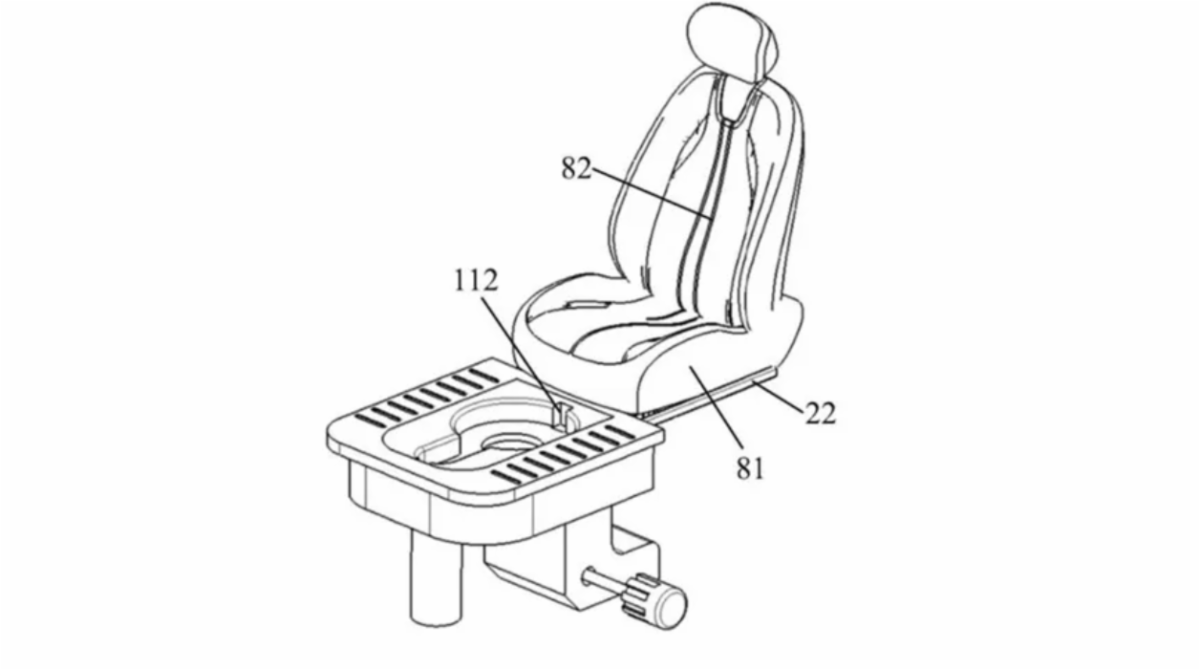
Chinese automaker Seres, the company behind Aito vehicles, has officially been granted a utility model patent for what it calls an “in-vehicle toilet and vehicle.” The patent was filed on April 22, 2025, and approved on April 10, 2026. It remains active, according to Sanyan Tech. At first glance, it sounds like one of those ideas that never leaves the drawing board. But digging into the patent, it’s clear the engineers put real thought into making it work – even if it still feels a little out there. According to the patent, the system consists of a compact toilet unit paired with a sliding rail assembly. The rail is mounted to connect with the seat structure, allowing the toilet to slide out when needed and tuck neatly back underneath afterward. Picture a drawer built right into the cabin floor.
When you don’t need it, it disappears, so the cabin stays just as roomy and comfortable as before. That’s the clever bit: turning unused space into something functional, especially in EVs where every inch counts. Even if the engineering holds up, this is where things start to get tricky. How do you run drainage in a cramped chassis? Where does the wastewater go? Can the sliding mechanism survive years of use, and will it really keep all the smells locked away? These are tough problems, especially in EVs, where packaging is constrained by batteries under the floor.
Read more at AutoBlog
|
|
|
The Council of Industry focuses on advancing manufacturing excellence, workforce innovation, advocacy, and strategically positioning its members within the Hudson Valley region and beyond. It is the premier manufacturers' association for Southeastern New York, representing over 160 member firms. Grow, Train, and Succeed with the Council of Industry.
|
|
|
If you’re part of a Council of Industry member company and not yet subscribed, email us. If you’re not a Council member, become one today
|
|
|
|
|