|
The Monthly Newsletter of the Council of Industry
March 24th, 2026
|
|
|
Council of Industry Updates
What's Happening in Your Association
|
|
|
Council of Industry Announces 2026 Manufacturing Champions
|
|
|
The Council of Industry is proud to announce its 2026 Manufacturing Champions.
Nominated by their peers, Champions are honored for their exceptional contributions in Manufacturing Leadership, Manufacturing Education, or Community Support for the regional manufacturing industry.
|
|
|
Meet The 2026 Manufacturing Champions
|
|
|
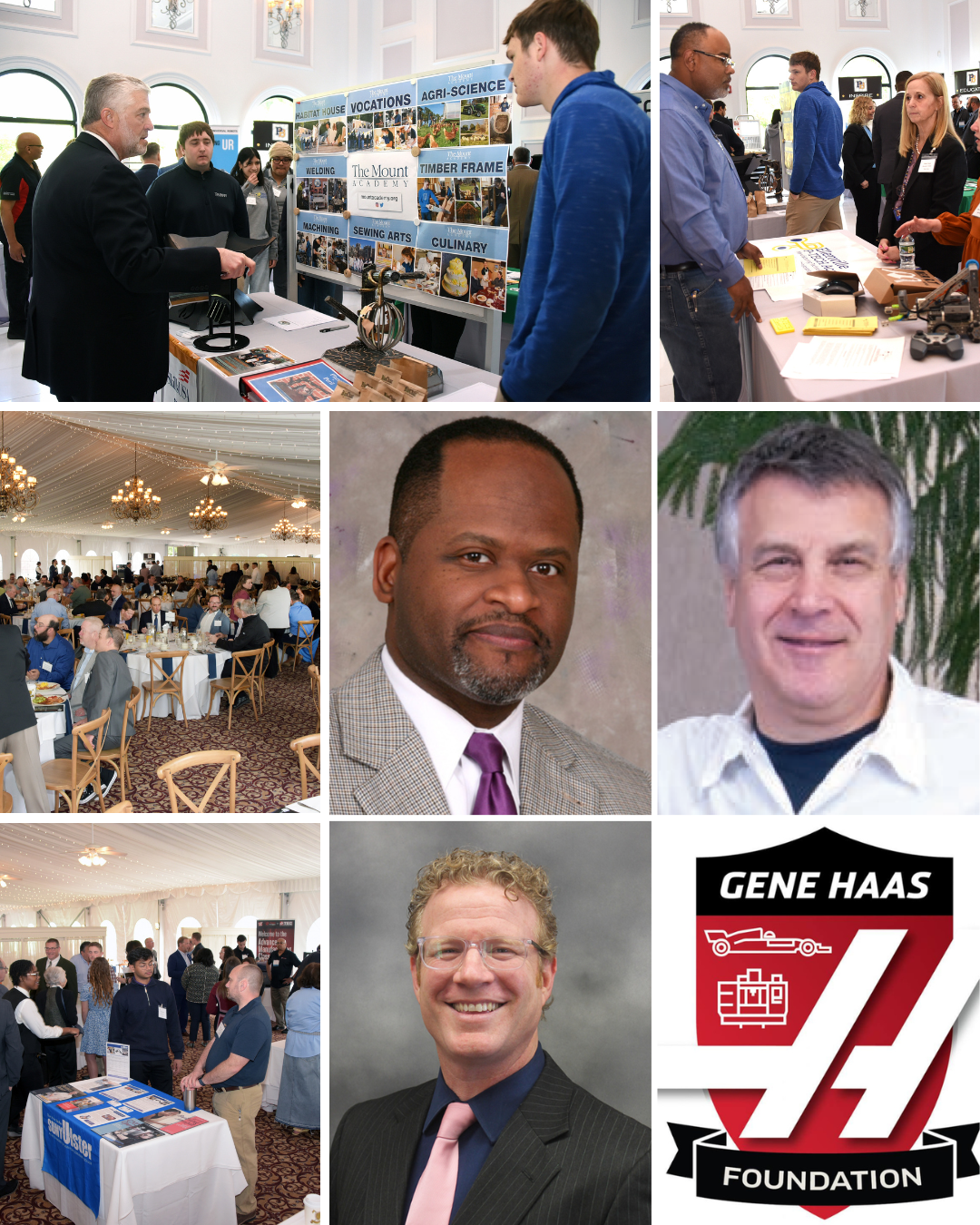
Cedric Glasper
President & CEO, Mechanical Rubber
Cedric Glasper is a manufacturing leader known for his commitment to both industry and workforce. Since 1995, he has helped revitalize struggling facilities and preserve jobs through four strategic acquisitions that prevented plant closures and restored opportunity for displaced workers.
Cedric serves on the boards of the Council of Industry, the Association for Rubber Products Manufacturers, and the Ohio Manufacturers’ Association. During the COVID-19 pandemic, his leadership ensured operations continued and employees remained on the job.
Beyond his business leadership, Cedric is an active community advocate, serving organizations including the Orange County Workforce Investment Board and United Way.
|
|
Ben Katzenstein
President & Owner, Star Kay White
Star Kay White, Inc. is a fifth-generation manufacturer that has produced ice cream ingredients, frozen desserts, and specialty flavorings since 1890.
Ben Katzenstein grew up in the family business, working alongside his father and grandfather from a young age and learning every aspect of the company’s operations. When he joined the company full-time, he recognized significant opportunities for growth.
In 1984, Star Kay White employed 16 people and was transitioning from a 15,000-square-foot plant in the Bronx to a new 30,000-square-foot facility. Under Ben’s leadership, the company has expanded to four buildings across 15 acres totaling approximately 170,000 square feet and now employs more than 150 people, many of whom are local Hudson Valley residents.
|
|
Dr. Jonah Schenker
District Superintendent, Ulster BOCES
Dr. Jonah Schenker has served as District Superintendent of Ulster BOCES since March 2023 and been part of Ulster BOCES since 2010, serving in a range of instructional and leadership roles, including founding principal of the Hudson Valley Pathways Academy.
He recently led the expansion of the Career and Technical Center into its new location at iPark87, a project that serves as a state and national model for advanced manufacturing education. This initiative was bolstered by his ability to secure support from parents, school districts, and political leaders, and was recognized with a $1 million grant from the Gene Haas Foundation.
To address the local workforce shortage, Dr. Schenker has aligned the BOCES curriculum with industry needs by collaborating directly with business leaders. By implementing their feedback, he has expanded facilities and programs to prepare students for rewarding careers within the Hudson Valley.
His impact on the manufacturing sector is evidenced by the growth of student internships and the resulting economic benefits for the local workforce.
|
|
The Gene Haas Foundation
The Gene Haas Foundation was established in 1999, by Haas Automation, Inc. – which produces CNC vertical machining centers, horizontal machining centers, CNC lathes, and rotary products – CEO and Founder Gene Haas, to support the needs of the local community through grants.
The Gene Haas Foundation remains a manufacturing Champion of the Hudson Valley and beyond.
In its role the Gene Haas Foundation has been a driving force in supporting our high school, BOCES, community colleges and Universities throughout the Hudson Valley. To date, over $7 million have been distributed to our schools within the Hudson Valley.
The Gene Haas Foundation is instrumental in promoting the Haas Technical Education Community (HTEC) throughout the United States and Europe. The HTEC organization brings schools together to focus on technical education programs and best practices, and within the Hudson Valley many schools are HTEC members.
Read the full Champions Announcement here
|
|
|
Join Us at The Champions Awards Breakfast & Workforce Developers Expo on May 7th
|
|
|
The Council of Industry has been honoring Manufacturing Champions for more than 20 years.
A Manufacturing Champion may be an individual or an organization that, through vision, dedication, and sustained involvement, has advanced manufacturing in the Hudson Valley.
Champions build businesses, develop talent, create programs, or forge partnerships that strengthen the regional manufacturing ecosystem. Through leadership, collaboration, and a commitment to opportunity, they help manufacturers and their workforce overcome challenges, adapt, and thrive.
Award recipients are selected by a hand-selected nominations committee, which reviews nominations and recommends a slate of honorees that reflect meaningful impact across manufacturing, education, and community leadership, before being approved by the Council’s Board of Directors.
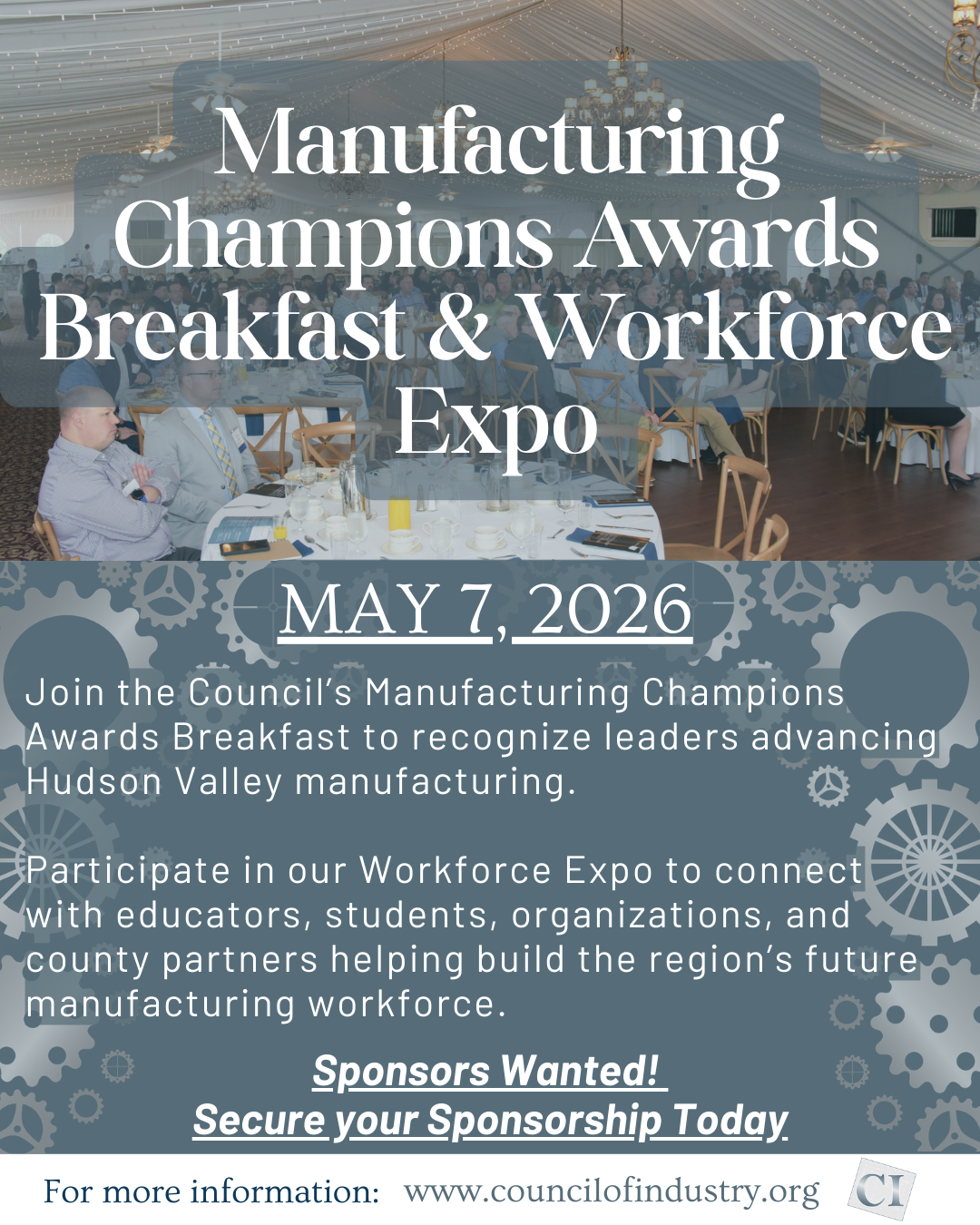
The Council of Industry will celebrate the 2026 Manufacturing Champions at the Manufacturing Champions Awards Breakfast & Workforce Expo on May 7, 2026.
Our event will begin with the Manufacturing Workforce Developers Expo, highlighting schools, workforce programs, and organizations that are helping to build the region’s manufacturing talent pipeline. The expo allows attendees to meet the many partners working to train the next generation of skilled workers in the Hudson Valley.
The breakfast and expo bring together manufacturers, educators, workforce development professionals, and community leaders from across the region to celebrate achievements and strengthen connections within the manufacturing ecosystem.
Organizations interested in supporting the event and increasing their visibility within the Hudson Valley manufacturing community are invited to become sponsors.
Additional advertising opportunities are available in the event program, including back cover, full-page, half-page, and quarter-page ads.
For event registration, sponsorship information, or additional details, visit:
www.councilofindustry.org
|
|
|
Thank you to our Sponsors to date!
|
|
|
Spring 2026 HV MFG in Final Stages, Publishing in April
|
|
|
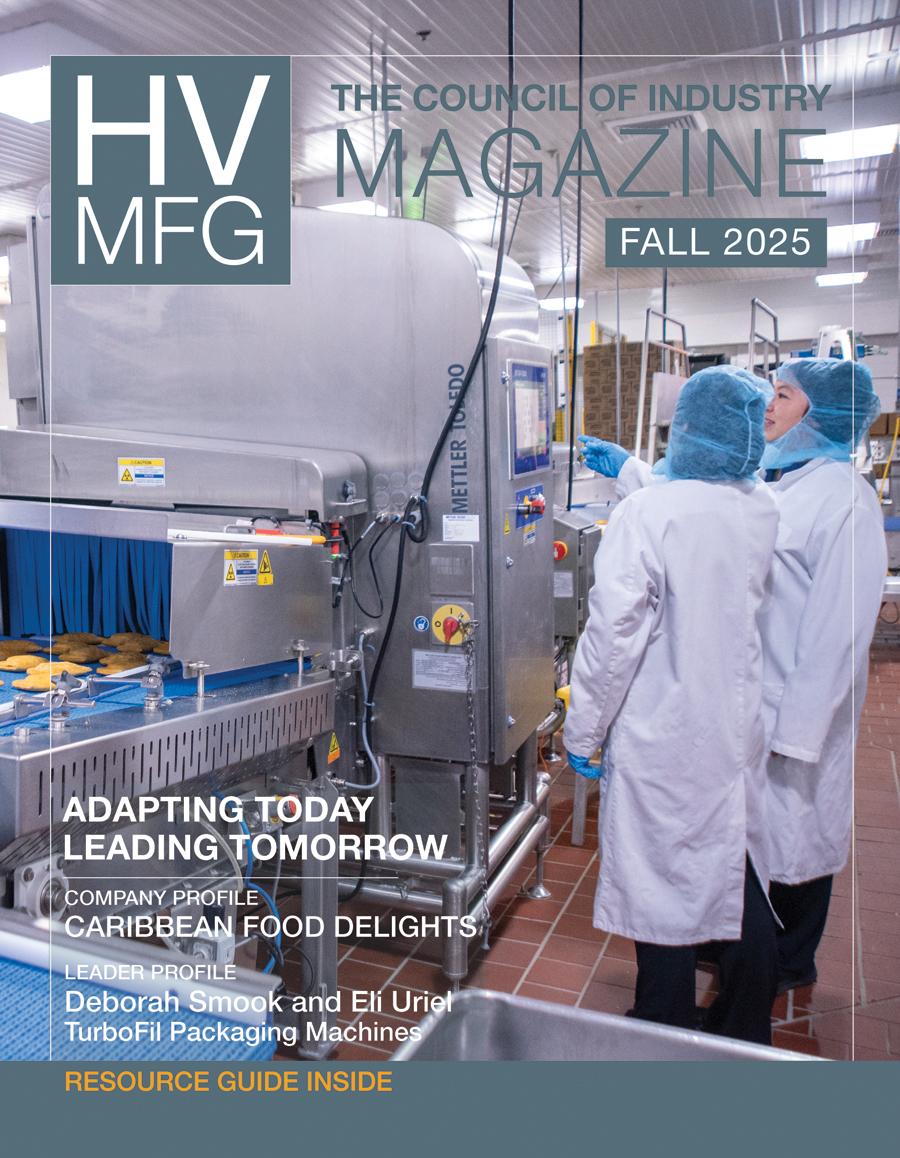
The Spring 2026 HV MFG is in its final stages and is set to publish next month!
Each issue includes articles showcasing local manufacturers, including a company profile, Q&A with industry leaders, and information for and about Hudson Valley manufacturers.
With a print circulation of 3,000 copies as well as an online version, HV Mfg reaches manufacturing decision makers, educators and policy makers throughout the Hudson Valley Region.
The HV Mfg Spring 2026 Issue will feature:
- A leader profile of Scott Aronson, President, Producto Electric Corporation (PECO)
- A company profile of Cerven Solutions
- How Manufacturing Advocacy shapes Policy in Albany
- AI Implementation examples and practices for Manufacturers
- A Roundtable featuring Hudson Valley Capital Equipment Manufacturing leaders
- And more!
This edition also includes our Member Directory which lists our members and associate members, along with brief descriptions of their products and services.
|
|
|
In-Person Certificate in Manufacturing Leadership Series begins April
|
|
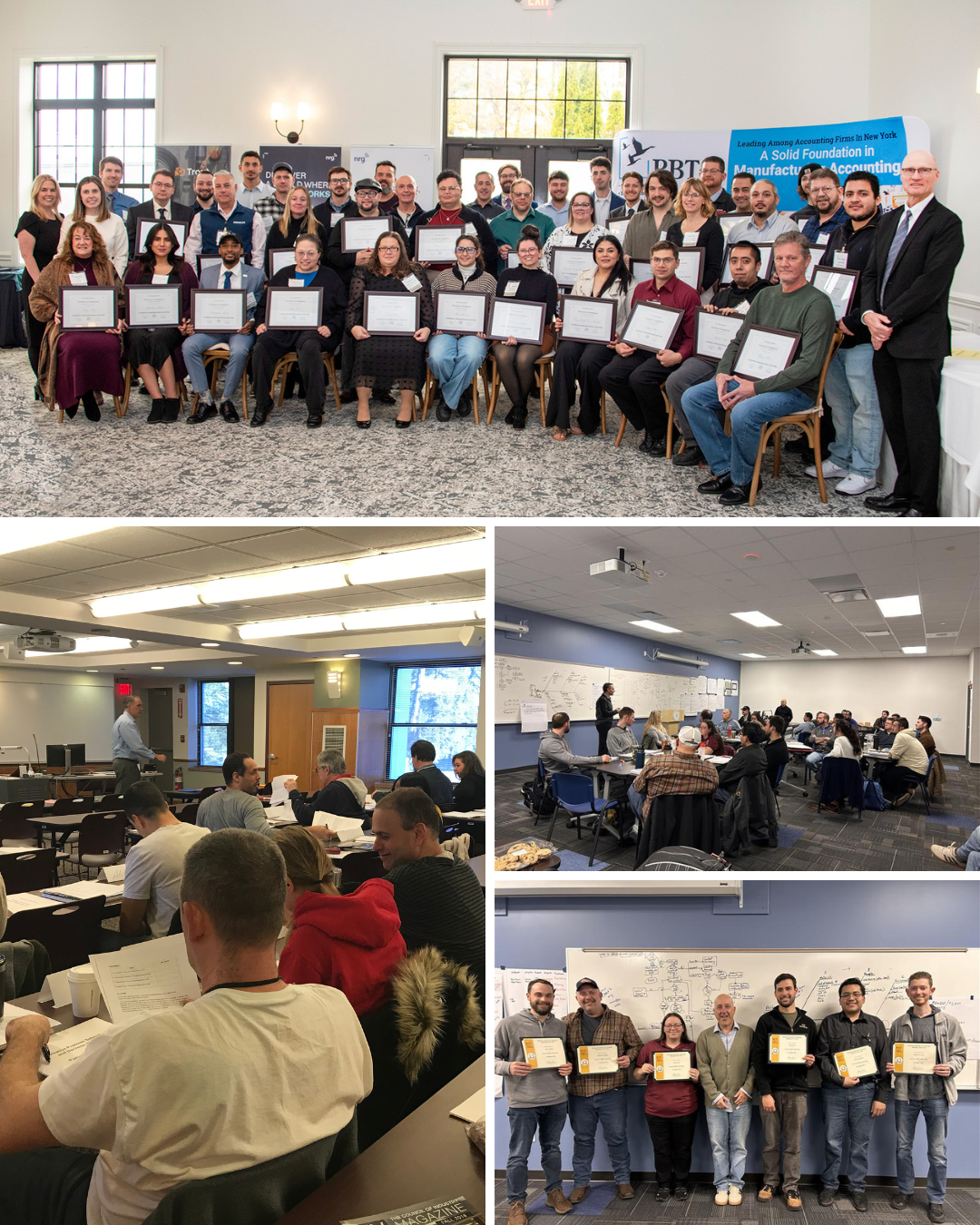
Registration is now open for our Spring Certificate in Manufacturing Leadership Series, running from April through July at Ulster BOCES' Career Academies and Technical Center in Kingston.
CML has provided a practical development program for supervisors, team leads, and emerging leaders in local manufacturing for more than 25 years.
These courses are designed to provide hands-on learning and discussion opportunities that reflect the challenges and realities of manufacturing leadership.
This series is ideal for those interested in both individual growth and broader leadership development within their organization.
Participants who complete the series are recognized at our annual Luncheon each Fall.
Click here to secure your spot!
|
|
|
Insight Exchange: Expert-Led Video Series for Manufacturers
The Insight Exchange is a video series from the Council of Industry, offering member manufacturers expert insights and strategies—accessible anytime. Each session features industry professionals covering key topics like workforce development, regulatory updates, and emerging technologies.
|
|
Want to share your expertise?
Contact Johnnieanne Hansen at info@councilofindustry.org to learn more.
|
|
Manufacturing Industry News
|
|
Ford Scrapped Cost-Cutting Norms To Create Its $30,000 EV
|
|
While large, heavy, super-quick electric vehicles underscore the EV’s incredible performance potential, there’s more of a physics challenge — and a tougher puzzle — to develop lean and efficient EVs that are competitive on price versus gas-powered vehicles. That’s part of what Ford set out to do with its Universal Electric Vehicle platform, which is due to launch in 2027 as a midsize pickup with a target starting price of around $30,000. The electric truck is slated to be built at the automaker’s assembly plant in Louisville, which formerly built the Escape SUV. The new EV is one of five more affordable vehicles Ford has promised to launch by 2030.
To get there, the company had to face the puzzle differently — by not tallying costs on a part-by-part basis. According to Alan Clarke, Ford’s Executive Director of Advanced EV Development, a vicious weight spiral can result from grabbing low-cost off-the-shelf components in order to meet performance targets, then adding a bigger battery to meet driving range or more heavy-duty components support the added weight. To avoid that, Ford’s UEV platform team took a different tactic, justifying and tracking the tough trade-offs that can ultimately bring ripple effects to an EVs overall efficiency, which it referred to as “bounties.” Here are a few key points from the automaker on how it’s applying those bounties and cutting big-picture weight and cost rather than bean-counting.
Read more at Ward’s Auto
|
|
Tariff Engineering: Turning Headaches Into Competitive Advantage
|
|
If you're a manufacturing executive, the past year has probably felt like whiplash. One week, your supply chain strategy makes perfect sense. The next, new tariffs drop and suddenly your margins are underwater. You're not alone. Luckily, there's a smarter way forward than just eating the costs or frantically raising prices. The manufacturers who’ll succeed in this environment aren't necessarily the biggest or those with the deepest pockets. They're the ones who can pivot quickly and strategically redesign their operations to legally minimize tariff exposure. This approach— let’s call it Tariff Engineering—is becoming as critical to competitiveness as lean JIT manufacturing was two decades ago.
Tariff engineering isn't about finding loopholes or skirting regulations. It's about strategically redesigning products, processes and value chains to legally minimize duty costs while improving resilience. Think of it through three dimensions: product, process and place. You don't need a complete supply chain overhaul to begin. Start by mapping your current tariff exposure across products and suppliers. Where are your biggest risks? Which products or components carry the highest-duty burden? How does that flow through to margins?
Read more at IndustryWeek
|
|
|
4 Ways to Streamline Supply-Chain Localization
|
|
|
The upheaval caused by recent geopolitical incidences has highlighted the weakness of many supply chains, with resource availability now overtaking cost as the top influence over key manufacturing decisions. This shift requires manufacturers to take a more proactive approach rather than waiting until supply chains have taken a hit. Enter localization, the process of bringing key parts of the supply chain closer to manufacturing locations and customers. Yet the shift to localization isn’t a smooth process. Older logistics networks and connectivity dips can cause delays, and the reliance on local assets could mean higher distribution costs for manufacturers. Industrial AI is uniquely positioned to alleviate some of these issues and help manufacturers localize their operations.
1. Prioritize Simplicity in Sourcing Components - One of the most overlooked causes of supply chain vulnerability is product design. Highly customized components, for instance, can limit a manufacturer’s flexibility by tying them to single-source suppliers or long-lead-time parts that are difficult to replace during supply chain disruptions.
2. Cut the Carbon and Upcycle Waste for Profit - As remanufacturing reduces the need for raw-material extraction and long-distance transport, it can be a crucial strategy for manufacturers to reduce carbon footprints and supply risk.
3. Sustainability Initiatives Should Come from the Top - Sustainability practices are essential for long-term business success. Regulators, investors and consumers now expect greater transparency from companies, especially around Scope 3 emissions.
4. Implement Scenario Planning - The final piece of the puzzle is scenario planning. Currently, just 5% of organizations globally can proactively predict and mitigate disruption before it impacts their business.
Read more at IndustryWeek
|
|
|
7 Ways AI Will Transform US Manufacturing by 2030
|
|
|
In just a few short years, manufacturers have experienced whiplash as generative AI capabilities have rapidly evolved since 2022. Manufacturing leaders are understandably overwhelmed—not only by the pace of change but by the challenge of translating AI hype into operational value. The data confirms this: the average score in ServiceNow's Enterprise AI Maturity Index dropped nine points in 2025. Here are seven ways manufacturing operations will transform by 2030.
1. End-to-end workflow reimagination will rewire manufacturing operations - Most manufacturing processes were designed during the analog era, then digitized and optimized over decades—but not reimagined for AI. Leading manufacturers won't just automate existing workflows with AI; they'll reinvent how workflows across procurement, production, quality, maintenance, logistics, and customer service.
2. Manufacturing teams will orchestrate AI agents, not just work with them - Plant managers, production supervisors, and maintenance leads will become agentic orchestrators—managing fleets of purpose-built AI agents designed to deliver specific outcomes.
3. Autonomous workflows will pave the way for the autonomous plant - Select critical workflows will begin running end to end without human intervention—from predictive maintenance work orders to quality inspection routing to just-in-time inventory replenishment. Goal-seeking, compliance-aware agents will coordinate across MES, ERP, QMS, and CMMS systems, planning, executing, responding, and self-healing as needed.
4. Organizational hierarchies will shift to dynamic work teams - Static org charts will give way to dynamic, outcome-based teams assembled from live skills inventories and agent registries.
5. Simulation-first decision-making becomes standard practice - Manufacturing leaders will test decisions inside high-fidelity digital twins before implementing changes on the production floor.
6. Value metrics will replace volume as the measure of manufacturing productivity - Manufacturers will shift from measuring output alone to tracking what drives profitability and competitiveness: value per production run, first-pass yield, mean time between failures, exception rates, cycle time reduction, and human-to-agent leverage ratios.
7. Continuous innovation will become embedded in daily operations - Time freed up by autonomous workflows will enable manufacturing teams to focus on innovation and problem-solving. Floor supervisors, quality managers, and process engineers will have bandwidth to test new approaches, optimize processes, and drive continuous improvement.
No one can predict the future with certainty, but these seven shifts focus on elevating human expertise while AI handles repetitive tasks. As agents manage routine monitoring and execution, manufacturing professionals will apply their domain knowledge, problem-solving abilities, and operational judgment to tackle complex challenges with greater speed and impact.
Read more at IndustryWeek
|
|
|
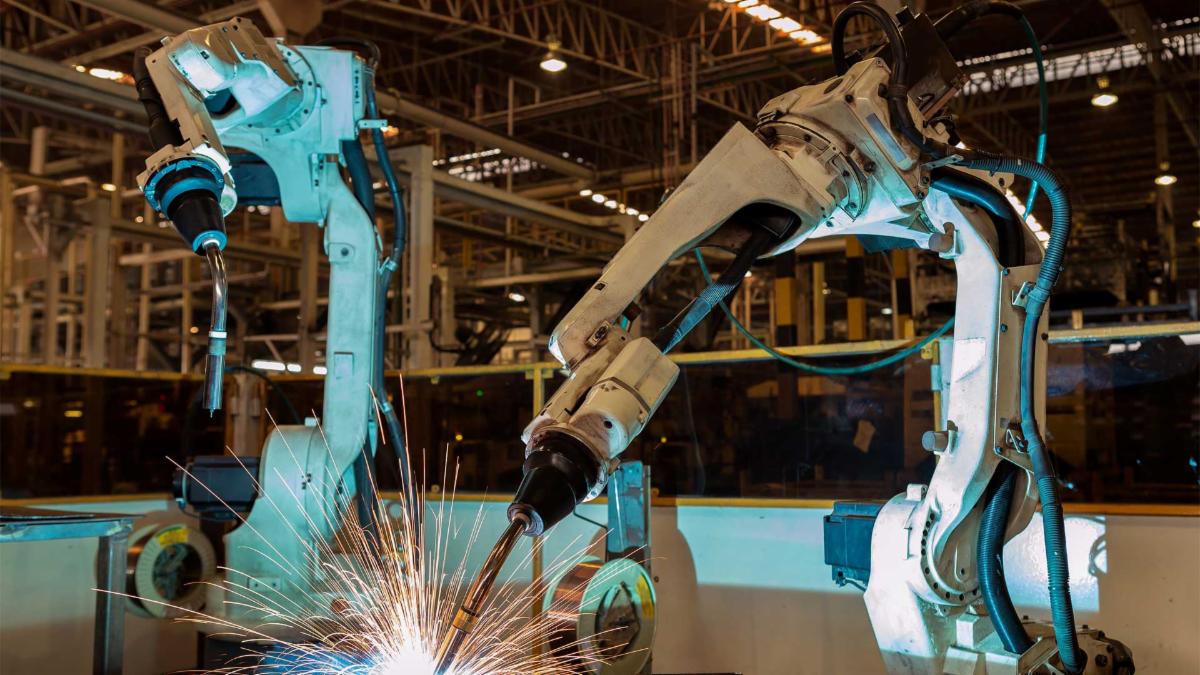
'The Hardest Advances In Robotics Are Behind Us': What Comes Next?
|
|
|
After a decade of largely unseen progress, autonomous robots are now operating in manufacturing, healthcare, logistics and more – from self-steering cars to digital therapists and algorithmic diagnoses. The core technical groundwork for physical AI is largely complete, leaders at Davos 2026 agreed, yet the industry’s full impact will only be realized as these systems move from isolated industrial zones into the complexity of everyday life.
The World Economic Forum recently welcomed experts on physical AI to its 56th Annual Meeting in Davos, where they explored, in the panel session 'Living Autonomously' and on Radio Davos, what comes next for the technology. The past decade has brought fundamental breakthroughs, unlocking what was previously impossible. So what are these recent advancements? Here is what the experts said at Davos.
Read more at the World Economic Forum
|
|
|
Factories On The Brink Of Revolution: Why Humanoid Robots Will Change Our Workplaces As Early As 2026
|
|
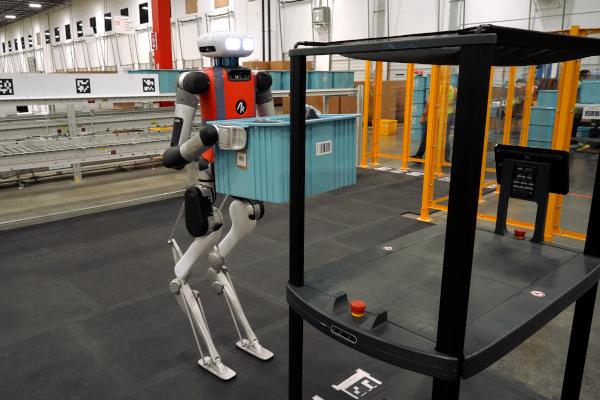
The history of industrial automation is a history of the gradual withdrawal of human labor from dangerous, monotonous, and physically demanding tasks. Since the first hydraulic robot arms of the 1960s, machines have taken over more and more tasks in factories. However, this has always occurred in the form of highly specialized tools, optimized for a single task, installed in a precisely defined environment, and requiring costly reinstallations for every production change. In 2026, a new chapter in this story begins, and it bears a name that long sounded like a futuristic exaggeration: the humanoid robot.
Humanoid robots are no longer prototypes confined to isolated research environments, admired by scientists. They work in factories. They grasp components, operate machines, and load conveyor belts. Tesla is already using its Optimus robot in its own production and plans to begin mass production before the end of 2026. The Chinese automaker BYD works with more than 1,500 humanoid units in its manufacturing plants. BMW is testing humanoid systems for inserting sheet metal parts and operating machines. Schaeffler, the German automotive and industrial supplier, has entered into a strategic partnership with the startup Figure (Note: "Humanoid" is an unusual company name; Figure AI is often meant here), which aims to integrate hundreds of robots into production sites worldwide over the next five years.
Read More at Xpert Digital
|
|
|
US To Scale Up Submarine Production With $900 Million AI-Driven Automated Factories
|
|
|
The United States Navy is reportedly planning to spend $900 million to use automation to fix a major labor bottleneck in its submarine production. Called “Hadrian,” the new contract will see automated factories built to produce submarines with minimal human intervention. The hope is to produce a production line that can run nye-on continuously using artificial intelligence (AI) and robotics.
Submarines, like the Virginia-class or Columbia-class, take millions of man-hours apiece to assemble. The former, for example, takes an estimated 13 to 18 million hours, with the latter about 34 million hours. “The number-one problem that the Navy has identified is we can’t find enough skilled workers, so we have to automate our way out of this problem,” Hadrian CEO Chris Power told reporters. The Navy “can’t hire enough people and the primes can’t hire enough people because there aren’t enough trained people to do it…We need to automate and have people running multiple robots in a new way of doing things, versus replacing jobs,” Power added.
Read More at Interesting Engineering
|
|
|
AI Energy Demand Is Fueling a High-Stakes Bet on Nuclear Fusion
|
|
|
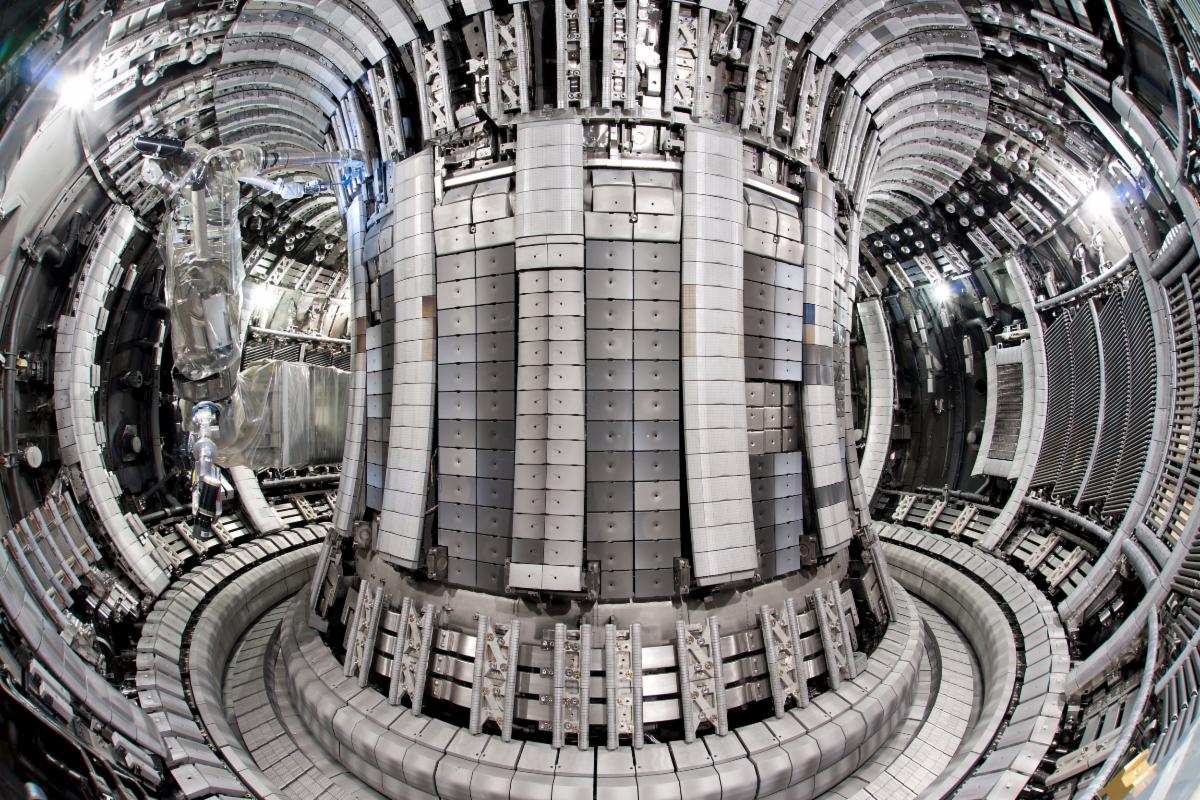
The AI boom has been a major catalyst for nuclear fusion investing, research, and development. Helion Energy, a fusion start-up owned by Sam Altman, co-founder and CEO of OpenAI, just hit a major milestone earlier this year when it achieved an ultrahot plasma temperature of 150 million degrees. And Helion is far from alone – a whole rash of startups across the globe is increasing the rate and scale of technological breakthroughs in the burgeoning fusion sector. Wall Street has finally gotten behind the next-gen energy technology that was, until recently, thought to be ripped from the pages of science fiction rather than a commercial eventuality.
The relationship between AI and fusion is complicated. A recent report from the International Energy Agency (IEA) revealed that investors are increasingly funneling money into AI – at the expense of sorely needed energy tech innovation. On the other hand, AI could also be the secret sauce to finally cracking the code for commercial nuclear fusion. Just this week, the government of the United Kingdom announced that it will invest £45 million (approximately USD $60 million), to build an AI supercomputer with the express purpose of accelerating nuclear fusion research at the UK Atomic Energy Authority’s Culham campus in Oxfordshire. The machine – named Sunrise – is expected to begin operations in June of this year.
Read more at OilPrice.com
|
|
|
Energy Department Touts $1.9B For Grid Upgrades
|
|
|
The Energy Department announced earlier this month it is opening up $1.9 billion in funding aimed at helping upgrade the U.S. power grid. Projects selected through the funding opportunity, which is made available through the bipartisan infrastructure law, would invest in grid upgrades at a time the Trump administration is confronting rising electricity demand and concerns over resource adequacy.
“The United States must increase grid capacity to meet demand, and ensure the grid provides reliable power — day-in and day-out,” Katie Jereza, assistant secretary for the Office of Electricity, said in a statement. Jereza said the so-called SPARK funding opportunity will help "stabilize and optimize grid operations to strengthen it for rapid growth.”
Projects that receive the funding would need to demonstrate reconductoring — or the replacement of existing power lines with higher‑capacity conductors — paired with other technologies that can expand grid capacity and increase operational efficiency, the department said in a release.
Read more at the DOE
Learn more about the Council of Industry’s energy consortium (where you can lock in a fixed price to avoid price spikes)
|
|
|
Scientists Develop Brain-Inspired Chip For More Efficient AI Hardware, Cut Energy Use By 70%
|
|
|
Researchers at the University of Cambridge have developed a high-performance memristor using a specialized hafnium oxide. A memristor is a low-energy component that mimics how our brain cells connect, helping conserve energy. This nanoelectronic device could potentially reduce AI energy consumption by up to 70%. “Energy consumption is one of the key challenges in current AI hardware,” said Dr Babak Bakhit, lead author from Cambridge’s Department of Materials Science and Metallurgy.
Standard computer chips are inefficient. These chips spend most of their energy shuffling data between a memory unit and a processor. This digital commute creates heat and wastes power. Our brains don’t work that way. We process and store information in the same place: the synapse. The Cambridge team’s technique uses a specialized form of hafnium oxide to do exactly that. Researchers have developed a neuromorphic (brain-inspired) chip using a stable, low-energy memristor that handles both tasks in a single chip.
Read more at Interesting Engineering
|
|
|
The Council of Industry focuses on advancing manufacturing excellence, workforce innovation, advocacy, and strategically positioning its members within the Hudson Valley region and beyond. It is the premier manufacturers' association for Southeastern New York, representing over 160 member firms. Grow, Train, and Succeed with the Council of Industry.
|
|
|
If you’re part of a Council of Industry member company and not yet subscribed, email us. If you’re not a Council member, become one today
|
|
|
|
|