|
The HR Newsletter of the Council of Industry
July 7th, 2026
|
|
|
HR Sub-Council Meeting July 23 at SUNY New Paltz
|
|
Join us on July 23rd at SUNY New Paltz's School of Business for a discussion on current SUNY workforce initiatives, including updates on the SUNY Internship Program, SUNY Reconnect, and other emerging developments.
We'll also explore best practices, lessons learned, and workforce trends being observed across the region, with opportunities to share insights and strategies that can support student and employer engagement.
|
|
|
The Council of Industry HR Sub-Council is a dedicated community for the HR professionals in our association to address workplace challenges.
This forum provides a collaborative platform for members to connect, share best practices, and address the critical challenges facing the industry. Attendees are encouraged to bring topics of concern and actively engage in the discussion.
This sub-council is open to business owners, HR professionals, and individuals managing HR responsibilities from manufacturing member companies, space is limited, so please register early.
If you are an associate member or part of our extended community, please reach out to Johnnieanne Hansen to discuss possible arrangements.
|
|
|
Annual Golf Outing SOLD OUT! - Tee Sign Sponsorships Still Available
|
|
|
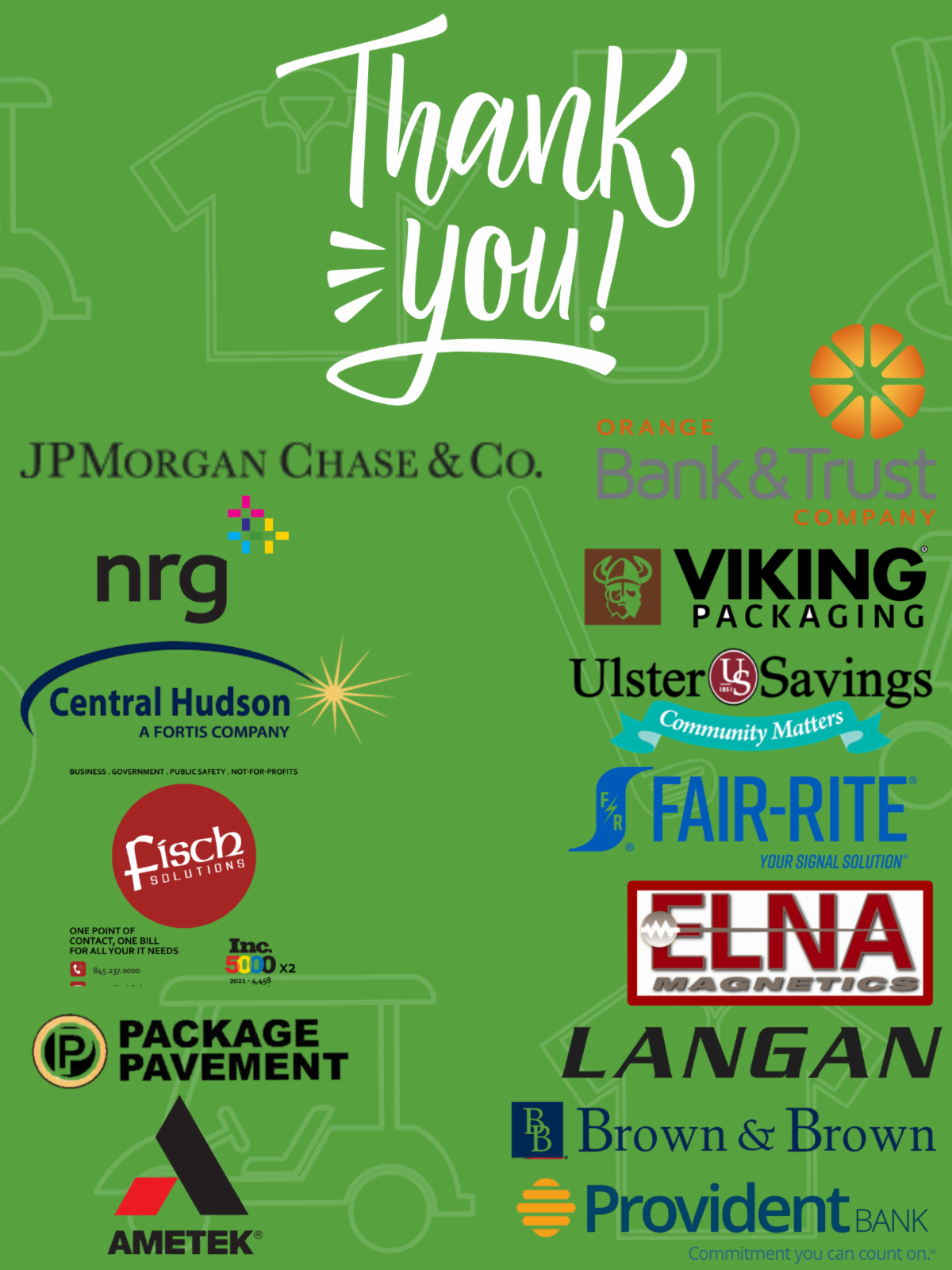
The 2026 Annual Golf Outing is officially SOLD OUT! Thank you to everyone who registered to golf and to our incredible sponsors for making this event such a success before the first tee.
Tee Sign Sponsorships are still available! Securing a tee sign sponsorship is a great way to support the Council and gain visibility throughout the course on event day.
We'd also like to extend our sincere thanks to our current sponsors for their generous support! Your partnership helps make this event, and the Council's work on behalf of manufacturers, possible.
Don't miss your chance to be part of this year's sold-out event. Reserve your Tee Sign Sponsorship today!
|
|
|
Mid-Hudson Summer STEAM Camps: Coding, Game Development and Robotics
|
|
|
Summer STEAM Camps start in Newburgh today, July 6th, and there's still time to get your teen (or one you know) into the lineup. OpenHub, a Newburgh based non-profit focused on developing technology skills in young people, has partnered with Newburgh Creates and Little Friends Learning Loft to run seven weeks of hands-on tech and creative programming for ages 7–14, no experience needed. The camps focus on coding, game development and robotics.
Junior Coding Lab — July 6–10
BUILDLab — July 13–17
CITYLab — July 20–24
GAMELab — July 27–31
GAMELab — Aug 3–7
ROBOLab — Aug 10–14
ROBOLab — Aug 17–21
Each week is Monday–Friday, 9 AM–4 PM, at our satellite space at 113 Liberty Street, Newburgh. Sign up for one week or several — enrollment is per week, so you can mix and match. If you'd rather see it in person first, stop by anytime between 9 AM and 4 PM — come take a look at what the kids are building and enroll on the spot. Thanks to a grant from the Community Foundation of Orange, Sullivan & Rockland, three scholarships are available for every camp week. If cost is what's holding you back, reach out and we'll help you get started.
If you have questions or want to learn more about a scholarships reach out to info@newburghcreatesfoundation.org.
|
|
|
Industrial Sewing Machine Operator Trade Now Offered through Council of Industry's Apprenticeship Program
|
|
|
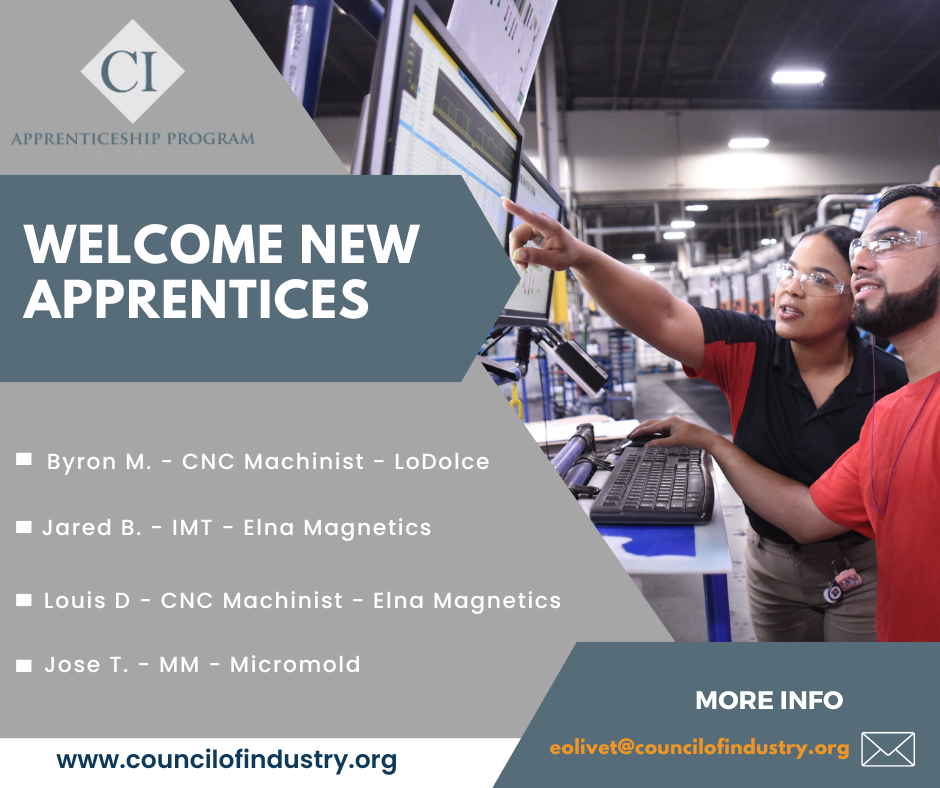
The Council of Industry is excited to officially add the Industrial Sewing Machine Operator Apprenticeship to the trades offered through the Manufacturing Intermediary Apprenticeship Program.
A one-year apprenticeship, a total of 2,000 hours, this program creates another pathway for individuals to build valuable skills while helping employers develop their workforce.
Industrial Sewing Machine Operator Apprentices will learn sewing and cutting techniques, operating commercial sewing machines, production/manufacturing processes, handling various materials, troubleshooting and safety procedures, along with related instruction outside of the workplace.
We're especially excited to partner with SUNY to provide the related instruction and look forward to seeing this trade continue to grow throughout the Hudson Valley.
Interested in learning more? Reach out to Emma Olivet for more information.
|
|
The Maintenance Mechanic Trade Is Among the Most in Demand MIAP Apprentice Trades
|
|
|
What does every manufacturing facility in the Hudson Valley have in common? Machines. Machines that cut, stamp, feed, convey, lift, and more. And all these machines need to be maintained and repaired. That is why so many Council members are using the Maintenance Mechanic Trade to develop skilled workers.
Industrial maintenance mechanics keep machines in working order. Many of these machines are increasingly run by computers. They use technical manuals, their understanding of industrial equipment, and observation to determine the cause of a problem. Examples of machines they may work with are robotic welding arms, automobile assembly line conveyor belts, and hydraulic lifts.
Work Processes (Skills learned on the Job) Approximate Hours for Maintenance Mechanic (Automatic Equipment):
· Preliminary Machine Familiarization: 600 hours
· Basic Maintenance: 1,000 hours
· Preventative and Predictive Maintenance: 1000 hours
· Machine Shop: 250 hours
· Troubleshooting: 3,000 hours
· Welding and Fabrication: 250 hours
· Rigging and Installing: 250 hours
· Electrical: 1,150 hours
· Fluid Systems and Piping: 500 hours
Total Hours: 8,000
Minimum of 144 Hours of Related Instruction (Classroom Learning) Required for Each Apprentice for Each Year:
· General Workplace Safety
· Blueprint Reading and Drawing
· Mathematics
· Fundamentals of Electronics and Computer Programming
· Sexual Harassment Prevention Training
· Trade Theory and Science
· Welding (certification as required)
· Cutting, Die, Jig and Fixture Design
· Layout and Production Methods
· Computer Software
· Communications
· Other Related Courses as Necessary
If you want to know more about this trade and if it might be right you’re your company contact Emma Olivet
Learn more about The Council of Industry’s Apprentice Program
|
|
|
Subscribers to the Manufacturing Career Hub can view candidate resumes and contact information by searching the Candidate ID Number in the iCIMS platform.
Not yet a participant of the Career Hub? Contact Emma Olivet directly for additional candidate details or to learn more about the recruiting initiative.
|
|
|
Candidate ID: 43615
Position Interest: Supply Chain Analyst | Operations | Strategic Management | Consulting
Skills: Financial modeling; CAPEX and NPV analysis; business case development; supply chain analytics; demand planning; inventory management; procurement and sourcing; ERP systems; Power BI; Microsoft Excel; VBA; SQL; Tableau; R Studio; KPI tracking; predictive analytics; project management; cross-functional collaboration; stakeholder communication; strategic planning; executive presentations; leadership development
Education: Syracuse University, Syracuse, NY — Master of Business Administration (MBA), Supply Chain & Sustainability (Expected May 2026)
State University of New York at New Paltz, New Paltz, NY — Bachelor of Science, Double Major in Management & Marketing (December 2021)
Dutchess Community College, Poughkeepsie, NY — Associate of Science, Business Administration (December 2018)
Availability: Open to Interviews
Location/Commute: Resides in the Hudson Valley, NY (Open to relocation)
MBA candidate specializing in Supply Chain and Sustainability with experience driving measurable cost savings, process optimization, and data-driven decision-making within manufacturing environments. Experience includes supply chain analysis, ERP data analysis, demand planning, inventory management, procurement support, and financial modeling. Successfully identified $600,000 in potential duty drawback recovery opportunities, uncovered $250,000 in pricing discrepancies through ERP analysis, and developed automated dashboards and forecasting tools using Power BI, Excel, and VBA to improve operational performance. Additional consulting experience includes evaluating utility cost strategies and identifying multimillion-dollar financing opportunities for a carbon capture startup. Strong analytical, leadership, and cross-functional collaboration skills with a proven ability to translate complex data into strategic business recommendations.
|
|
|
Candidate ID: 44229
Position Interest: Manufacturing | Maintenance | Skilled Trades | Production | Entry-Level Technician
Level: Entry-Level / Full-Time
Skills: Hand and power tools; mechanical aptitude; safety procedures; troubleshooting; documentation; teamwork; communication; facility security; incident reporting; basic maintenance; problem-solving; reliability
Education: Arlington High School, LaGrangeville, NY — High School Diploma
Certifications: New York State Security Guard License; CPR Certified
Availability: Open to Interviews
Location/Commute: Resides in the Hudson Valley, NY
Dependable and hardworking professional with experience in security, residential care, and education support. Demonstrates strong safety awareness, attention to detail, and the ability to follow established procedures in fast-paced environments. Experienced using hand and power tools, performing basic maintenance tasks, completing accurate documentation, and working collaboratively with diverse teams. Seeking an opportunity to build a long-term career in manufacturing or the skilled trades while expanding technical and mechanical skills.
|
|
Candidate ID: 44359
Position Interest: Quality Assurance | Quality Systems | Compliance | Training & Document Management | Regulatory Affairs
Skills:
Quality systems; GxP compliance; CAPA and deviation management; document management; policy and SOP development; quality review; inspection readiness; audit support; LMS administration; training governance; role-based curriculum management; electronic document management systems (EDMS); Veeva Vault; TrackWise; SharePoint; Visio; quality metrics and reporting; investigations; data integrity; cross-functional collaboration; process improvement; regulatory compliance
Education: University of Maryland — Bachelor of Science in Business
Availability: Open to Interviews
Location/Commute: Resides in the Hudson Valley, NY
Quality and Compliance professional with more than 20 years of experience supporting GxP-regulated pharmaceutical and animal health organizations. Extensive expertise in quality systems, regulatory compliance, training governance, document management, CAPA and deviation management, inspection readiness, and quality metrics. Proven success partnering with cross-functional and global teams to develop, implement, and maintain corporate policies, procedures, and role-based training programs while ensuring compliance with regulatory requirements. Experienced with Veeva Vault, TrackWise, LMS administration, and electronic document management systems, with a strong track record of driving process improvements, supporting audits and inspections, and strengthening organizational quality systems across global operations.
|
|
|
News for HR and Workforce Professionals
|
|
|
iCIMS June Insights – Employer Demand is Strong
|
|
|
The market is heating up, but the talent engine is not keeping pace. Over the last three months, job openings have consistently trended above baseline, with May coming in 9% higher than the May 2025 baseline. With the exception of a brief dip in February, employers have steadily added more open roles, signaling increased business demand and an appetite to grow headcount. Hiring, however, is not matching that level of demand. After a sharp decline in November 2025, hiring has struggled to recover and has only managed to rise above baseline in April and May and even then, just 1% above.
A major driver of this gap is the sustained drop in candidate applications. Application volume is now 11% below baseline last May, continuing a decline that started in February.
Over the past 3 months, frontline openings increased and ended the period in May 9% above baseline (May 2025). Unfortunately, hires stayed flat.
According to Challenger, Gray & Christmas U.S. tech companies announced 38,242 job cuts in May, the highest monthly total for the sector in two years. This brings the total announced tech cuts for 2026 to 123,653, a 65% increase over the same period last year.
Big Tech layoffs and slower growth in some information roles are releasing experienced talent back into the market, but the hiring that is happening is concentrated in specific sectors and roles.
The fastest-growing tech occupations include Computer Programmers, Software Developers, Database Administrators, and Computer and Information Systems Managers.
Read the Report
Learn more about the Council of Industry’s Manufacturing Career Hub Driven By iCIMS
Check out the MIAP Apprentice Program
|
|
|
13 Tips For Transforming HR Into A Strategic Business Partner
|
|
|
For years, human resources has been viewed primarily as a support function focused on processes and compliance. But as organizations face growing pressure to adapt and compete, that role is no longer enough. Today, HR leaders are expected to influence strategy and play a direct role in shaping business outcomes. Making that shift requires a seat at the table, but more importantly, there needs to be a fundamental change in how HR operates and how its impact is measured. Here, Forbes Human Resources Council members share practical approaches for transforming HR into a strategic partner that drives meaningful, measurable results. Among their recommendations:
Operate As A Data-Driven Function - By turning workforce data into predictive insights and clearly presenting them in strategic discussions, HR shifts from reporting to guiding decisions on retention, performance and cost. Alignment with finance ensures talent strategy is measured with the same rigor as revenue.
Automate Low-Value Work To Focus On Strategy - This shift allows HR to move from tactically supporting the business to strategically shaping how work is designed. As HR’s impact on outcomes becomes clear, it earns a seat at the table where strategy is defined.
Empower Managers To Own Leadership And Performance - HR becomes strategic when managers own leadership. Employees should look first to their direct leader for coaching and accountability. HR strengthens leaders and designs performance systems, stepping in only when escalation is necessary.
Align People Strategy With Business Strategy - Embedding HR leaders within the business and ensuring they have a voice at the executive table allows HR to shape workforce design, culture and leadership capability. A people-centric approach ensures decisions drive both performance and meaningful outcomes.
Measure Impact, Not Activity - This shifts the focus from administrative oversight to organizational architecture, ensuring every people-centric initiative directly influences the bottom line and delivers organizational value.
Advise Leadership On Talent And Organizational Strategy - HR business partners demonstrate that decisions focused on people excellence drive business results by enhancing company culture, organizational performance and competitive advantage.
Read all 13 recommendations at Forbes
|
|
|
HR Is Still ‘Experimenting At The Margins’ On AI, Report Says
|
|
HR is still adapting to artificial intelligence rather than taking the lead on redesigning the workflow around AI, according to a report released by the Institute for Corporate Productivity (i4cp) Tuesday. After surveying more than 1,300 business and HR leaders worldwide, i4cp researchers determined that even though workplaces are moving past “isolated AI use cases,” AI implementation is still a “series of disconnected experiments,” according to a Tuesday statement.
According to i4cp researchers, firms with a “strong” AI culture tend to report that the tech has enhanced HR’s impact at a rate 4.5 times higher than other organizations. These employers were also more likely to spend time advising managers on AI — a finding that re-emphasizes how learning and development and AI adoption go hand in hand. What does the process of AI upskilling entail for HR? It’s not just a matter of teaching workers how to engage with AI but also triaging which workers will need to be upskilled. “What we see in future-ready organizations is a fundamentally different role for HR,” i4cp’s Brekken said. Instead of just supporting the business, HR is “actively shaping strategy, using AI to drive better decisions, and helping the organization adapt faster,” Brekken added.
Read more at HR Dive
|
|
Mid-Sized Firms Thrive As AI Reshapes Workforce Dynamics
|
|
As AI reshapes how work gets done, some HR leaders say the link between workforce size and business performance is beginning to break down. There is evidence of this from McKinsey, which estimates that generative AI could lift U.S. labor productivity by 0.5%-0.9% a year through 2030, helping companies scale up without proportional hiring. “Organizations can increase output, accelerate decision-making and expand market reach without scaling headcount at the same rate,” says Ronni Zehavi, CEO and co-founder of HR technology platform HiBob. He predicts that the organizations that pull ahead will be the ones that can redeploy talent quickly, pair human judgment with machine intelligence and out-adapt their competitors—not necessarily the ones with the largest workforces.
Zehavi says the companies getting it right are organizing around skills, capabilities and outcomes rather than static job descriptions. They are also pushing decision-making closer to where work actually happens. Mid-sized companies often have an advantage because they have fewer legacy structures to unwind, according to Zehavi. He says orgs in this size range can often move from experimentation to execution faster. “The winners of the AI era won’t necessarily be the organizations with the biggest AI budgets,” Zehavi says. “They’ll be the organizations that can translate technological capability into organizational agility.”
Read more at HR Executive
|
|
|
New York Passes A Bill Aimed At Halting ‘Ghost Jobs’
|
|
|
A bill passed June 2 by New York state lawmakers aims to crack down on “ghost jobs” — jobs that don’t exist or aren’t intended to be filled — by requiring employers with 100 or more employees and third-party job posting platforms to disclose if, and when, hiring is expected. Specifically, under S8877, if the job is intended to be filled in 90 days or less, the print ad or digital post must state in bold, capital letters: “This position is for a current vacancy, and the employer intends to fill this position by (date).” If the job is intended to be filled in more than 90 days, the ad or post must state in bold, capital letters that the job is not for a current vacancy and is intended to be filled “no sooner than (date).” If there is no expectation the job will be filled, the ad or post must state in bold, capital letters: “This position is not for a current vacancy, but the employer is seeking resumes to review in the future when jobs become available.”
Companies advertise ghost jobs for various reasons. For example, companies may want to evaluate a potential pool of candidates, signal to existing employees that they are replaceable or attract potential investors by suggesting the company is growing, the report said. Ghost jobs can also result from third-party online job boards automatically copying postings from other websites, CRS added. The bill is awaiting delivery to Gov. Kathy Hochul.
Read more at HR Dive
|
|
|
USDOL's Assistant Labor Secretary Henry Mack Urges Employers To Use Job Training Funds
|
|
|
Henry Mack, assistant secretary of the Labor Department, has urged employers to use federal job training funds to prepare for a shifting labor market. Mack has emphasized the importance of skills-based hiring and the need for education systems to adopt competency-based learning, noting that many employees have more formal education than their jobs require, highlighting a disconnect between education and job requirements.
DOL announced last year an interagency agreement with the Department of Education to create a national skills credentialing framework using Learning and Employment Records, which the agencies described as “machine-readible, industry-recognized competency statements” that captured workers verified skills. LERs could prove to be more effective and comprehensive signals of workers’ skills than traditional transcripts or self assertions on LinkedIn profiles, Mack said. But employers need to buy into the idea; “Otherwise, it’s just going to be sort of a one-way street.” Last year, DOL announced $30 million in funding for training in critical workforce shortages such as skilled trades and artificial intelligence. In April, it launched a website to provide organizations information on building AI literacy as well as AI-focused apprenticeships.
Read more at HR Dive
|
|
|
What 700 STEM Students Think of Manufacturing
|
|
|
I have reviewed more than 700 student applications to the National STEM Festival. Not one of them used the word “manufacturing," but many are already designing, prototyping, testing and building in ways modern manufacturing demands. More than half of those projects focus on health and medicine. Nearly 40% use AI as a core tool—not a talking point, a baseline. Students are modeling energy systems, designing diagnostics, building robotics and creating tools that interact directly with the physical world.
This is real work, aimed at real problems. This is what modern manufacturing looks like. They just don't know to call it that. And we haven't told them. The interest exists. The aptitude exists. What's missing is the connection between what students are already doing and the industries that desperately need them to do it. The fix does not require new funding or restructured curriculum. It requires the people who shape how students understand the world—teachers, employers, policymakers—to make one honest, consistent connection: The problems you are already working on live inside manufacturing. That field belongs to you.
Read more at Foundry Magazine
|
|
|
Workforce Pell Is Here, Connecting Government Funding to In Demand Short Term Workforce Training
|
|
|
Workforce Pell started July 1, but the date is neither a deadline nor a due date. The arrival of the new financial aid program is the beginning of implementation, following years of advocacy. Now Pell Grants can help eligible students pay for certain short-term workforce programs designed to prepare them for in-demand jobs for the first time. And officially, as Under Secretary Kent announced at the National Association of Student Financial Aid Administrators (NASFAA) conference yesterday, the U.S. Department of Education can now begin program applications for Workforce Pell eligibility, once they are approved by their state.
This policy creates a new opportunity for students, colleges, employers, and states to connect financial aid with short-term pathways into the workforce. But the first measure of success should not be whether every eligible student can access a grant on day one. It should be whether states, colleges, and the federal government build a reliable, accountable, and student-centered program that can grow over time. If implementation is done carefully, Workforce Pell can move from a long-sought policy idea to a durable part of the student aid landscape. And that's why today should be viewed as the exciting beginning, not the finish line.
Read more at The Association of Community College Trustees (ACCT)
|
|
|
Insight Exchange: Expert-Led Video Series for Manufacturers
|
|
|
Insight Exchange: Expert-Led Video Series for Manufacturers
The Insight Exchange is a new video series from the Council of Industry, offering manufacturers expert insights and strategies—accessible anytime. Each session features industry professionals covering key topics like workforce development, regulatory updates, and emerging technologies.
|
|
|
|
What’s a Health Care Consortium — and Why It Could Save You Money
Presented by Brown and Brown
|
|
|
In this episode of Insight Exchange, Wes Price from Brown & Brown joins Harold King to explain how the consortium works, why it was created, and how Council members can take advantage of this opportunity. Learn how pooling with other manufacturers can lead to long-term cost savings, rate stability, and better access to claims data to help manage your employee benefits more effectively.
About Brown and Brown
Brown & Brown Insurance is one of the largest and most respected independent insurance brokerages in the United States. With a strong local presence and national reach, they provide a wide range of insurance solutions, including business, personal, employee benefits, and risk management services. Known for their customer-first approach and deep industry expertise, Brown & Brown helps clients navigate complex insurance needs with personalized service and strategic guidance.
Learn More
Brown & Brown: us.bbrown.com
For more info, visit www.councilofindustry.org
|
|
|
The Council of Industry focuses on advancing manufacturing excellence, workforce innovation, advocacy, and strategically positioning its members within the Hudson Valley region and beyond. It is the premier manufacturers' association for Southeastern New York, representing over 160 member firms. Grow, Train, and Succeed with the Council of Industry.
Council of Industry - www.councilofindustry.org - (845) 565-1355
If you’re part of a Council of Industry member company and not yet subscribed, email us. If you’re not a Council member, become one today
|
|
|
|
|