|
The HR Newsletter of the Council of Industry
August 4th, 2026
|
|
|
HR Sub-Council Meeting at SUNY New Paltz's School of Business Talks Internships with SUNY
|
|
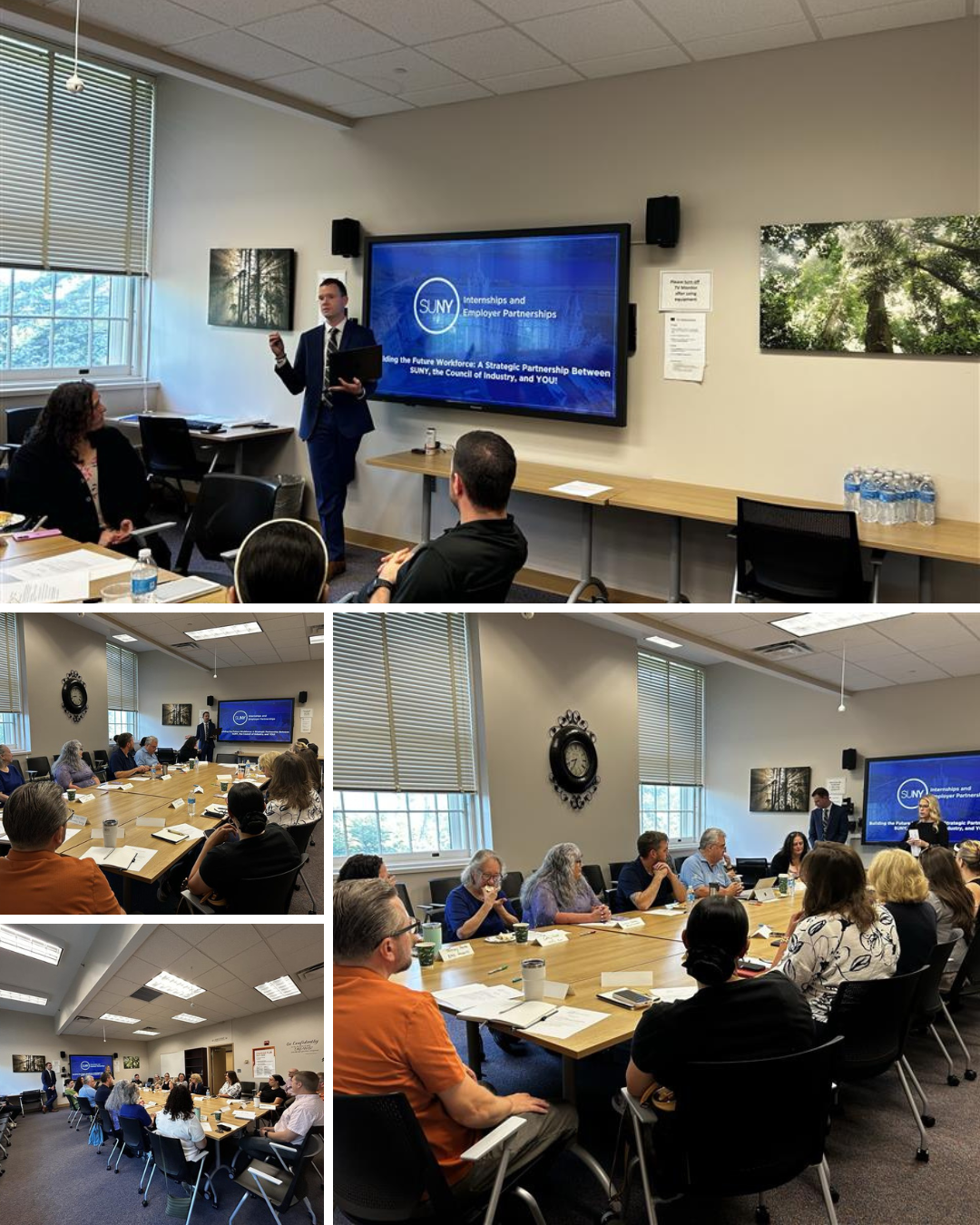
The Council of Industry's quarterly HR Sub-Council recently brought together human resources professionals from across the Hudson Valley to discuss strategies for strengthening the region's manufacturing workforce through internships and employer partnerships.
The meeting featured a presentation by Brandon K. Aldous, Director of Internships and Employer Partnerships, and Gaston Neville, Regional Internship Coordinator – Mid-Hudson Region, from The State University of New York. They shared information on internship programs, employer engagement opportunities, and resources available to help manufacturers connect with college students seeking meaningful work experience.
The discussion highlighted the important role internships play in building a strong talent pipeline, giving employers access to emerging talent while providing students with valuable hands-on experience in manufacturing and related fields. Attendees also learned about ways to partner with SUNY institutions to recruit interns and develop future employees.
The Council extends its appreciation to SUNY New Paltz's School of Business for hosting the meeting and providing a welcoming environment for our HR Sub-Council members. We also thank Brandon K. Aldous and Gaston Neville for sharing their expertise and highlighting the many opportunities available through SUNY's internship and employer partnership initiatives.
Want to learn more about the SUNY Intermediary Internship Program? Reach out to Emma Olivet
|
|
|
Annual Golf Outing SOLD OUT! - Tee Sign Sponsorships Available Until August 10th
|
|
|
The 2026 Annual Golf Outing is officially SOLD OUT! Thank you to everyone who registered to golf and to our incredible sponsors for making this event such a success before the first tee.
Tee Sign Sponsorships are still available! Securing a tee sign sponsorship is a great way to support the Council and gain visibility throughout the course on event day.
We'd also like to extend our sincere thanks to our current sponsors for their generous support! Your partnership helps make this event, and the Council's work on behalf of manufacturers, possible.
Don't miss your chance to be part of this year's sold-out event. Reserve your Tee Sign Sponsorship before it's too late!
|
|
|
Annual Luncheon & Expo is November 20
|
|
|
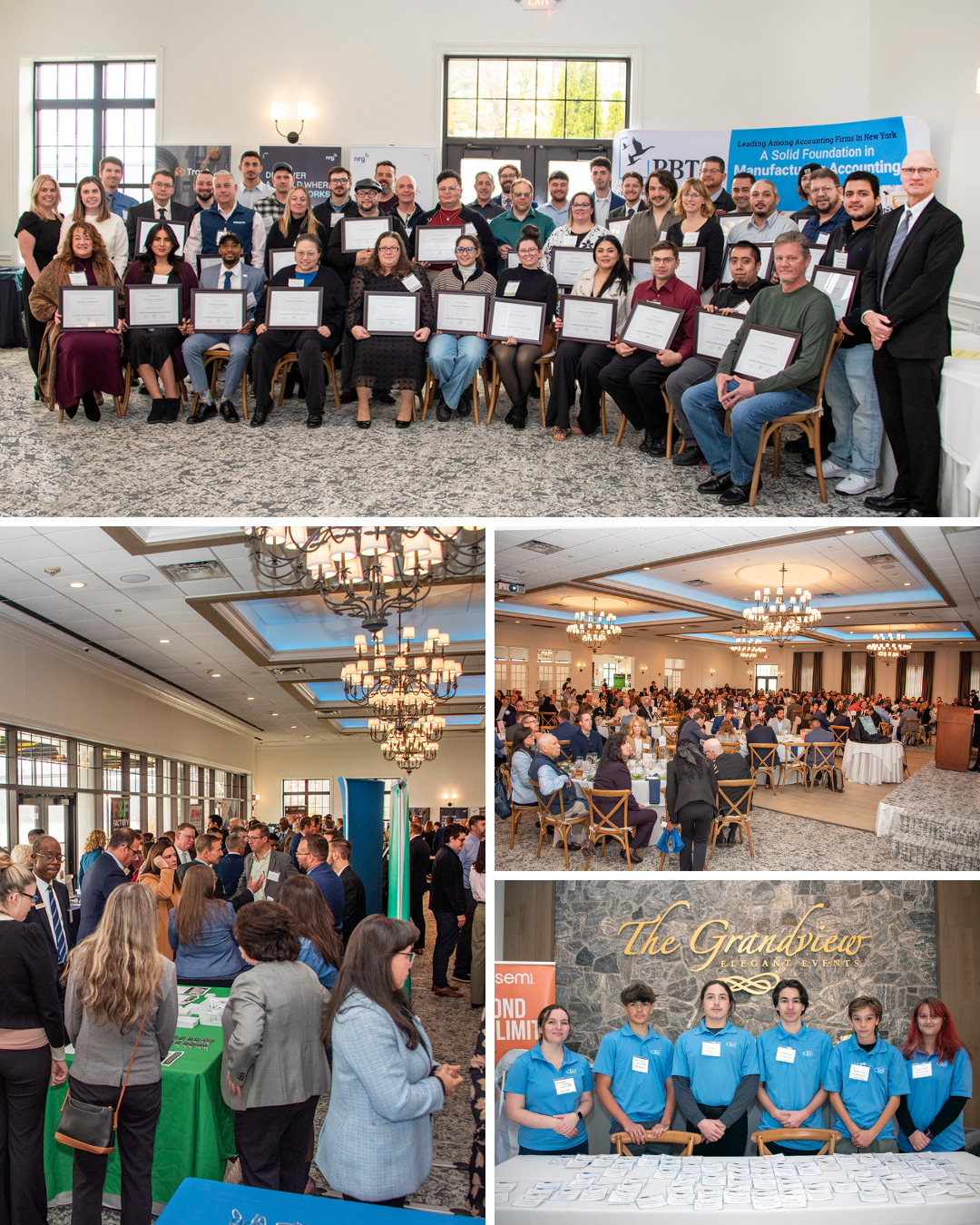
The Council of Industry's 2026 Annual Luncheon & Member Expo will take place on Friday, November 20, from 11:00 a.m. to 2:00 p.m. at The Grandview in Poughkeepsie.
As one of the Council's signature events, the Luncheon brings together manufacturers, associate members, community partners, educators, and industry leaders from across the Hudson Valley for an afternoon of networking, collaboration, and celebration.
The event begins with the Member Expo, where attendees can connect with fellow members, discover new products and services, and strengthen relationships with businesses that support manufacturing throughout the region.
Following the expo, guests will enjoy lunch, the Council's annual program, and the recognition of graduates from the Certificate in Manufacturing Leadership program.
This year's keynote speaker, Neal Moriarty, IBM's Innovation Studio Leader and Senior Quantum Ambassador, will provide an engaging look at one of the most important emerging technologies: quantum computing. During his presentation, he will explore the current state of quantum computing, its practical implications, and what manufacturers should know as the technology continues to evolve.
|
|
|
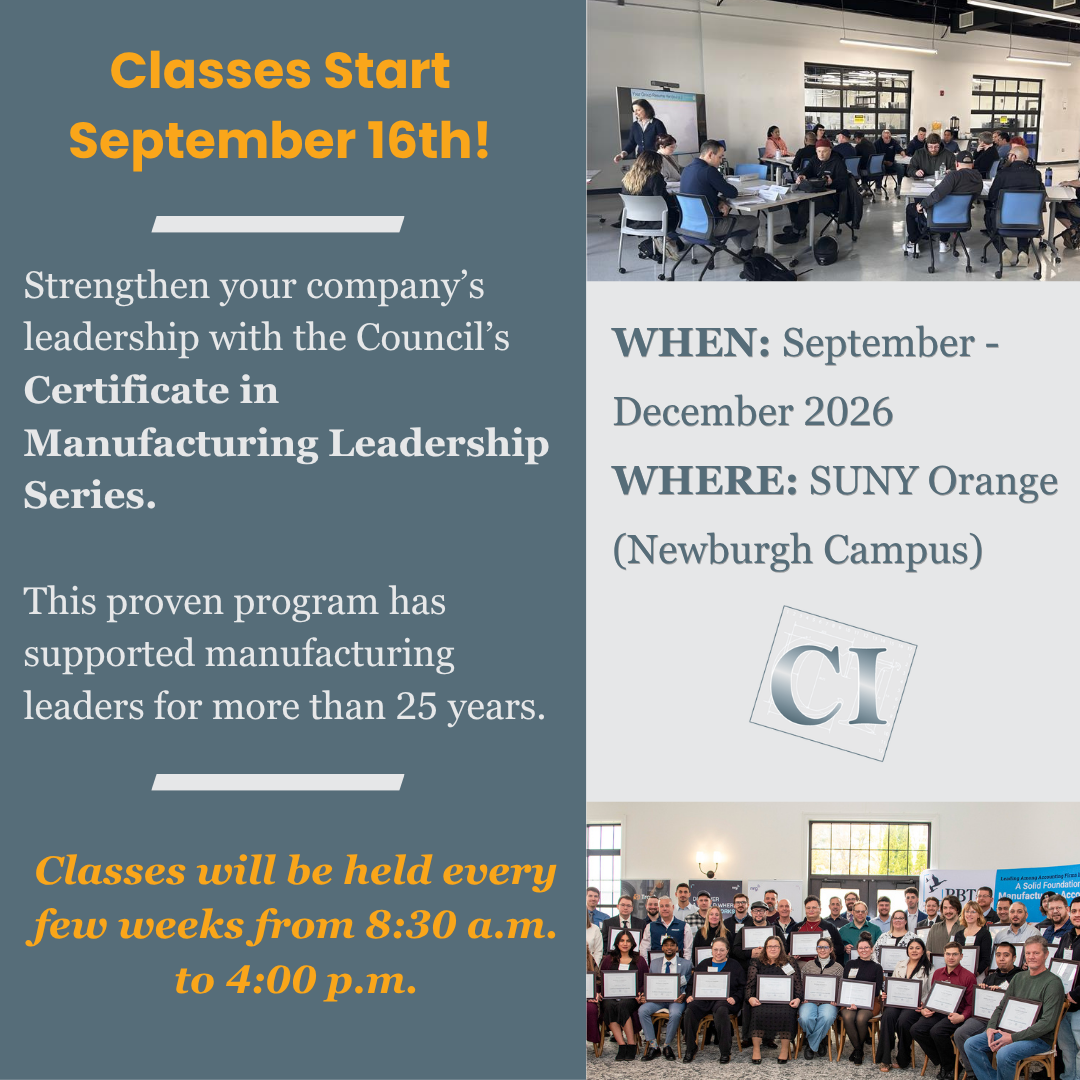
Registration is now open for the Council of Industry's September - December 2026 Certificate in Manufacturing Leadership Series, being held at SUNY Orange's Newburgh Campus.
Through this series, participants will gain practical skills in leadership, communication, coaching, human resources, lean manufacturing, financial performance, safety, and more.
Whether you're preparing a new supervisor or investing in an experienced leader, this series is an investment in the long-term success of your people and your business.
Secure your spot today!
|
|
|
Council of Industry, DCC and RIT Team up to Provide Lean Six Sigma Yellow Belt Training in October
|
|
|
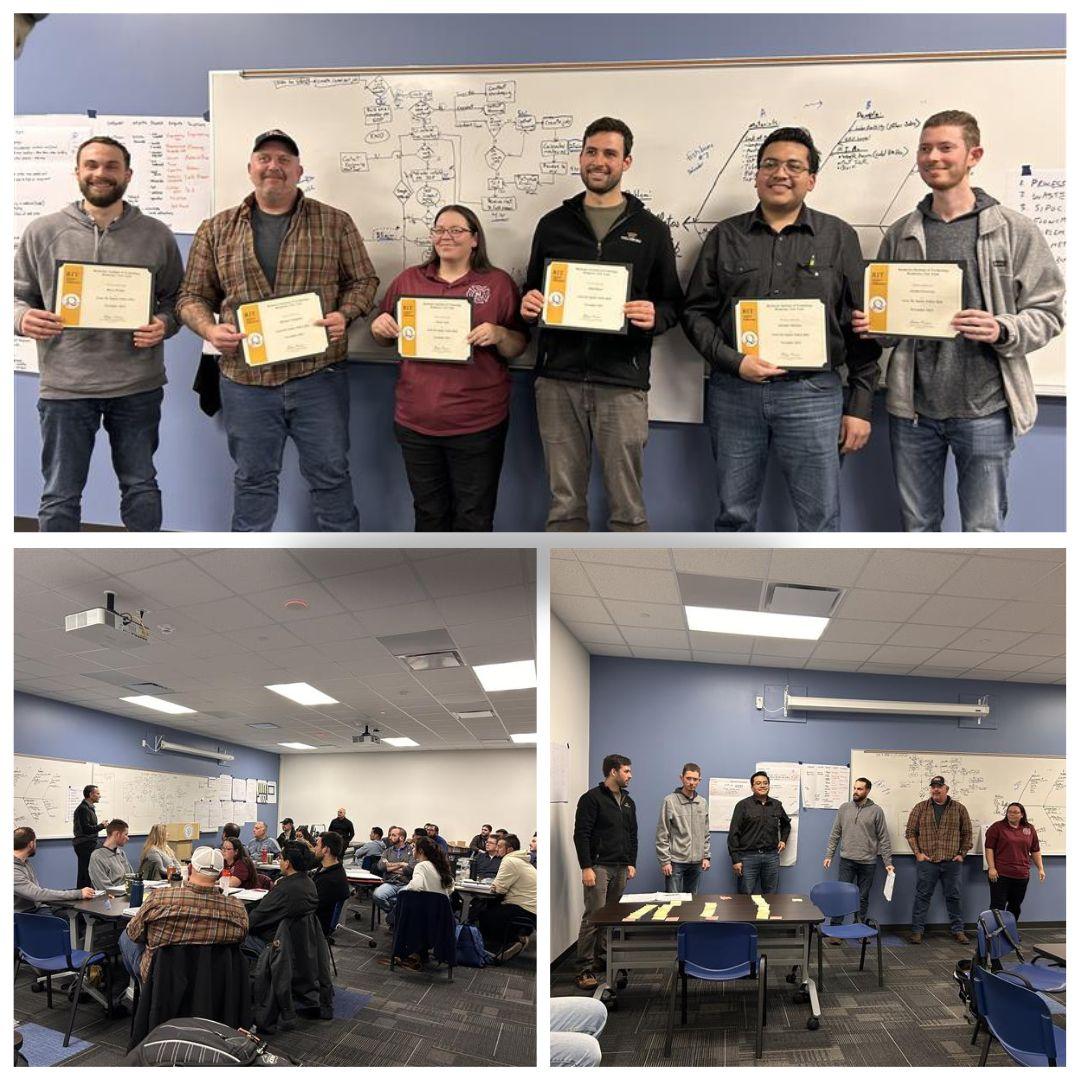
The Council of Industry is pleased to be offering Lean Six Sigma: Yellow Belt this Fall! Attendees will be introduced to the Define, Measure, Analyze, Improve, and Control improvement process and some of the tools associated with each stage.
The following topics will be focused on during the training:
- Resistance to Change
- 5-S and Visual Controls
- Team Building
- Problem Solving Process
- Statistical Thinking
During this interactive Yellow Belt training, each group of participants will identify opportunities within their respective work areas and ways to improve those areas utilizing the taught problem-solving tools. The teams will present their identified work area opportunity and suggested solutions.
When: October 13th, 14th and 15th, 8:30 - 4:00 PM
Where: DCC @ Fishkill
Contact Emma Olivet for more information.
|
|
|
The Council of Industry has long been a leader in consortium-based training for Mid-Hudson manufacturers. Our model of bringing a small numbers of employees from multiple companies together benefits from the diverse experiences of the participants and has proven to be very cost effective.
While we will continue to deliver training via this model we now also have the resources to deliver customized training to individual manufacturers as well.
Through collaboration with our education and consulting partners we can deliver a wide range of training courses including, but not limited to:
- Leadership
- Lean
- Project Management
- Blueprint reading
- SolidWorks and other design software
- Supply chain management
- And more!
Want to know more? Contact Harold King
|
|
|
Registered Apprentices Receive Between $5,000 - $8,000 in Tuition at SUNY to Complete Related Instruction
|
|
|
One of the many advantages of participating in the Manufacturing Intermediary Apprenticeship Program is access to SUNY tuition funding.
Eligible registered apprentices may receive between $5,000 and $8,000 to cover the cost of SUNY trade-related coursework that complements their on-the-job training. This funding enables employers to develop highly skilled employees while reducing the financial burden of formal technical education.
Depending on the institution and semester offerings, courses may be available in person, online, or in a hybrid format, providing flexibility that allows apprentices to continue working while building the technical knowledge needed to excel in their roles and grow thier career.
For manufacturers looking to strengthen their workforce, Registered Apprenticeship offers a practical, cost-effective way to invest in employee development while giving apprentices access to valuable educational opportunities.
Reach out to Emma Olivet to learn more.
|
|
Industrial Manufacturing Technician (IMT) Apprentice Trade Provides Foundational Skills
|
|
|
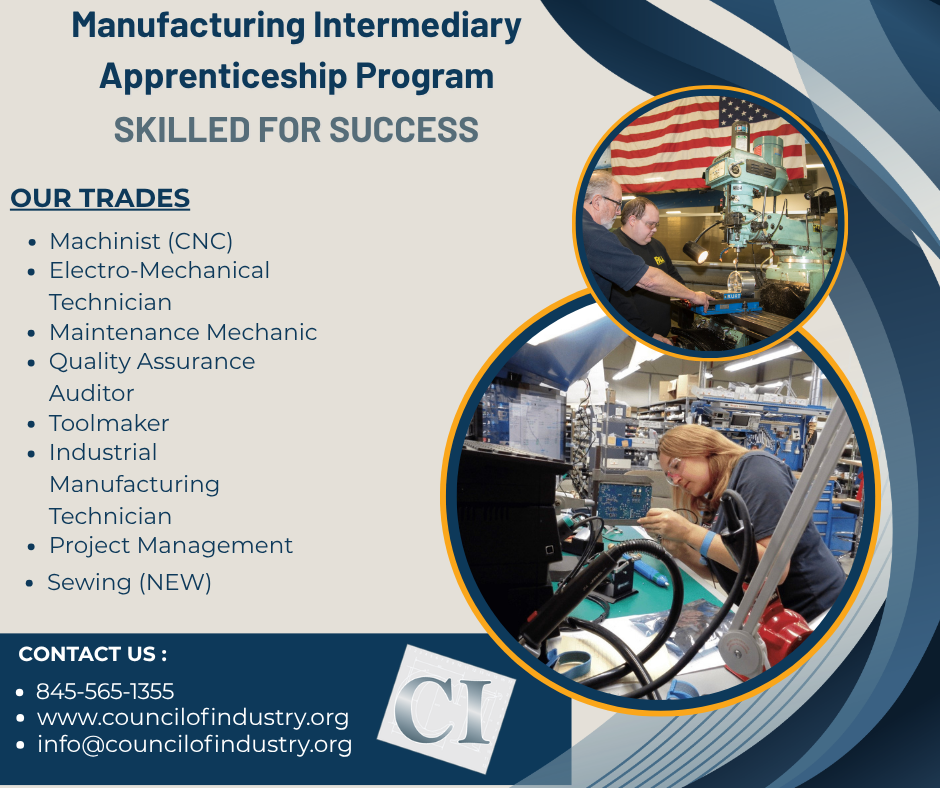
The Council of Industry sponsors 7 manufacturing trades through The Manufacturers Intermediary Apprenticeship Program (MIAP.) These are New York State Department of Labor approved trades ranging in length from 12 months to 4 years. These apprenticeships consists of two pieces: On-the-Job Training (OJT) and Related Instruction (RI).
OJT allows an apprentice to learn firsthand from a skilled craftsperson who will demonstrate and share their experience in the field
In RI, apprentices will learn the theory - and knowledge - based components of the craft. They must complete 144 hours of classroom or online training each year.
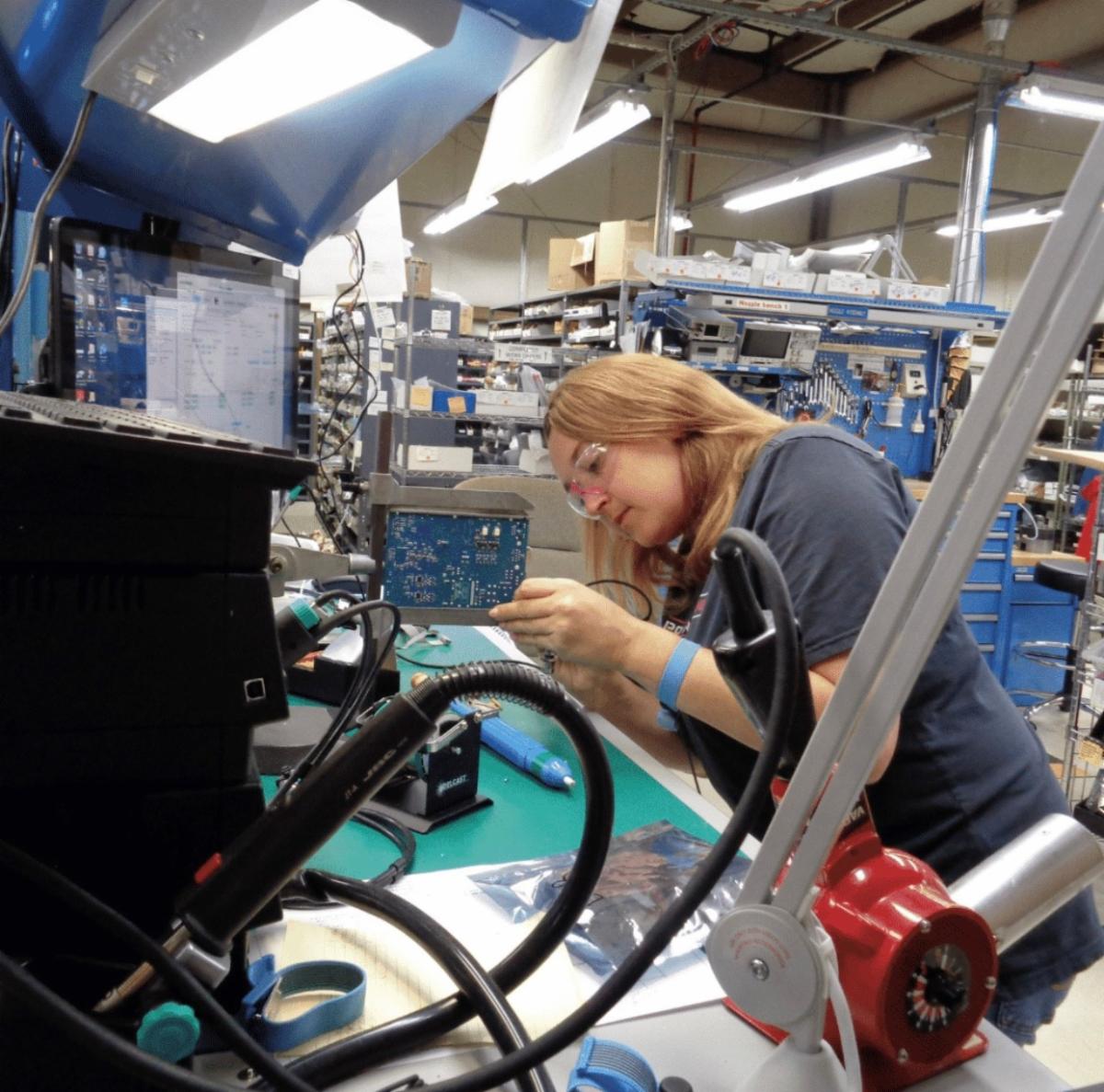
The Industrial Manufacturing Technician (IMT) introduces people to work on the factory floor. It provides training in safety, equipment set-up and maintenance, quality systems and more. It is ideal for entry level workers and provides a solid foundation for further training in other trades such as CNC Machinist, Toolmaker, Maintenance Mechanic or Electro Mechanical Technician.
Work Processes (Skills learned on the Job) Approximate Hours for Industrial Manufacturing Technician (IMT):
Safety and Workplace Orientation: 100 hours
Production Equipment Set-Up: 500 hours
Production Equipment Operation: 900 hours
Quality Production and Quality Assurance: 700 hours
Routine Equipment Maintenance: 100 hours
Inventory and Material Processes: 100 hours
General Business Knowledge: 50 hours
Continuous Improvement: 100 hours
Local Options: 150 hours
Total Hours: 2,700
Minimum of 144 Hours of Related Instruction (Classroom Learning) Required for Each Apprentice for Each Year:
Safety, Health and the Workplace
General Workplace Safety
First Aid & CPR (minimum 6.5 hours)
Personal Protective Equipment (PPE)
Right-to-Know/Safety Data Sheets (SDS)
Asbestos Awareness (if present – see Attachment to Appendix B)
Lockout/Tagout (LO/TO)
Sexual Harassment Prevention Training (minimum 3 hours)
Occupational Safety and Health Administration (OSHA) 10-Hour General Industry
OSHA 30-Hour General Industry (at option of sponsor)
If you want to know more about this trade and if it might be right you’re your company contact Emma Olivet
Learn more about The Council of Industry’s Apprentice Program
|
|
|
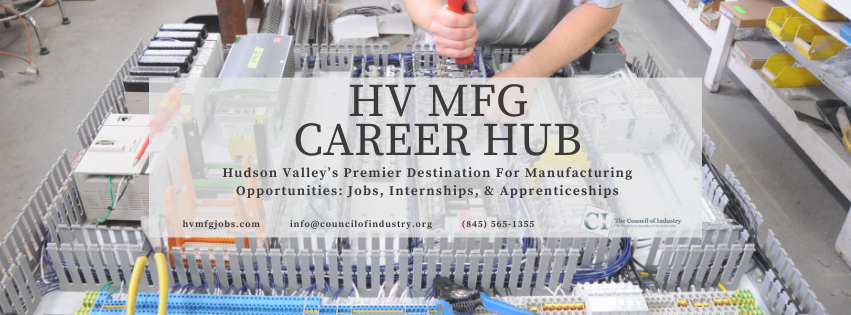
Subscribers to the Manufacturing Career Hub can view candidate resumes and contact information by searching the Candidate ID Number in the iCIMS platform.
Not yet a participant of the Career Hub? Contact Emma Olivet directly for additional candidate details or to learn more about the recruiting initiative.
|
|
|
Candidate ID: 44554
Position Interest: Operations Manager / Logistics Manager / Supply Chain Manager / Distribution Operations / Project Manager
Level: Mid-Level / Full-Time
Skills: Operations management; logistics and supply chain coordination; transportation management; personnel leadership; strategic planning; project management; process improvement; Lean Six Sigma Black Belt; change management; Scrum; risk management; contract oversight (COR); inventory and asset management; regulatory compliance; SOP development; ERP systems (SAP); Microsoft Office 365; team building; cross-functional collaboration; warehouse operations; dispatch coordination; customer service
Education: Marist University, Poughkeepsie, NY — Bachelor of Science in Criminal Justice, Cum Laude (May 2022)
Availability: Open to Interviews
Location/Commute: Based in the Hudson Valley, NY
Experienced operations and logistics leader with over four years of leadership experience managing complex, large-scale logistics and transportation operations in support of U.S. Army missions throughout Europe and Africa. Proven success leading cross-functional teams, overseeing multimillion-dollar assets, coordinating domestic and international operations, and ensuring compliance with regulatory and contractual requirements. Brings expertise in supply chain operations, process improvement, project management, and personnel leadership, complemented by Lean Six Sigma Black Belt, Change Management, and Scrum certifications. Recently completed an operations management training program with SRS Distribution to support a successful transition into the private sector.
|
|
Candidate
Position Interest: Manufacturing Technician / Industrial Maintenance Technician / Machine Operator / Production Technician / Apprentice
Level: Experienced / Full-Time
Skills: Manufacturing operations; machine operation; industrial equipment; forklift operation; clamp truck; fork truck; stinger truck; warehouse operations; production line operations; troubleshooting; quality-focused; preventive maintenance; mechanical aptitude; organization; teamwork; continuous improvement; fast learner
Education: Previously enrolled in the Council of Industry Registered Apprenticeship Program, training to become a Journeyman Machinist.
Availability: Open to Interviews
Location/Commute: Hudson Valley, NY
Manufacturing professional with over 10 years of experience in high-volume production environments. Currently completing a Registered Apprenticeship through the Council of Industry while training to become a Journeyman Machinist. Brings extensive hands-on experience operating a wide variety of manufacturing equipment, including paper machines, bundlers, stackers, forklifts, clamp trucks, fork trucks, and stinger trucks. Known for being highly organized, mechanically inclined, and a quick learner with a strong work ethic. Passionate about manufacturing, continuous improvement, and working collaboratively to support safe, efficient production operations.
|
|
|
News for HR and Workforce Professionals
|
|
|
iCIMS July Insights – Employer Appetite for Workers Builds. Manufacturing Hiring ‘Selective.’
|
|
|
In the U.S., employer appetite has been building for months, but the signals suggest it is getting harder to turn that intent into hires. Openings are rising while the candidate pool at the top of the funnel is thinner than last year, leaving recruiters to reconcile ambitious growth plans with fewer applicants and a tougher fight for quality. June continues a pattern that has been building since early spring. Openings were up 19% over the June 2025 baseline while hiring also increased, now sitting at 6%. On its own, that signals a healthy labor market. The tension appears in the gap between the two, as demand is rising faster than organizations are converting that demand into hires.
Manufacturing sits in a strange spot in the labor market: According to JOLTs data, manufacturing job openings started 2026 near the half-million mark, up 11% year-over year, while hires and separations declined. Employment nudged up in January, dipped in February and recovered some ground in March, pointing to selective rather than broad-based expansion. Longer-term projections still see solid opportunities in advanced production, engineering and maintenance, even as overall job growth is driven more by sectors like healthcare.
Sales and frontline leadership anchor demand Demand for frontline leadership is surging, with openings for First-Line Supervisors of Production and Operating Workers up 59% year over year. That points to a constraint not just in equipment or supply chains, but in the people who can run teams, manage throughput and keep lines stable. In a market where openings outpace hires, supervisors are a primary lever for productivity and safety.
Technical and operational expertise remains a top priority Industrial Engineers show a 39% year-over-year increase in openings, and General Maintenance and Repair Workers are up 30%. Those gains signal a push for smarter processes and more reliable uptime, from system design to day-to-day repairs that prevent costly downtime. Future capacity is being built as much through better systems and maintenance as through added headcount.
Core production support holds steady Openings for All Other Production Workers have increased 29% year-over-year, even in a sector that is not expanding uniformly. Manufacturers still need hands on the line to execute what engineers and supervisors design. The message for readers is straightforward: manufacturing hiring is concentrating in frontline leaders, system thinkers and core production staff, and talent decisions should match that mix rather than treating all roles as equal in impact.
Read the Report
Learn more about the Council of Industry’s Manufacturing Career Hub Driven By iCIMS
Check out the MIAP Apprentice Program
|
|
|
How Mentorship and Workplace Support Help Attract and Retain Women in Manufacturing
|
|
|
Women comprise more than half of the nonfarm workforce in the United States, but they make up only 28.7% of the manufacturing workforce. But what if there was a simple strategy to successfully recruiting and retaining women in manufacturing? It turns out that mentoring and connection-building can be both a way into the field for women and an even stronger reason to stay.
In the 2025 Career Advancement in Manufacturing survey from the Women in Manufacturing Association (WiM), Thomas and Xometry, respondents chose mentorship programs (53%) and leadership and management development (53%) as their most valuable upskilling activities. In addition, Deloitte’s 2025 Gen Z and Millennial Survey found that 86% of Gen Z and 84% of millennial workers desire mentorship and guidance from their experienced colleagues.
“Manufacturing and STEM are very much male dominated still,” says Nashay Naeve, president of the Engineered Plastic Components business unit at global manufacturer of high-performance industrial components Tsubaki-Nakashima. “Coming into these fields, [women] don’t always see ourselves reflected in our communities, and so it’s helpful to have a mentorship or somebody that you can lean on, whether it’s a woman or a man—but somebody that can really help you understand what a career path might look like.”
Read more at Industry Week
|
|
|
HR Is Still ‘Experimenting At The Margins’ On AI, Report Says
|
|
HR is still adapting to artificial intelligence rather than taking the lead on redesigning the workflow around AI, according to a report released by the Institute for Corporate Productivity (i4cp) Tuesday. After surveying more than 1,300 business and HR leaders worldwide, i4cp researchers determined that even though workplaces are moving past “isolated AI use cases,” AI implementation is still a “series of disconnected experiments,” according to a Tuesday statement.
According to i4cp researchers, firms with a “strong” AI culture tend to report that the tech has enhanced HR’s impact at a rate 4.5 times higher than other organizations. These employers were also more likely to spend time advising managers on AI — a finding that re-emphasizes how learning and development and AI adoption go hand in hand. What does the process of AI upskilling entail for HR? It’s not just a matter of teaching workers how to engage with AI but also triaging which workers will need to be upskilled. “What we see in future-ready organizations is a fundamentally different role for HR,” i4cp’s Brekken said. Instead of just supporting the business, HR is “actively shaping strategy, using AI to drive better decisions, and helping the organization adapt faster,” Brekken added.
Read more at HR Dive
|
|
Employers, Workers At Odds Over Future Of Upskilling
|
|
Does the burden of future-readiness belong to employers or workers? DeVry University’s third annual report on the state of upskilling in the U.S. reveals a quiet but growing conflict at the heart of this question. The research exposes what the university refers to as a “Silent Standoff” characterized by short-term certainty and long-term avoidance among workers and employers. While both groups stand strong in the conviction that their efforts are adequate for the time being, they are becoming increasingly unsettled by what is coming next. As industries evolve and adapt, so do the responsibilities and roles within organizations, leading to an increased demand for diverse skill sets. At this rate, the World Economic Forum predicts that 59 percent of the global workforce will need to upskill by 2030. In my view, there seems to be a disconnect between this need and current levels of upskilling activity.
According to a 2024 Gallup poll, less than half of U.S. workers participated in training or education to build new skills. DeVry’s research shows workers currently have confidence, with a staggering 85 percent feeling secure in their skills and believing they are qualified to remain employable. On the other hand, 69 percent of employers worry that their workforce lacks the skills needed to succeed. This dynamic widens the gap between perceived stability and actual future readiness, leaving the future of work less certain than ever. Access to and responsibility for upskilling fuel this widening gap. While 75 percent of employers claim they are doing enough to keep workers’ skills relevant, nearly a third of workers (32 percent) disagree and feel their employers fall short, according to DeVry’s research. Many workers underestimate the seismic shifts on the horizon, and employers struggle to bridge the gap between awareness and incentives for continuous learning.
Read more at Training Magazine
|
|
|
Ford’s Rehire Wave Has HR Leaders Rethinking How AI Layoffs Get Decided
|
|
|
Ford has hired back 350 veteran engineers over the past three years after automated inspection systems missed design and quality defects that experienced staff would have caught. Analysts and reporters have started calling the pattern the “AI boomerang,” and Ford isn’t an isolated case. Robert Half research shows that 3 in 10 employers eliminated positions after implementing AI, then later added those roles back. A related breakdown of the survey put the figure at nearly a third (32%) of hiring managers, with finance, tech and HR reporting the highest rates.Visier’s analysis of 2.4 million employees across 142 companies found the overall rehire rate after layoffs sits at about 5.3%, a pattern the firm says has shown up for years.
“The ‘easy button’ in restructuring is to target high-salary line-items to drastically cut costs,” Peter D. Banko, president and CEO of Baystate Health says. “The ‘real button’ to push here is to use this as an opportunity to address the team members who don’t perform (bad attitudes, behaviors and relationships) and don’t deliver the necessary results.” CHRO Daniela Seabrook from the Adecco Group says “The best way to avoid rehiring as a correction mechanism is to slow down the decision before the cut.” She recommends leaders ask a short set of questions before a role is eliminated: which tasks are genuinely automatable, what happens to the rest of the role if only part of it is, what expertise disappears if the role goes entirely and whether the role could be redesigned or redeployed instead of removed.
Read more at HR Executive
|
|
|
Visa Cuts 2,600 Jobs As AI Reshapes Workforce Planning
|
|
|
Visa is cutting about 2,600 jobs, roughly 7% of its workforce, in a restructuring CEO Ryan McInerney tied directly to artificial intelligence, according to a staff memo confirmed by the company and reported by CNBC. McInerney wrote that AI “is also helping to accelerate this evolution and shape the way work gets done at Visa.” The cuts fall mainly on technology and product teams, per the memo.
The numbers tell a more complex story than “AI took the jobs.” A person familiar with the company’s reasoning told CNBC that AI played a significant role in the decision but was not the sole driver, while analysts at Evercore ISI, in a note cited by Reuters, described the move as routine cost and resource reallocation rather than a sign of distress. Visa’s memo reflects a broader pattern in which companies frame workforce reductions as part of an AI-enabled efficiency push even when business performance remains strong. In Visa’s case, the cuts were concentrated in technology and product roles, and the company said AI was helping reshape how work gets done. That seems to suggest that Visa’s layoff announcement is as much about capital allocation and operating model changes as about automation alone.
Read more at CNBC
|
|
|
Workers Are Driving AI Adoption Faster Than Employers
|
|
|
A study by INTOO/Harris says that the traditional methods of organizations adopting technologies and then employees following suit is changing.The poll says that more than 2 in 5 full-time and part-time employees (22%) say AI is being used by individual workers for business purposes on their own initiative, without formal company-approved tools or processes. By comparison, only 12% report that AI is being used consistently across their organization through formal company-approved tools and processes. In other words, employees are not waiting for their organizations to build AI adoption strategies. They are bringing AI into their work on their own.
· On one side are organizations that have yet to formalize AI adoption: 16% report no AI use. 22% report employee-led AI use without organizational programs. Together, these groups represent 38% of workplaces.
· On the other side are organizations where AI has moved beyond experimentation: 12% have organization-wide AI programs. 17% report AI is actively reshaping workflows and workforce planning. Together, these more advanced organizations account for 30% of workplaces.
· Despite concerns about AI disrupting work, employee sentiment is largely positive. When asked how they feel about using AI in their jobs: 34% say they are curious to learn more. 34% say they are excited about AI’s potential. 31% say they are confident using AI tools.
Read more at HR Executive
|
|
|
New Directions in CNC Programming Software
|
|
|
CNC machine programming software is moving in new directions as manufacturers look for ways to improve productivity, reduce programming time, and get more value from every machine on the shop floor. CAM software has been the foundation of CNC programming for decades, but today's platforms are becoming smarter, more connected, and increasingly capable of automating routine tasks. Probably the most conspicuous trend is the increasing use of AI-assisted toolpath generation. Up-to-the-minute CNC programming software can analyze part geometry, recommend machining strategies, and suggest optimized feeds and speeds based on the selected material and tooling.
Experienced programmers still make the final decisions, but AI can reduce repetitive programming work and shorten the time required to prepare new jobs. Shops with smaller programming teams can benefit by completing programming tasks faster while maintaining consistent machining practices. As AI capabilities mature, they are becoming valuable assistants that help improve productivity without sacrificing operator control. Although these technologies continue to advance, they do not eliminate the need for skilled CNC programmers and machinists. Successful machining still depends on practical experience, sound judgment, and a deep understanding of cutting tools, materials, machine capabilities, and production requirements. The newest generation of CNC programming software is designed to enhance those skills by automating repetitive tasks, improving simulation accuracy, and providing better manufacturing data.
Read more at American Machinist
|
|
|
What Spain’s World Cup Triumph Can Teach Leaders About Building A High-Performing Team
|
|
|
From a young age, Spain’s soccer academies teach more than just technical skill. Players learn to see the entire field, anticipate teammates’ moves, move into space and make decisions before the ball reaches them. The emphasis is not simply on becoming a better individual player. It is about becoming the kind of player who makes the entire team better. Spain’s national teams have been consistent winners at the senior and youth levels for 30 years, suggesting that their success is systemic rather than dependent on a single extraordinary generation. The players change, but the philosophy endures.
That is what makes Spain’s example so relevant to leaders. Sustainable excellence is rarely created by assembling the most impressive collection of individual resumes. It emerges when people are developed within a culture that teaches them how to think, decide and perform together. Talent matters (and no coach would turn away Messi in his prime), but leaders don’t maximize performance simply by acquiring talent. They have to create an environment in which talent can connect and multiply.
Read more at SmartBrief on Leadership
|
|
|
The Council of Industry focuses on advancing manufacturing excellence, workforce innovation, advocacy, and strategically positioning its members within the Hudson Valley region and beyond. It is the premier manufacturers' association for Southeastern New York, representing over 160 member firms. Grow, Train, and Succeed with the Council of Industry.
Council of Industry - www.councilofindustry.org - (845) 565-1355
If you’re part of a Council of Industry member company and not yet subscribed, email us. If you’re not a Council member, become one today
|
|
|
|
|