|
The Monthly Newsletter of the Council of Industry
June 23rd, 2026
|
|
|
Empire State Development Names the Council of Industry the Mid-Hudson Region’s Manufacturing Extension Partner (MEP)
|
|
|
The Council of Industry has been designated as the Mid-Hudson Region’s MEP. The Manufacturing Extension Partnership (MEP) is administered by the U.S. Department of Commerce’s National Institute of Standards and Technology (NIST). The program’s primary mission is to strengthen and empower small and medium-sized U.S. manufacturers through state-designated MEP Centers located across the U.S. and in Puerto Rico.
In New York State the program is run by NYSTAR (New York State Division of Science, Technology and Innovation) a division of Empire State Development (ESD) that fosters tech-led economic growth.
The Council of Industry will use its MEP status and funding to strengthen its programming and build upon its 116-year history serving manufactures in the Mid-Hudson region, said Chief Executive Officer Johnnieanne Hansen.
“We look forward to the opportunity to work more closely with our education, economic development, and other association partners across the region to help Mid-Hudson manufacturers grow and meet the challenges of global competition," she continued.
Council of Industry programs and services have traditionally been delivered on consortium – or group basis. Training programs, for example, are attended by multiple companies. Through the MEP we will now also be able to deliver programs and services directly to individual small and medium sized manufacturers in the Mid-Hudson region.
Drawing on our current network of resources and adding the resources of the New York State MEP network, we will be able to help firms tackle a wide range of issues, problems and projects. These include, but are not limited to:
Operational Excellence
- Value Stream Mapping: Experts analyze a factory's workflow to reduce waste, shorten lead times, and optimize floor layouts.
- Quality Management System (QMS) Implementation: Helping factories update procedures to achieve certifications like ISO 9001, which are often required to secure larger corporate or defense contracts.
- Automation Integration: Projects helping machine shops deploy robotics or automated packaging lines to overcome labor shortages.
- Artificial Intelligence Adoption and Integration.
Technology Adoption & Product Development
- Technology Scouting: Sourcing and evaluating new technologies (e.g., specific 3D printing materials or software solutions) needed for a client's specialized product.
- Cybersecurity Compliance: Guiding manufacturers through the implementation of NIST frameworks to safeguard intellectual property and achieve mandatory DFARS/NIST SP 800-171 CMMC compliance for Department of Defense supply chains.
- Prototyping & IP Support: Working with innovators to prototype new hardware, navigate intellectual property, and license patents.
Supply Chain & Business Growth
- Supplier Scouting: Connecting manufacturers with reliable, domestic suppliers when overseas supply chains face disruptions.
- Market Diversification: Performing market research to help a company adapt an existing product for new industries (e.g., shifting from automotive to aerospace).
- Exporting Assistance: Creating localized strategies and navigating documentation to help small manufacturers sell their goods internationally.
Workforce Development
- Upskilling Programs: Designing customized on-the-job training for employees to operate new CNC machinery, automated equipment, or software systems.
- Apprenticeship: Designing a customized program to maximize the impact of registered apprentices in the workplace.
- Candidate recruiting: Assistance with the selection of top talent for executive, skilled trade and entry level positions.
- Lean Culture & Leadership Training: Equipping shop-floor leaders and management with continuous improvement methodologies.
To learn all the ways the Council of Industry can help your business contact Harold King
|
|
|
NY MEPs Gather to Discuss AI Implementation Tools and Strategies
|
|
|
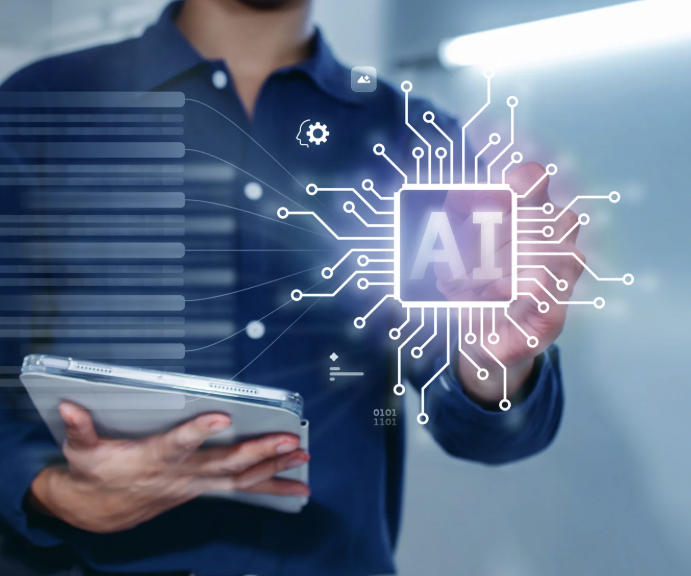
Last month, directors from New York State’s Manufacturing Extension Partnership (MEP) centers met to discuss a coordinated statewide strategy for helping manufacturers adopt and implement artificial intelligence (AI). The meeting, attended by Council of Industry President Harold King, focused on identifying common challenges, sharing best practices, and exploring opportunities to provide manufacturers with practical guidance on AI technologies that can improve productivity, quality, sales and competitiveness.
As AI continues to reshape the manufacturing landscape, the MEP network is working to ensure that companies across New York have access to the resources and expertise needed to successfully evaluate and implement these emerging technologies.
The Council of Industry is excited to be part of this statewide effort and looks forward to bringing AI implementation services and support to manufacturers throughout the Mid-Hudson Valley, helping regional companies leverage AI to strengthen operations, drive innovation, and remain competitive in a rapidly evolving marketplace.
|
|
|
Funding Opportunities For Manufacturers
|
|
|
New York State 2026 CFA Grant Program – New York State has opened the Consolidated Funding Application (CFA) for 2026. The CFA allows for applicants to access multiple State funding sources through one application. The Mid-Hudson Regional Economic Development Council is hosting Information Session on the CFA process. Applications Due July 31, 2026 by 4:00 PM. Go to the Application Portal.
USDA Grants for ISO9001 and AS9100 Certification (Up to $3,000) - Eligible companies will meet the USDA criteria for rural-based companies. Visit the USDA rural map tool and enter in your business address. Once you've checked your rural eligibility, visit the New York MEP website to submit an application for funding.
NYSEG/RG&E’s economic development grant programs – NYSEG is accepting new applications for projects that will be completed today and beyond. Visit the grant portal at to complete a pre-application to determine your eligibility.
|
|
|
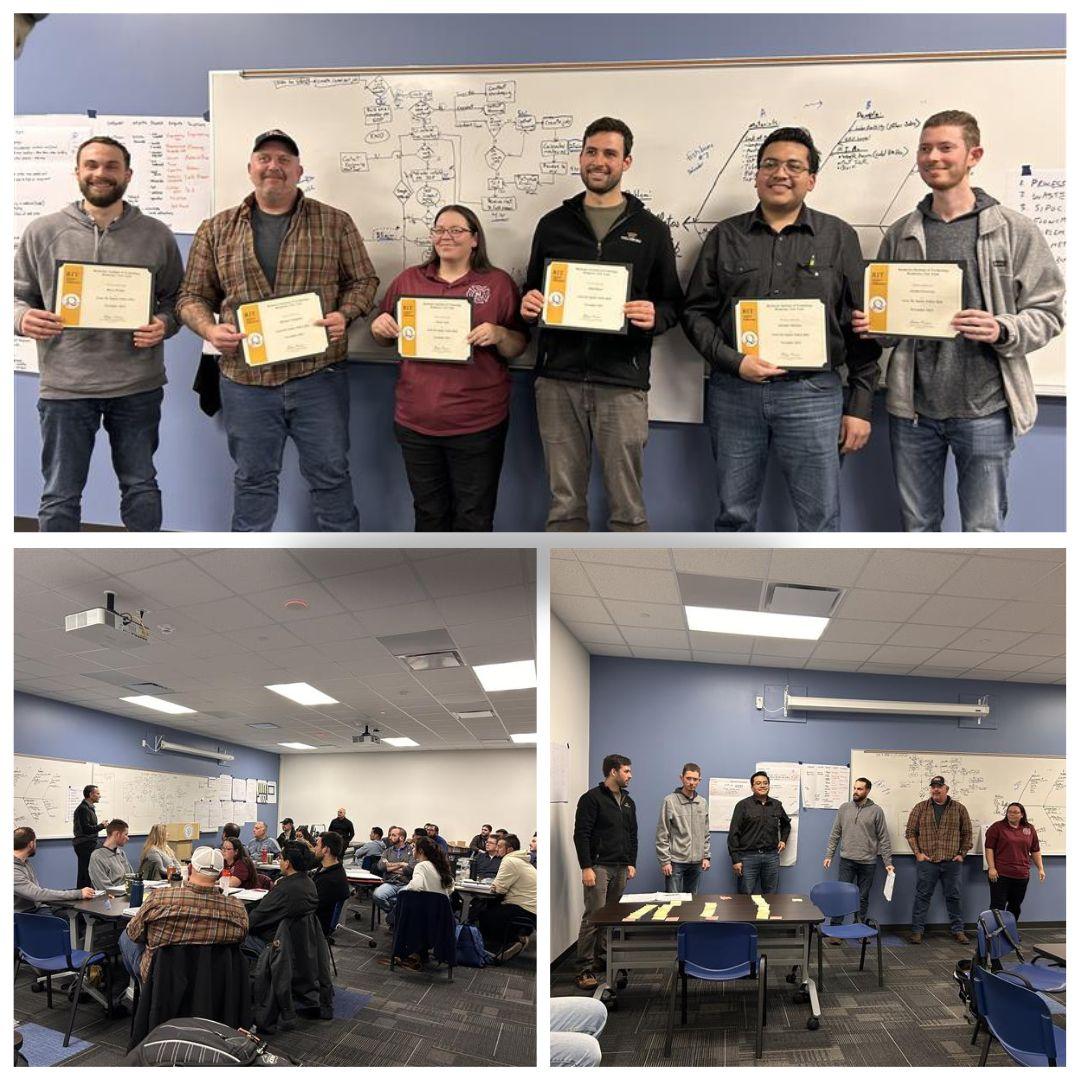
Council of Industry, DCC and RIT Team up to Prvide Lean Six Sigma Yellow Belt Training in October
|
|
The Council of Industry is pleased to be offering Lean Six Sigma: Yellow Belt this Fall! Attendees will be introduced to the Define, Measure, Analyze, Improve, and Control improvement process and some of the tools associated with each stage.
The following topics will be focused on during the training:
- Resistance to Change
- 5-S and Visual Controls
- Team Building
- Problem Solving Process
- Statistical Thinking
During this interactive Yellow Belt training, each group of participants will identify opportunities within their respective work areas and ways to improve those areas utilizing the taught problem-solving tools. The teams will present their identified work area opportunity and suggested solutions.
When: October 13th, 14th and 15th, 8:30 - 4:00 PM
Where: DCC @ Fishkill
Contact Emma Olivet for more information.
|
|
Upcoming CI Trainings & Events
|
|
Events
Product Development Workshop @ SUNY New Paltz - Wednesday, August 12th, 9:00 AM - 5:00 PM
Council of Industry Golf Outing - Monday, August 24th 11:30 AM - 7:30 PM. The Powelton Club, Newburgh.
Upstate Defense: Microelectronics Forum @ The Griffiss Institute - Tuesday, August 25th, 8:30 AM - 2:00 PM
New York State Innovation Summit - Tuesday, October 27th, 8:00 AM - 4:00 PM, Buffalo Niagara Convention Center
Training
Effective Business Communication at iPark 87 in Kingston. June 24, 8:30 - 4:30.
Risk Management - Environment Health & Safety at iPark 87 in Kingston. July 8, 8:30 - 4:30.
Strategies for Managing, Coaching and Dealing with Difficult People at iPark 87 in Kingston. July, 15, 8:30 - 4:30.
Lean Six Sigma Yellow Belt at DCC Fishkill. October 13, 14, and 15 8:30 - 4:30.
|
|
Manufacturing Industry News
|
|
Why Most AI Advice for Manufacturers Is Dead Wrong
|
|
Every manufacturer has seen the headlines. AI will transform your operations. Automate your workflows. Revolutionize your supply chain. The advice keeps coming, from consultants, tech vendors, and business media, maybe even your twelve-year-old nephew...Yet, almost none of it reflects how manufacturing businesses actually work. That disconnect is no accident. Most AI guidance is written with a specific type of company in mind: one with dedicated marketing departments, full-time HR teams, IT administrators, and innovation committees with the bandwidth to run pilot programs. Sure, that company exists. Many companies like that exist. It's just not most manufacturers.
The typical U.S. manufacturer is a privately held company that has been running the same core business for four decades, with a workforce smaller than many office buildings' single floors. Decision-making authority rests with a small group of people who are directly involved in daily operations, not a corporate hierarchy or a technology steering committee. These are disciplined, experienced organizations where new tools are evaluated by one simple question: Will this help us run the business better? When AI advice assumes large specialized teams, fast iteration, and low-consequence mistakes, it fails manufacturers before it even gets started. Oops.
Read more at Industry.Net
|
|
The AI Opportunity Most Manufacturers Haven't Acted On Yet
|
|
AI in manufacturing is moving from “what is it?” to “how do workers use it?” The Manufacturing Institute analyzed responses to some unique questions that were incorporated into the NAM’s most recent Manufacturers’ Q2 Outlook Survey.
• 40% agree that frontline workers will need foundational AI skills (working with AI tools, interpreting outputs)
• 31.1% point to moderate, role-specific skills tied to production, quality, maintenance and logistics
• 22.6% say it’s still too early to define exact skill needs
• 41.4% of manufacturers currently provide no AI-related training to frontline employees
Manufacturers are now converging on a clear definition of “AI-ready” workers: frontline employees who can use AI-enabled tools, interpret outputs and apply insights on the job. But most training systems haven’t fully caught up—creating a gap between how work is evolving and how workers are being prepared. That’s where the Manufacturing Institute’s AI Skills Initiative comes in. It’s building practical, manufacturing-specific AI training pathways for current and future workers, integrating advanced AI skills into programs like FAME USA and establishing employer partnerships to better align training with real-world use of AI on the shop floor.
Learn more about the Institute’s AI Skills Training
|
|
|
Could Agentic AI Make Robots Affordable for Small Business?
|
|
|
We’re nearly at the end of the AI hype cycle, when suggestions for how to leverage the technology become less flashy and more realistic. Like, for instance, the new agentic AI technology named Eigen, that Siemens revealed at this year’s Hannover Messe automation fair. Siemens pitches Eigen (a pun as the word means own in German but phonetically sounds like AI gen) as a brand-agnostic AI agent that can replace manual coding or programming for programmable logic controllers (PLC), distributed control systems (DCS) and robotics applications, updating code or instructions to reflect new priorities and goals.
According to Rainer Brehm, CEO of Siemens’ automation business and CTO for Siemens Digital Industries, Siemens in its operations sees that engineering and reconfigurations constitute 70% of the entire lifecycle cost of a robot. If, however, an AI agent like Eigen can shorten the time needed to make these adjustments, it makes the robot more efficient, and SMBs might be better able to afford deploying the technology. “There’s a kind of new age of automation arising, because [with AI assistance to program robots and PLCs] means you could suddenly automate much smaller lot sizes on a good return of investment,” says Brehm. Humans must always remain in the loop, however, says Kumar. Agentic AI is like an orchestra and humans the conductors.
Read more at Foundry
|
|
|
Toyota's Jidoka Principle and the Future of Work
|
|
|
Much of today’s AI conversation centers on replacing work, automating tasks and driving speed. But that framing misses something essential. AI – like any technology or system – is an amplifier. It amplifies the good, the gaps and the friction already present in our organizations. A tool doesn’t inherently make us better. It makes what’s already there more visible, more powerful and sometimes more problematic.
If your culture and systems are clear, connected and grounded in learning, AI will amplify that. If they are fragmented, chaotic or overloaded, AI will amplify that , too.
Jidoka is the integration of machine automation with human thinking. In practice, it means designing systems where machines automatically stop when something is wrong, alerting people immediately so defects don’t cascade downstream. But jidoka is more than a mechanical safeguard. It’s a cultural principle that empowers people to stop the process to assess quality, reflect on and learn why an issue occurred, and prevent its recurrence. The goal of jidoka isn’t to replace people with machines. It’s to protect quality, expose issues early and free people from mindless monitoring so they can focus on judgment, creativity, problem-solving and improvement. The future of work isn’t AI versus human. It’s AI + human, where technology amplifies our capability and humans are freed to lead, learn and solve higher-order problems.
Read more at IndustryWeek
|
|
|
Why You Shouldn't Rush To Punish Your Rule-Breakers
|
|
|
As AI and other factors disrupt the workplace, rule-breaking is increasing, and Michael Gill, an associate professor at the University of Oxford Said Business School, says his research shows people break rules for several reasons, including self-interest, as a way to help others, as a reaction to pressure or because the rule breaker feels it's for a higher purpose.
Instead of jumping right to punishment, Gill recommends asking why the rules were broken, examining whether the rules are preventing your teams from doing good things for the company and educating teams on the rules deemed necessary.
Listen at the Harvard Business Review
|
|
|
The CMMC Readiness Gap: Why Many Small Manufacturers Are Unprepared
|
|
For four consecutive years, manufacturing has ranked as the most targeted industry for cyberattacks. Much of this exposure is rooted in legacy systems and environments that were never designed to withstand modern cyber threats. This vulnerability is one of the primary drivers behind the DoD’s implementation of CMMC. Although CMMC contract cybersecurity requirements — originally part of the National Institute of Standards and Technology’s (NIST) Special Publication 800-171 — have existed since at least December 2017, enforcement mechanisms were limited. Sensitive defense information has continued to move through supply chains, often exposed not at the prime contractor level, but among smaller suppliers with fewer resources, limited cybersecurity staff and incomplete visibility into how data moves throughout their organizations.
CMMC is intended to close that gap. For many small and mid-sized manufacturers, however, the distance between intent and demonstrable readiness remains wider than anticipated. Manufacturers excel at solving tangible problems. When equipment fails on the shop floor, it is repaired. When production slows, processes are refined. Cybersecurity, by contrast, is largely invisible until an incident occurs. In some smaller organizations, responsibility for IT and cybersecurity still falls to informal or under-resourced arrangements that lack the depth required to withstand formal certification scrutiny.
Read more at Federal News Network
|
|
|
What is Market Engineering—and How Is It Different from Category Creation?
|
|
|
Category creation is about naming a new problem or opportunity, and defining the bucket: the “category” buyers, press and partners use to sort and compare companies. It’s undeniably powerful: think “Industry 4.0” in the last decade, or “connected fitness” in consumer goods. But as that story gets copied and the buzzwords diffuse, what happens next? Market engineering goes several steps further. It’s the deliberate, repeatable process of: Defining or redefining a market category and then architecting all the mechanisms (i.e., messaging, proof points, stakeholder advocacy, ecosystem alignment and feedback loops) that cause the entire market to organize itself around your company’s worldview and operational strengths, not simply your invented “label”. Two examples are Deere & Company and Carrier Corp.
John Deere is known for its green tractors. But over the last decade, Deere didn’t just try to rebrand itself as a “precision ag” company; it architected an entire market ecosystem that aligns dealers, farmers, agronomists and software partners around the reality that “farming intelligence” is the new competitive advantage.
When the pandemic made indoor air quality a top concern, Carrier Global didn’t just bolt filtration onto their HVAC units. Instead, leadership engineered a new category (“Healthy Buildings”) bringing together IoT sensors, advanced air quality, digital management and training into a unified offer. Carrier’s Market Blueprint synthesized a decades-old brand into the champion of safe, resilient and sustainable buildings. Coordinated messaging, proof through pilot projects, white papers and policy advocacy ensured entire school systems and facility managers began to treat “building health” as a buying standard, not an optional add-on.
Read more at IndustryWeek
|
|
|
‘Data Chaos’ Is Stalling Digital Transformations
|
|
|
In all the recent noise about industrial AI, and various companies’ efforts at software solutions to help customers pilot or bring the technology to scale, a fundamental idea should not be getting lost: If data is fragmented, missing or stored in places that require manual processes to retrieve it, AI is going to be of limited or no value to your industrial operation. Research released last month by L2L, the Salt Lake City, Utah-based vendor of a connected manufacturing operations platform, concluded almost three-quarters of manufacturers—74%—were “trapped” by reporting delays that slow their production lines due to a disconnect between their corporate digital investments—their “digital transformations”—and the reality of the data in their factories.
The L2L research, based on surveys of more than 600 U.S. manufacturing leaders also concluded that 65% of shop supervisors waste up to 4 hours per shift on manual data entry and reconciliation and that half of the surveyed manufacturers still rely on manual frontline logs, paper trails, and spreadsheets to make decisions—even though plants are generating more data than ever via IIoT sensors and automated systems. All this continues to make the point that manufacturers are trying, with new software purchases, to get to their critical data, but they are only having marginal success. And this does not bode well for their more advanced digital transformation efforts, like predictive maintenance and, yes, AI adoption.
Read more at Smart Industry
|
|
|
DOE Unveils Road Map To Develop Fusion For Electricity
|
|
|
The Department of Energy has released a blueprint outlining a path forward DOE’s final fusion strategy, which involved the input of more than 800 scientists and engineers, outlines proposals to secure the infrastructure needed to commercialize the technology within the next decade and sets detailed timelines for the department to reach milestones. Nuclear fusion, which generates electricity by emulating the process powering the sun, has yet to be “demonstrated at scale to produce electricity.” The plan—which was announced Tuesday and calls for industry, academia and the DOE’s national laboratories to collaborate to fill “technology gaps”—will be implemented by the new Office of Fusion.
The roadmap recommends fusion energy be developed by building critical infrastructure, innovating through research, computing and artificial intelligence and expanding the “fusion ecosystem.” The agency said it would aim to build small-to-medium-scale facilities in the next three to five years to help companies better harness fusion reactions. The blueprint, however, doesn’t commit the agency to specific funding amounts, and President Trump’s FY2027 budget includes about $50 million in fusion-related spending cuts. In 2025, however, Energy Secretary Chris Wright established a new fusion office and in April said on a podcast that “fusion on the grid could arrive within 10 years ‘if everything goes awesomely well.’”
Read more at E&E News from Politico
|
|
|
Niño Is Here, So What Does It Mean for Your Power Bill?
|
|
|
Americans may see their energy bills shift as El Niño strengthens, a meteorologist told Newsweek, with the climate pattern expected to help influence both winter heating needs and summer cooling demand. The weather phenomenon, part of a recurring global weather cycle, can influence temperature and precipitation in the United States and worldwide. According to the Climate Prediction Center (CPC), El Niño conditions are present and are expected to strengthen in the Northern Hemisphere this winter.
“With El Niños, generally Arctic airmasses are less frequent across the U.S. in the colder seasons, but not absent. We generally see moderate temperature winters. This can help save on energy costs,” AccuWeather lead long-range forecaster Paul Pastelok told Newsweek. Pastelok also said the risk of intense, long heat waves across the Ohio Valley, Northeast and mid-Atlantic is low during the summer. Increased wet conditions can reduce the frequency of prolonged heatwaves, which in turn may lower energy demand, he said. “In contrast, the Northwest and upper Midwest can see drier conditions during the course of summers and falls, which can lead to above average temperatures and higher energy costs in the summer, but less energy costs for heating in the fall," he said.
Read more at NPR
Learn more about the Council of Industry’s energy consortium (where you can lock in a fixed price to avoid price spikes)
|
|
|
MFG250 - Celebrating the History and Future of U.S. Manufacturing.
|
|
|
For 250 years, American manufacturing has powered growth, strengthened communities, and driven progress at home and around the world. From steel mills and shipyards to advanced robotics and precision technology, industry has shaped our economy and defined our strength. The same spirit of innovation that built this nation continues to lead it forward. American manufacturing built the past. It is building the future.
MFG250 celebrates that legacy while looking ahead to the next generation of builders, innovators, and leaders who will define what comes next. Through storytelling, events, and public engagement, this webisteis highlighting the impact of manufacturing across history and its role in driving America’s future.
Read more, Watch at MFG250.org
|
|
|
The Council of Industry focuses on advancing manufacturing excellence, workforce innovation, advocacy, and strategically positioning its members within the Hudson Valley region and beyond. It is the premier manufacturers' association for Southeastern New York, representing over 160 member firms. Grow, Train, and Succeed with the Council of Industry.
|
|
|
If you’re part of a Council of Industry member company and not yet subscribed, email us. If you’re not a Council member, become one today
|
|
|
|
|