|
The HR Newsletter of the Council of Industry
January 15, 2026
|
|
|
Nominations Open for the 2026 Manufacturing Champions
|
|
|
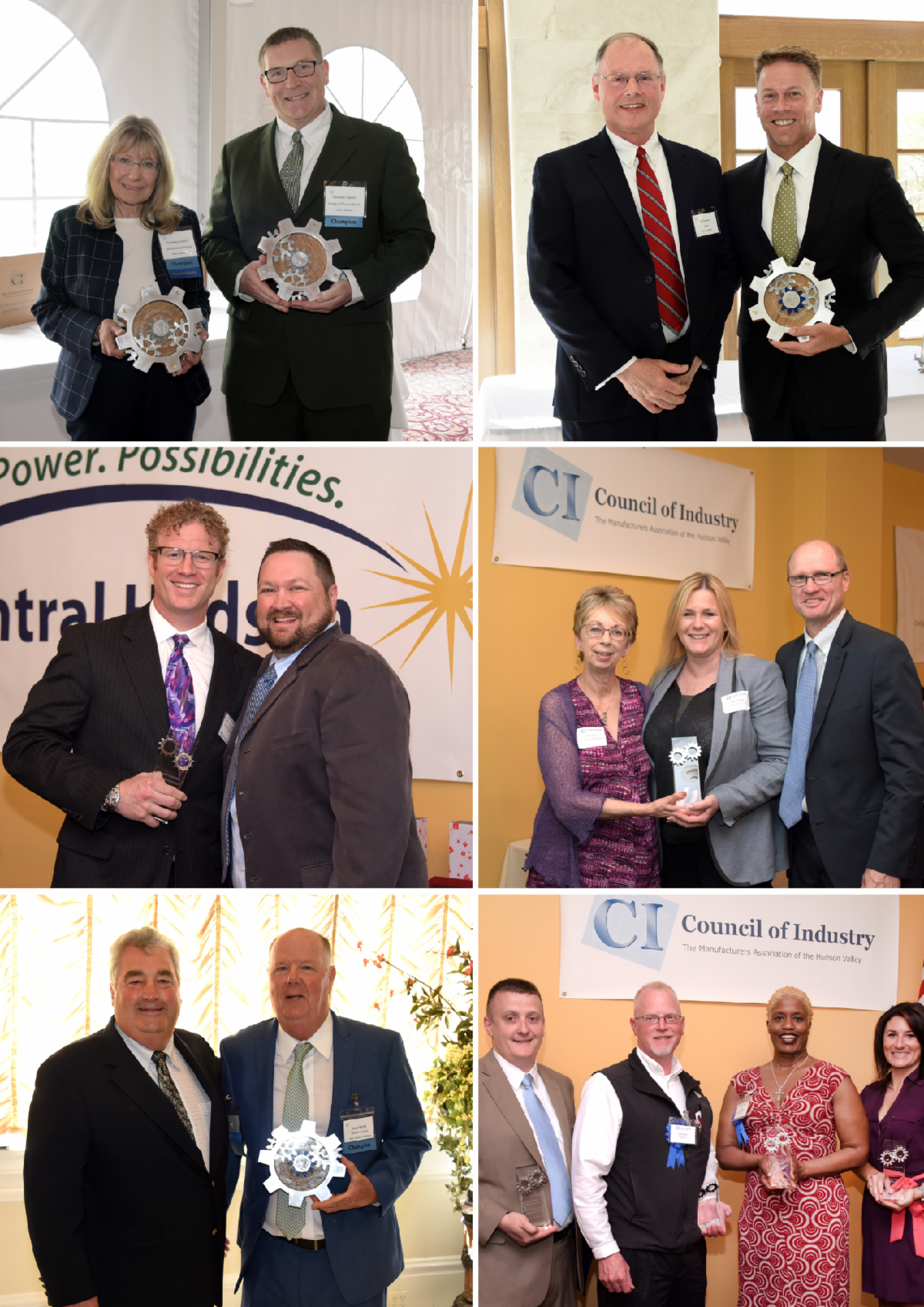
The Council of Industry is seeking nominations for the 2026 Manufacturing Champions Award. The Manufacturing Champions Award is presented annually to individuals and/or organizations that work in the sector or provide direct support to the manufacturing sector in the Hudson Valley. The Awards will be presented at the Champion's Breakfast and Workforce Developers Expo on May 7th at West Hills Country Club in Middletown.
Nominations will be accepted through close of business February 20, 2026
The Manufacturing Champions Award is presented to individuals or organizations which have “Through vision, dedication and tireless involvement have worked in manufacturing, built a manufacturing business, or worked to overcome some of the many obstacles faced by manufacturers in the Hudson Valley and in so doing they have made it possible for manufacturers and their employees to prosper.”
Past champions include founders of manufacturing businesses, owners of manufacturing businesses, key employees, teachers and educators, economic development leaders, educational institutions, economic development organizations elected officials and agencies supporting the manufacturing workforce pipeline. Click here for a list of past champions.
|
|
|
Winter 2026 Certificate in Manufacturing Leadership Courses Kicked off Last Week – Individual Course Registration Still Available for Online Training
|
|
|
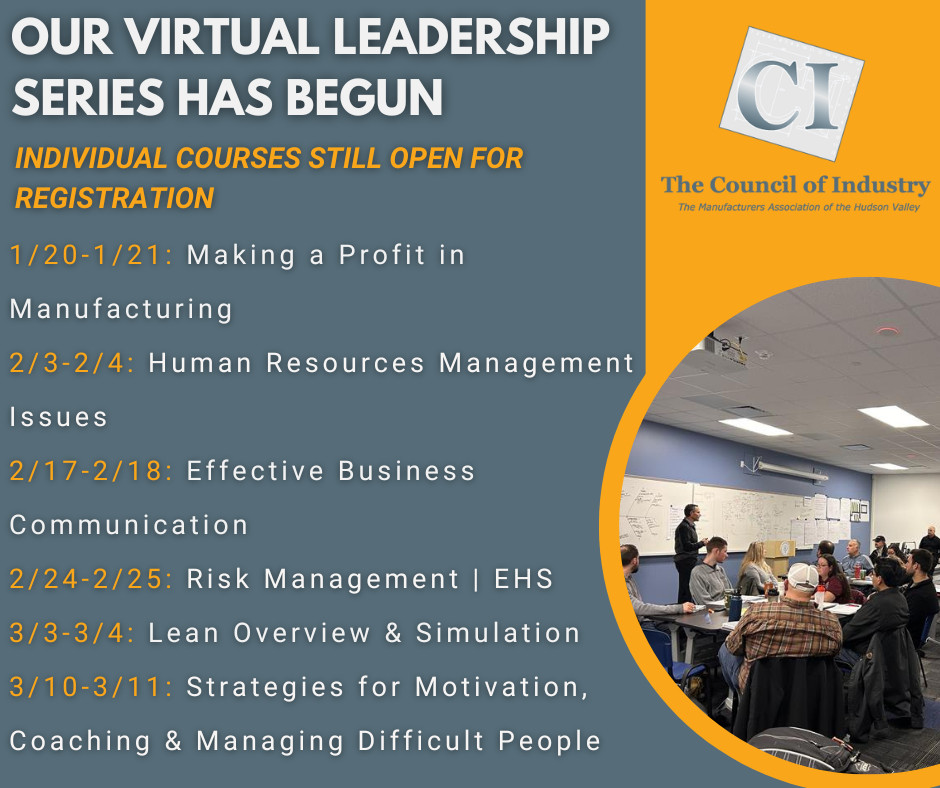
It’s not too late to be a part of our Virtual Certificate in Manufacturing Leadership Series. Trusted by manufacturers for more than 25 years, this virtual leadership series delivers practical, real-world skills through focused, expert-led courses designed for today’s manufacturing leaders.
While the full certificate program is underway, individual course registration is still available, allowing participants to jump in at any point and select the sessions most relevant to their goals, role, and organization.
Upcoming virtual courses include:
- Making a Profit in Manufacturing (1/20–1/21)
- Human Resources Management Issues (2/3–2/4)
- Effective Business Communication (2/17–2/18)
- Risk Management | Environmental Health & Safety (2/24–2/25)
- Lean Overview & Simulation (3/3–3/4)
- Strategies for Motivation, Coaching & Managing Difficult People (3/10–3/11)
|
|
|
Council's MFG Career Hub Fills Hundreds of Jobs, Reaches Thousands of Hudson Valley Candidates in 2025
|
|
As we head into 2026, everyone is working on New Year’s resolutions and projecting what the year is going to bring.
One thing we know is that filling jobs and workforce challenges continue to be at the forefront.
As the job market changes, the need to build a workforce and close the skills gap remains just as urgent. But the Council of Industry’s MFG Career Hub has been a regional solution to these challenges.
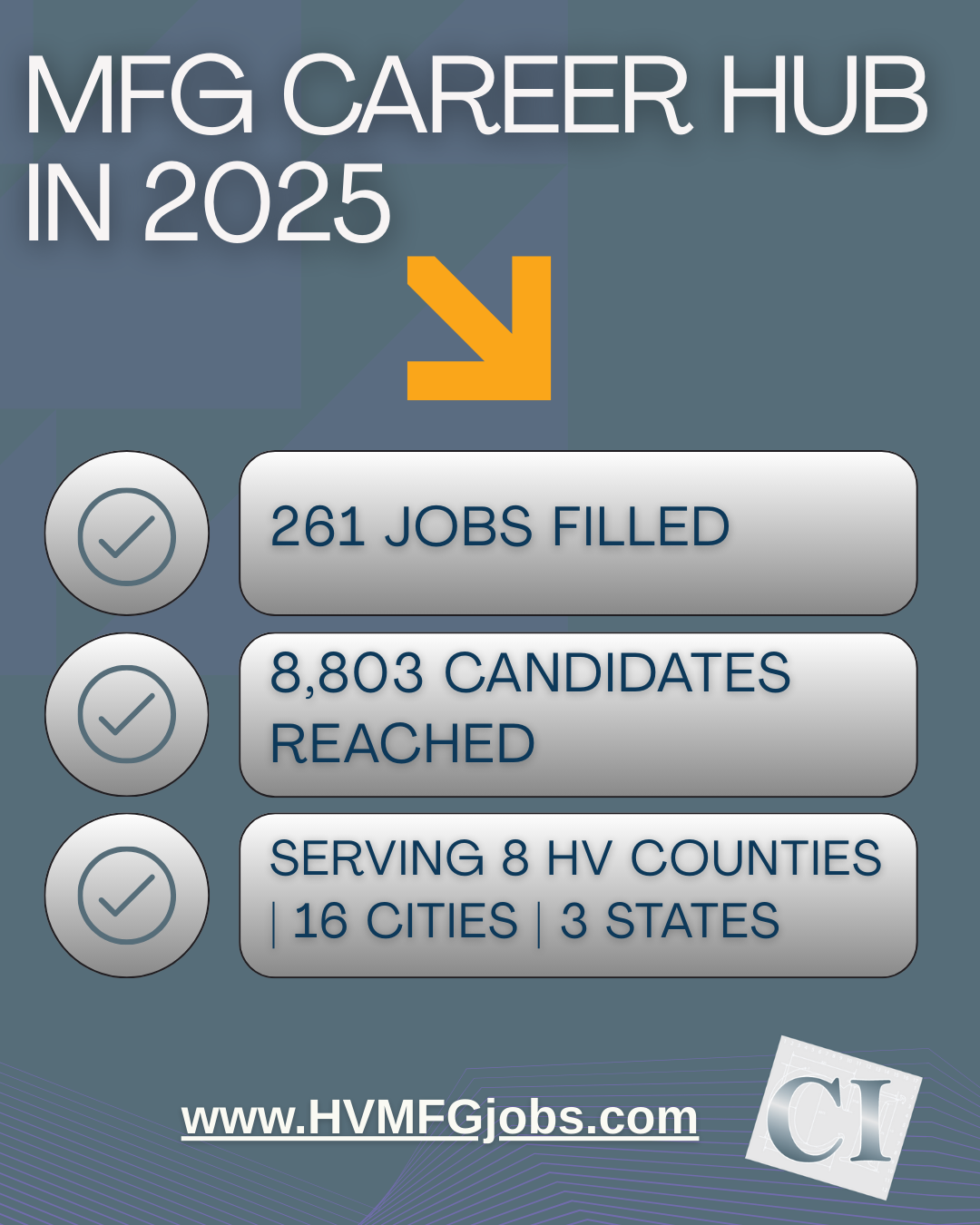
Since its inception, the MFG Career Hub has supported members in their hiring efforts, filling 261 jobs and attracting more than 8,800 candidates in 2025 alone.
Priced to allow every company to benefit from job posting visibility, exposure across 100+ job boards, and access to searchable resumes, along with staying engaged in the region’s workforce development efforts, the MFG Career Hub is a tool to help inform, inspire, and connect the next generation to meaningful work in manufacturing.
Our Career Hub Subscription options provide ample benefits and customizations for those ready to utilize the features of a full applicant tracking system.
Whatever your company’s hiring objectives are, let’s talk about how we can help.
Learn more about the MFG Career Hub here
|
HR Manufacturing Sub Council Meets, Tours Selux Corporation in Highland
|
|
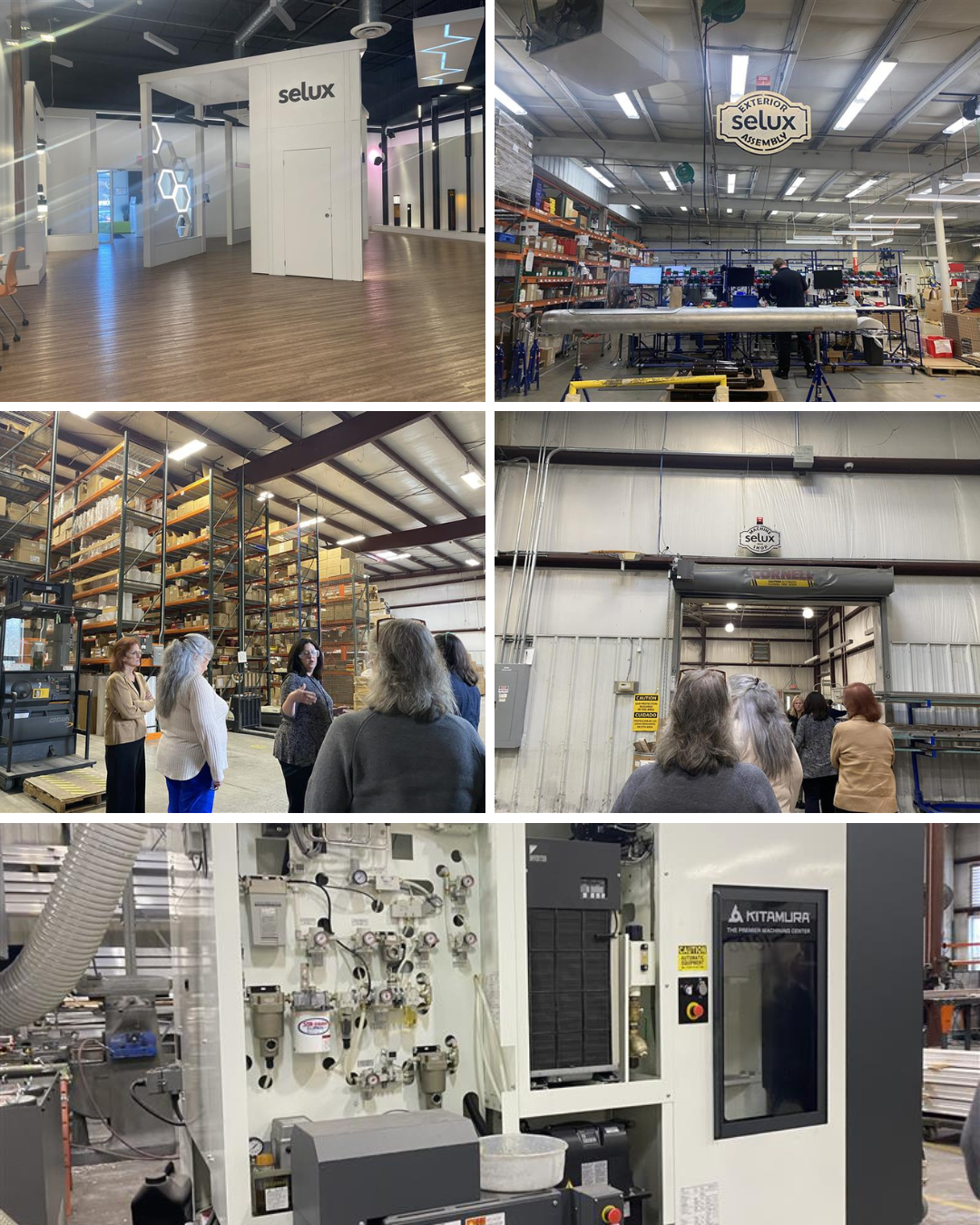
The Council of Industry's HR Sub-Council met on Thursday, January 15th, at Selux Corporation in Highland.
Following the meeting, our group took a tour of Selux's facility. The group got an inside look of Selux's operation from sales to manufacturing each product from start to finish.
Seeing how Selux produces its interior and exterior lighting products, along with each products mountings, the group of HR professionals got to see how the Ulster County based manufacturer operates each day.
Thank you to Selux for hosting our Sub-Council!
Click here to learn more about Selux
Click here to learn more about our HR Sub-Council
|
|
|
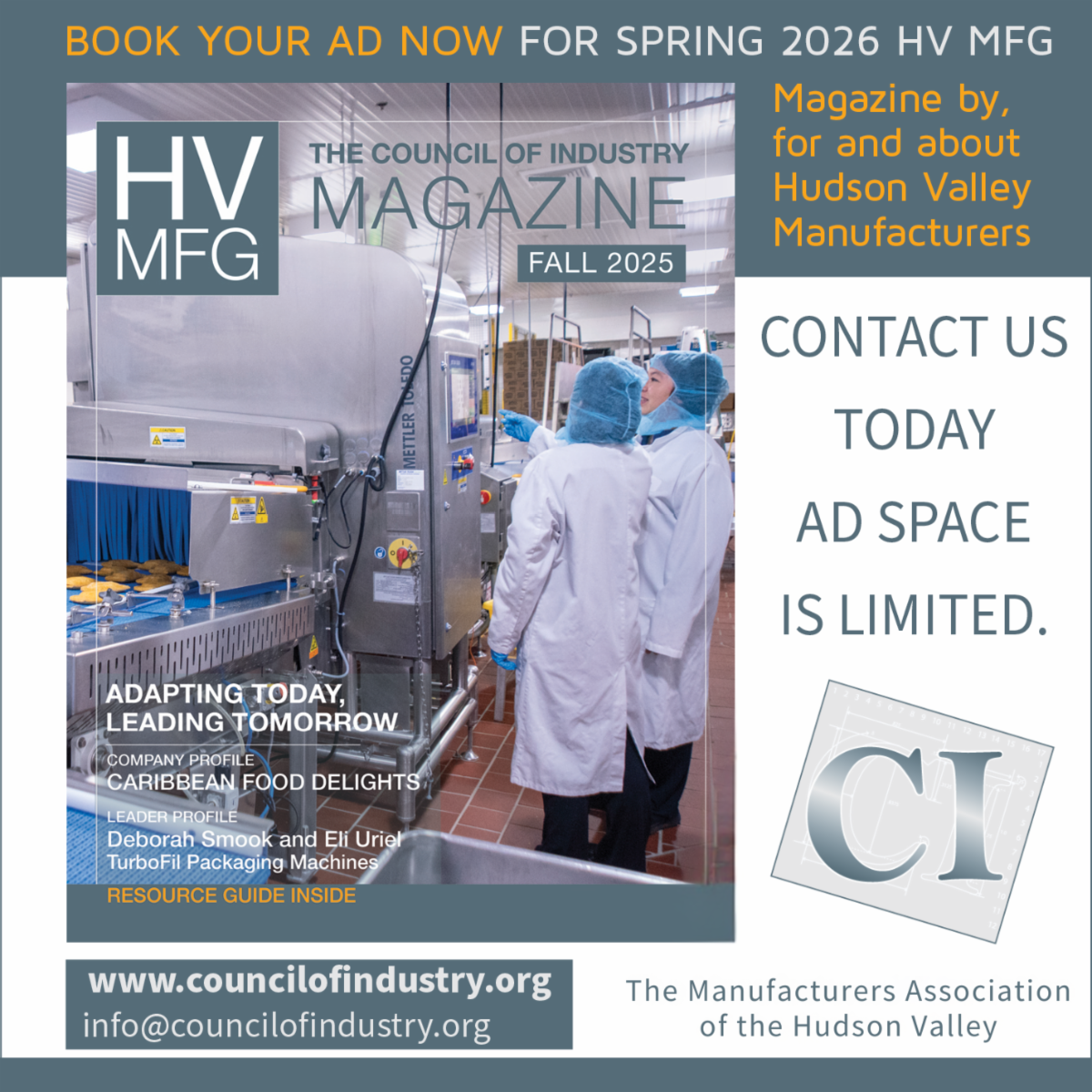
Secure Your Ad in the Spring 2026 HV MFG Issue!
|
|
The Maintenance Mechanic Trade Is Among the Most in Demand MIAP Apprentice Trades
|
|
|
What does every manufacturing facility in the Hudson Valley have in common? Machines.
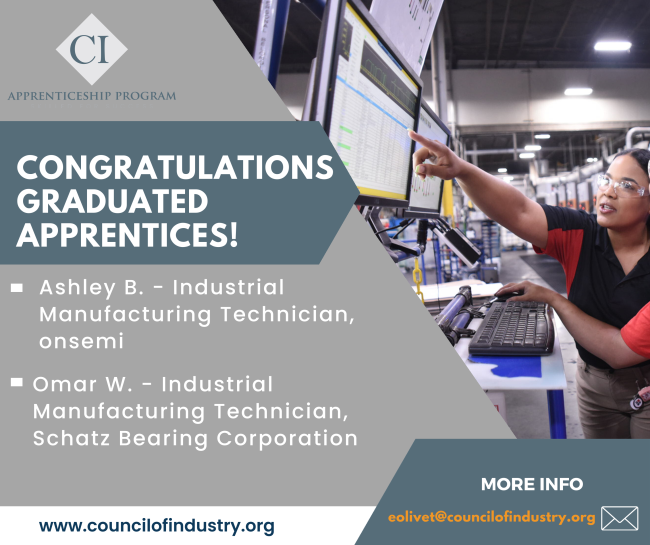
Machines that cut, stamp, feed, convey, lift, and more. And all these machines need to be maintained and repaired. That is why so many Council members are using the Maintenance Mechanic Trade to develop skilled workers.
Industrial maintenance mechanics keep machines in working order. Many of these machines are increasingly run by computers. They use technical manuals, their understanding of industrial equipment, and observation to determine the cause of a problem. Examples of machines they may work with are robotic welding arms, automobile assembly line conveyor belts, and hydraulic lifts.
Work Processes (Skills learned on the Job) Approximate Hours for Maintenance Mechanic (Automatic Equipment):
- Preliminary Machine Familiarization: 600 hours
- Basic Maintenance: 1,000 hours
- Preventative and Predictive Maintenance: 1000 hours
- Machine Shop: 250 hours
- Troubleshooting: 3,000 hours
- Welding and Fabrication: 250 hours
- Rigging and Installing: 250 hours
- Electrical: 1,150 hours
- Fluid Systems and Piping: 500 hours
- Total Hours: 8,000
Minimum of 144 Hours of Related Instruction (Classroom Learning) Required for Each Apprentice for Each Year:
- General Workplace Safety
- Blueprint Reading and Drawing
- Mathematics
- Fundamentals of Electronics and Computer Programming
- Sexual Harassment Prevention Training
- Trade Theory and Science
- Welding (certification as required)
- Cutting, Die, Jig and Fixture Design
- Layout and Production Methods
- Computer Software
- Communications
- Other Related Courses as Necessary
If you want to know more about this trade and if it might be right you’re your company contact Emma Olivet
|
|
|
News for HR and Workforce Professionals
|
|
|
Why 2026 Is An Opportunity To ‘Completely Redefine And Transform HR’
|
|
|
Dr. Robert Ployhart’s academic research career has focused on drawing a line between the “psychology of talent” and competitive business advantage—a link, he says, HR leaders need to pay close attention to today. Today, the most “modern, well-run organizations” are prioritizing collaboration among the CEO, CFO and CHRO, with the latter’s influence being particular essential as companies face the transformative impact of AI. It’s a transformation HR “absolutely has to lead,” Ployhart says, as humans will be at the center. Bringing the workforce along on the AI journey is going to require HR to rethink the fundamentals of what it can deliver to the organization. The function must prioritize culture and workforce readiness, while guiding discussions among key stakeholders on ethics and responsibility, Ployhart says.
HR must pay particular attention to its “commitment to legacy,” Ployhart advises. Policies and practices are “still important,” but should no longer be the driving priority. Without pivoting to more agile designs and principles, HR runs the risk of looking like a compliance function, a perception that dragged down HR’s strategic influence for decades, he says. “To me, this is an opportunity to completely redefine and transform what we think of HR,” he says. “But the question is, will we be tied to that history and legacy of the profession, or will we be able to break those chains and create something just truly transformational?”
Read more at HR Executive
|
|
|
The Future of Manufacturing Safety is High-Tech and Human Centric
|
|
|
The business case for safety is compelling. Preventable injuries cost millions of workdays each year. Eliminating them could return an estimated 103 million of them, the equivalent of keeping more than 394,000 full-time workers on the job. The next wave of safety innovation combines advanced technologies with human-centric design. AI and computer vision are becoming force multipliers for Environment, Health and Safety teams.
These platforms connect to CCTV systems and monitor for hazards such as missing personal protective equipment or unsafe equipment use, triggering real-time alerts that enable fast intervention. Wearable safety tech is also gaining traction. Smart helmets, badges and sensors track proximity to equipment, fatigue and posture. Exoskeletons – wearable support suits – are being adopted for physically demanding jobs. Toyota, for example, has mandated ergonomic exosuits for overhead tasks at select plants, aiming to reduce musculoskeletal disorders, which account for a third of lost workdays in the US.
Read more at the World Economic Forum
Learn more about the Council of Industry Safety & Health Sub-Council
|
|
|
Translating Office-Slang For 4 Generations Of Leaders
|
|
Every workplace has a shared language. Sometimes it shows up in acronyms and jargon. Other times, it slips into meetings through words like “chill.” For leaders rallying multigenerational team members, slang is no longer background noise. It is communication data. Four generations now work side by side, each shaped by different cultural moments and communication norms. Understanding how each group uses language offers leaders a faster read on engagement and trust. The strongest leaders do not awkwardly imitate slang. They understand it fluently, listen for meaning and respond with respect. Here’s how leaders can incorporate generational slang:
Listen first, speak second. Treat slang as diagnostic language. When employees use a generational term, focus on what they signal emotionally before deciding whether to mirror that language.
Respond to meaning, not vocabulary. Address the concern directly rather than repeating the slang itself.
Match tone to context. Slang fits best in informal settings like team chats or brainstorming sessions. Formal reviews, high-stakes meetings and external communications should prioritize clarity over cultural shorthand.
Let your team set the language ceiling. When leaders adopt the slang naturally used by the team rather than introducing it themselves, it feels validating rather than performative.
Stay current without chasing trends. Slang evolves quickly, especially among younger workers. Leaders earn credibility by staying aware of language shifts, not by trying to keep up with every new term.
Default to respect over relatability. Trust is built when employees feel understood, not when leaders try to sound like peers; forced usage signals insecurity.
Read more at Forbes
|
|
New York Issues Four Year-End Employment Law Changes
|
|
As we enter the New Year, New York employers should take note of new compliance obligations signed into law as 2025 came to a close.
Prohibition on Retaliation Against Individuals Requesting Reasonable Accommodations Under the HRL - On Dec. 5, 2025, Governor Kathy Hochul signed Senate Bill S3398 into law to amend the New York State Human Rights Law (HRL). This amendment was designed to address a statutory gap in the HRL because that law was silent on whether requesting a reasonable accommodation constitutes a protected activity for purposes of retaliation claims.
New York Formally Establishes Disparate Impact Framework Within the HRL - Governor Hochul signed Senate Bill S8338 on Dec. 19, 2025. This amendment to the HRL directly responds to the federal government’s newly adopted position on the treatment of “disparate impact” claims by formally codifying disparate impact as a basis for proving unlawful discrimination under New York’s HRL. The disparate impact theory generally provides that even facially-neutral workplace policies may be deemed discriminatory if they disproportionately disadvantage a protected group.
The “Trapped at Work Act” - On Dec. 19, 2025, Governor Hochul signed Senate Bill S4070-B, an amendment to the New York Labor Law known as the Trapped at Work Act (the Act). The Act prohibits the use of stay-or-pay agreements, referred to within the statute as “employment promissory notes.”
Employer Use of Credit Reports in New York - Governor Hochul signed a bill that amends New York’s General Business Law to extend the same protections afforded under New York City’s existing legislation that prohibits employers from requesting or using consumer credit histories when making employment decisions. Under the new legislation, it is an unlawful discriminatory practice for an employer to use an applicant’s or employee’s consumer credit history for employment purposes or to otherwise discriminate against an applicant or employee with respect to hiring, compensation, or the terms, conditions or privileges of employment.
Read more at Jackson Lewis
|
|
2026 HR Compliance Changes: What Leaders Can’t Afford To Miss
|
|
|
As organizational leaders sink their teeth into 2026, compliance experts warn that the complexity is only accelerating. A new analysis from HCM provider Paychex identifies several regulatory shifts that will require HR’s immediate attention, from tax law changes with reporting requirements to evolving state mandates on AI, paid leave and retirement. Here’s what HR leaders need on their radar, according to Paychex:
Tax law creates new reporting headaches - The 2025 tax law, known as the One Big, Beautiful Bill Act, introduces provisions that could create administrative complexity for HR teams. During the 2025 through 2028 tax years, workers can deduct qualified tips and overtime compensation on their personal returns, but employers remain responsible for withholding taxes and face new reporting requirements. For the overtime deduction only the premium portion of time-and-a-half qualifies, and only when required under the Fair Labor Standards Act. State-specific overtime requirements that exceed federal standards don’t count. Individual filers can claim up to $12,000, while joint filers can claim up to $25,000.
Retirement mandates spread - Thirteen states now have fully active mandated workplace retirement programs, including Minnesota’s soft launch on Jan. 1, 2026. New York’s first registration deadline is set for March 18 and Rhode Island’s deadline occurred on Dec. 12, 2025. Paychex advisors say employers in affected states must either register for the state-facilitated plan or implement a private plan that satisfies the mandate.
AI regulation takes shape - On Dec. 11, President Trump signed an executive order requiring the Department of Justice to create infrastructure allowing the federal government to preempt state AI laws. The DOJ can use its judgment on state law constitutionality, pursue litigation and cut specific funding for laws deemed too restrictive.
Minimum wage increases hit 20 states - Nearly 20 states will implement minimum wage increases in 2026, with the majority taking effect Jan. 1. Several major metropolitan areas in California, New York and other states will also see hourly wage increases.
Read more at HR Executive
|
|
Workplace Health Trends to Watch in 2026
|
|
|
The Business Group on Health has released its projection of workplace health trends that it believes will take place in 2026. A 'back to basics' approach will be used to scrutinize well-being programs to find economic outcomes based on companies' own workforce’s experiences. Here are a few:
2026 will be characterized by one of the most challenging affordability and cost management years in recent history - Employers anticipate a median 9% health care trend in the U.S., which is expected to drop to only 7.6% with plan design changes. These impending increases are on top of back-to-back years of actual health care costs that have exceeded employer forecasts.
Employers will get “back to basics” to improve health at scale - There is greater urgency to emphasize the foundational aspects of employee health and well-being: disease prevention and condition support rooted in evidence and proven outcomes.
AI is rapidly gaining traction in how health and well-being programs are delivered by employers and partners - Employers should require current and prospective vendors to detail and demonstrate how AI can support their health and well-being goals. Some employers have found success in leveraging internal efforts to deploy AI; others have focused on learning from early adopters of AI about how to reshape employee communications, benefits and programs.
Read more at EHS Today
|
|
|
AI-Assisted Hiring in 2026: Managing Discrimination Risk
|
|
|
For large employers — and for tech companies providing hiring platform technology for employers — the risk profile around AI-assisted hiring has shifted from “future concern” to something you need to worry about right now. The core point is simple: using an algorithm does not reduce anti-discrimination duties; it often increases the need for validation, monitoring, documentation and vendor oversight.
States and even municipalities have moved from general statements to targeted requirements (e.g., audits, notices, recordkeeping and “high-risk” system duties), creating a patchwork of which large, multi-state employers must be aware. And preexisting state and federal anti-discrimination laws are still very much in place and apply to AI-assisted employment decisions. Finally, the most closely watched private litigation in this space — Mobley v. Workday — illustrates the direction of liability: plaintiffs are targeting not only employers, but also the vendors and platforms that significantly influence hiring outcomes. Here is some background on the relevant laws and what employers need to manage.
Read more at Harris Beach Murtha
|
|
|
A Survey Shows The American Workplace Is A Less Friendly Place Today, But It Doesn’t Have To Be That Way.
|
|
|
Decorum and civility are under attack at the office and on the shop floor, according to the latest statistics from the Society for Human Resources Management (SHRM), which recently reported that 75 percent of U.S. workers either experienced or witnessed uncivil acts in the workplace during the previous month. The rising trend reflects a growing sense of turmoil and chaos, with numerous domestic, global, political and economic factors influencing workplace behavior, borne out in other more worrying trends revealed by responses to the trade group’s quarterly survey.
Employment lawyers at Chicago-based law firm Seyfarth Shaw note that “For employers, a new year can be a time to reset. It can be a time to recommit to a civil workplace where every employee feels respected, and the focus is on working together to achieve the organization’s mission or business goals.” Here are the firm’s recommendations for employers so that incivility can be kept under control at the workplace:
“Every employer should have an anti-discrimination and anti-harassment policy.”
“The employer’s handbook should make clear that a violation of the anti-discrimination and anti-harassment policy is grounds for discipline, up to and including termination.”
“The employer should investigate any complaints of violations and take prompt corrective action to enforce the policy when violations are found.”
“The employer can also insist on a civil workplace culture. Personal insults have no place in a well-functioning work environment. Bullying is not acceptable in the modern workplace. Temper tantrums need not be tolerated.”
“Leadership can set a professional tone from the top.”
Read more at Inc.
|
|
|
2026 Skill of the Year – ‘Adaptive Foresight’ Blends Human Judgement and Machine Insight
|
|
|
Talent intelligence platform SHL has identified “adaptive foresight” as this year’s critical capability. SHL analysts define this as the ability to anticipate change and act before it arrives. The skill centers on pattern recognition, which includes spotting risks others miss, running small experiments instead of waiting for certainty and connecting signals across technology, teams and processes to drive better decisions.
Sara Gutierrez, SHL chief science officer, describes the skill this way: “As AI accelerates the pace of work, human value shifts from simply keeping up to seeing what’s ahead.” She adds that adaptive foresight blends human judgment with machine insight. Those with this capability thrive when spotting early signals, challenging assumptions and knowing when to experiment, pivot or rethink how work gets done.
Read more at HR Executive
|
|
|
iCIMS December Insights – Applications Strong, Hires Lag
|
|
|
The U.S. Labor market saw a sharp slowdown from October to November, far steeper after November than typical seasonal dips. Elevated openings paired with hiring cuts signal structural cooling as companies prioritize caution over expansion. Applications remain strong but hires lag — creating higher apply-to-hire ratios and tougher competition. Workers are keeping jobs but face slower mobility, while employers are dealing with longer pipelines and rising drop-off risk. The late-year slowdown signals a cautious mindset taking hold. Companies are managing risk by slowing backfills and tightening conversion, while workers feel secure but less mobile.
Layoffs have flooded the market with qualified candidates. White collar jobs are still receiving heavy interest, drawing nearly double the average applicants per opening (APO). That competition comes even as the market cools and employers pull back.
The sharp September-to-November decline signals a structural slowdown — beyond seasonality — as companies curb hiring despite high job openings.
Tech and finance saw late-year application spikes, likely tied to ongoing layoffs. However, hiring stayed flat, signaling an oversupply of candidates and cautious headcount planning.
Read the Report
Learn more about the Council of Industry’s Manufacturing Career Hub Driven By iCIMS
Check out the MIAP Apprentice Program
|
|
|
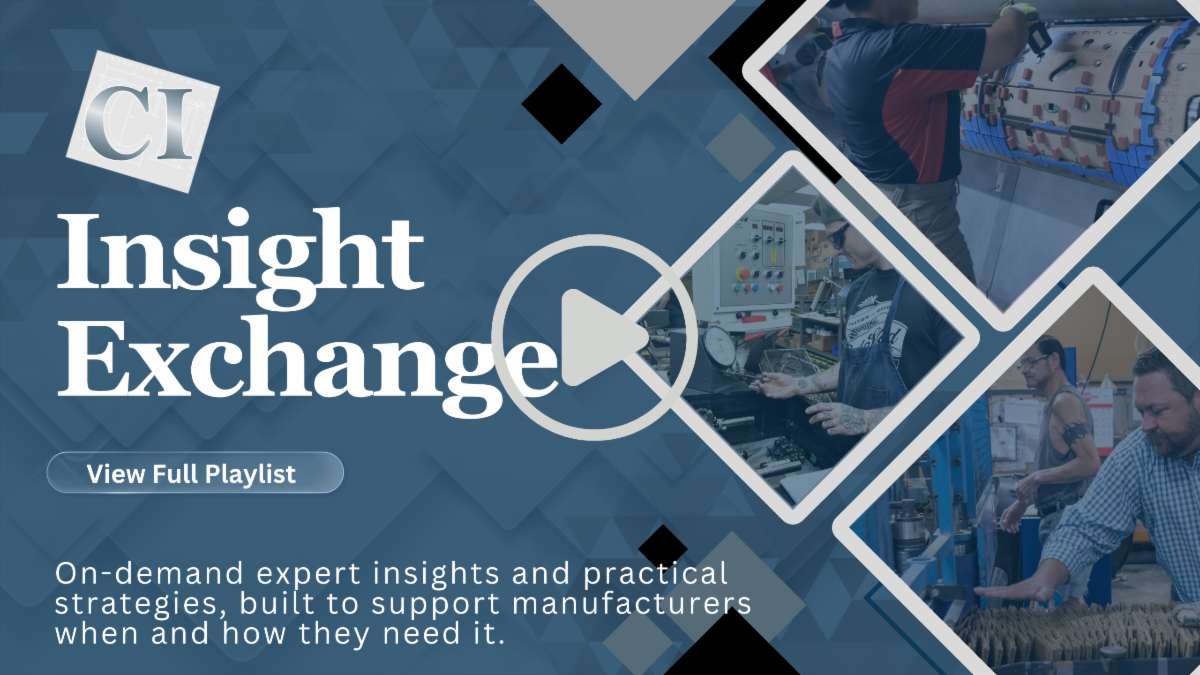
Insight Exchange: Expert-Led Video Series for Manufacturers
|
|
|
Insight Exchange: Expert-Led Video Series for Manufacturers
The Insight Exchange is a new video series from the Council of Industry, offering manufacturers expert insights and strategies—accessible anytime. Each session features industry professionals covering key topics like workforce development, regulatory updates, and emerging technologies.
|
|
|
Newest Episode: Healthcare Costs
Explore how company size affects healthcare costs, coverage options, and strategic benefits planning.
|
|
|
In this episode of Insight Exchange, Luke Strothenke, insurance broker and employee benefits consultant, breaks down the rapidly changing healthcare landscape and what it means for manufacturers of all sizes.
Key Topics Include:
- Why healthcare costs are rising sharply for manufacturers and small businesses
- How Medicaid cuts may affect employees and workforce retention
- Key healthcare differences for businesses under 25, 50, 100, and 250+ employees
- Upcoming ACA affordability changes and what they mean for employer contributions
- The role of PEOs in managing healthcare costs and HR complexity
|
|
|
If you’re part of a Council of Industry member company and not yet subscribed, email us. If you’re not a Council member, become one today
|
|
|
|
|