|
The HR Newsletter of the Council of Industry
April 7th, 2026
|
|
|
Council of Industry Announces 2026 Manufacturing Champions
|
|
The Council of Industry is proud to announce its 2026 Manufacturing Champions.
Nominated by their peers, Champions are honored for their exceptional contributions in Manufacturing Leadership, Manufacturing Education, or Community Support for the regional manufacturing industry.
Meet The 2026 Manufacturing Champions
|
|
Cedric Glasper
President & CEO, Mechanical Rubber
Cedric Glasper is a manufacturing leader known for his commitment to both industry and workforce. Since 1995, he has helped revitalize struggling facilities and preserve jobs through four strategic acquisitions that prevented plant closures and restored opportunity for displaced workers.
Cedric serves on the boards of the Council of Industry, the Association for Rubber Products Manufacturers, and the Ohio Manufacturers’ Association. During the COVID-19 pandemic, his leadership ensured operations continued and employees remained on the job.
Beyond his business leadership, Cedric is an active community advocate, serving organizations including the Orange County Workforce Investment Board and United Way.
|
|
|
Ben Katzenstein
President & Owner, Star Kay White
Star Kay White, Inc. is a fifth-generation manufacturer that has produced ice cream ingredients, frozen desserts, and specialty flavorings since 1890.
Ben Katzenstein grew up in the family business, working alongside his father and grandfather from a young age and learning every aspect of the company’s operations. When he joined the company full-time, he recognized significant opportunities for growth.
In 1984, Star Kay White employed 16 people and was transitioning from a 15,000-square-foot plant in the Bronx to a new 30,000-square-foot facility. Under Ben’s leadership, the company has expanded to four buildings across 15 acres totaling approximately 170,000 square feet and now employs more than 150 people, many of whom are local Hudson Valley residents.
|
|
Dr. Jonah Schenker
District Superintendent, Ulster BOCES
Dr. Jonah Schenker has served as District Superintendent of Ulster BOCES since March 2023 and been part of Ulster BOCES since 2010, serving in a range of instructional and leadership roles, including founding principal of the Hudson Valley Pathways Academy.
He recently led the expansion of the Career and Technical Center into its new location at iPark87, a project that serves as a state and national model for advanced manufacturing education. This initiative was bolstered by his ability to secure support from parents, school districts, and political leaders, and was recognized with a $1 million grant from the Gene Haas Foundation.
To address the local workforce shortage, Dr. Schenker has aligned the BOCES curriculum with industry needs by collaborating directly with business leaders. By implementing their feedback, he has expanded facilities and programs to prepare students for rewarding careers within the Hudson Valley.
His impact on the manufacturing sector is evidenced by the growth of student internships and the resulting economic benefits for the local workforce.
|
|
|
The Gene Haas Foundation
The Gene Haas Foundation was established in 1999, by Haas Automation, Inc. – which produces CNC vertical machining centers, horizontal machining centers, CNC lathes, and rotary products – CEO and Founder Gene Haas, to support the needs of the local community through grants.
The Gene Haas Foundation remains a manufacturing Champion of the Hudson Valley and beyond.
In its role the Gene Haas Foundation has been a driving force in supporting our high school, BOCES, community colleges and Universities throughout the Hudson Valley. To date, over $7 million have been distributed to our schools within the Hudson Valley.
The Gene Haas Foundation is instrumental in promoting the Haas Technical Education Community (HTEC) throughout the United States and Europe. The HTEC organization brings schools together to focus on technical education programs and best practices, and within the Hudson Valley many schools are HTEC members.
Read the full Champions Announcement here
|
|
|
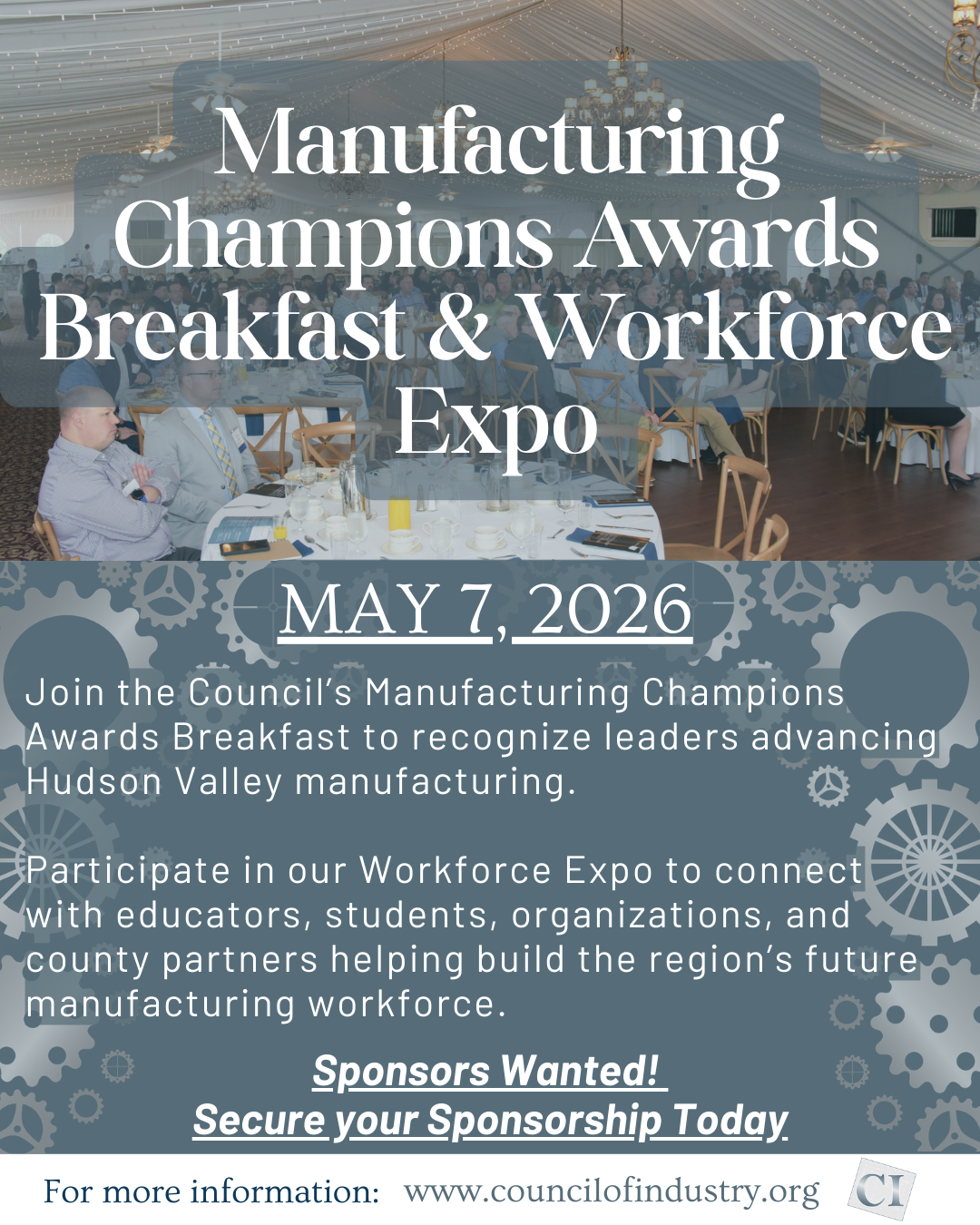
2026 Manufacturing Champions Awards Breakfast Will Again Feature Workforce Developers Expo
|
|
|
The Workforce Developers Expo has been a part of the Manufacturing Champions Awards Breakfast for the past five years.
This Expo seeks to highlight the ecosystem that prepares young people for careers in Manufacturing, as well as upskilling the current workforce.
Over the years, the Workforce Developers Expo has become a "can't miss event" for our members and partners, said Johnnieanne Hansen, CEO of the Council.
The event helps the current and future manufacturing workforce secure internships, jobs, and even full careers, as students connect with decision makers and industry leaders.
"Manufacturers value the opportunity to meet teachers, students, and workforce partners and to see firsthand the talent coming up in the next generation," she continued. "For students and educators, the experience is priceless. Networking is not always easy for students, but this environment gives them a real competitive advantage."
If you are an educator, student, nonprofit, economic development agency, or county partner actively engaged in training the future, or current, manufacturing workforce, we invite you to participate!
The expo allows attendees to see the great work being done to build and develop the skilled pipeline necessary for manufacturers success.
Following the Expo will be our Annual Manufacturing Champions Awards Breakfast - Champions to be announced later this month!
Click here to register & learn more.
|
|
|
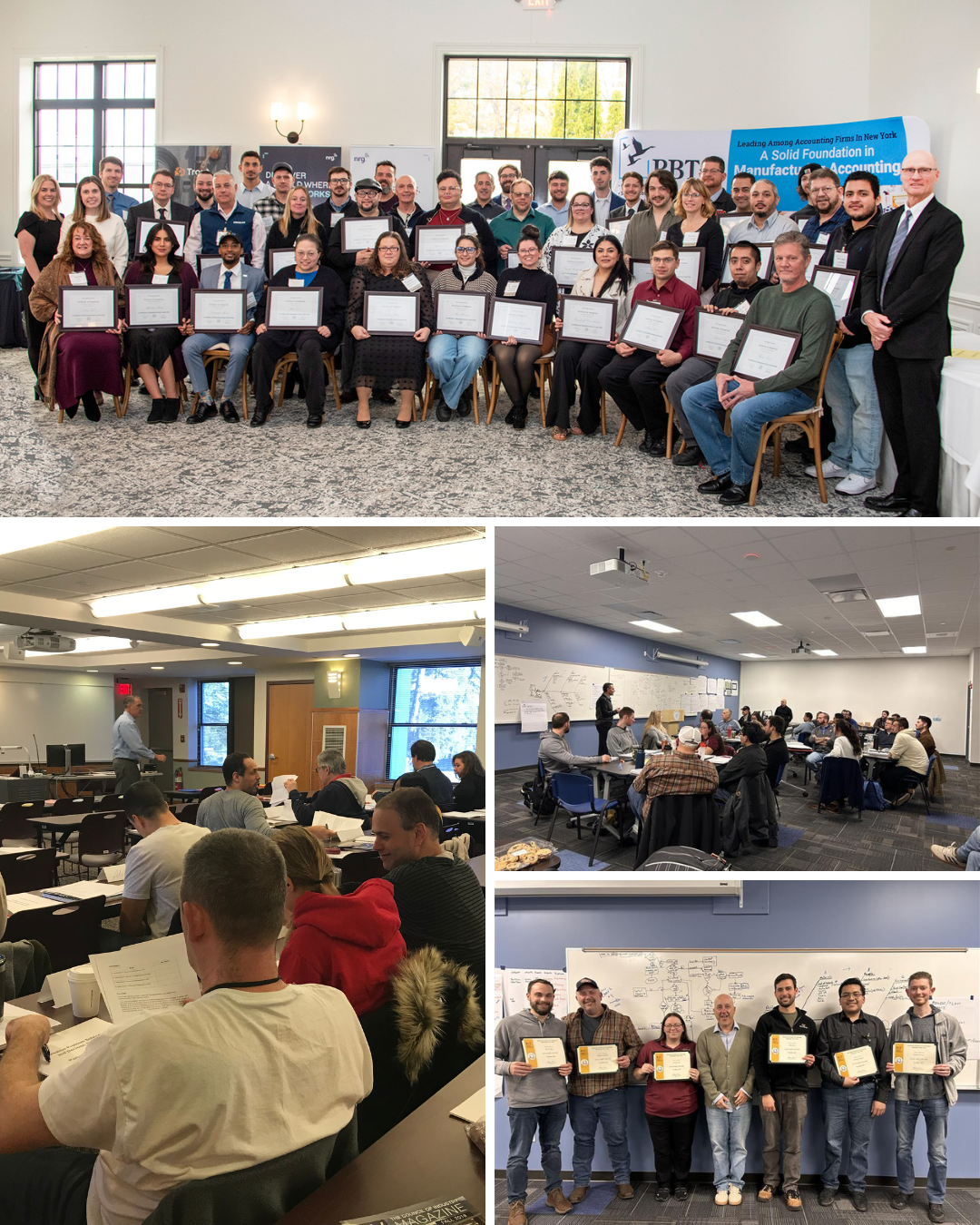
In-Person Certificate in Manufacturing Leadership Series begins April
|
|
|
Registration is now open for our Spring Certificate in Manufacturing Leadership Series, running from April through July at Ulster BOCES' Career Academies and Technical Center in Kingston.
CML has provided a practical development program for supervisors, team leads, and emerging leaders in local manufacturing for more than 25 years.
These courses are designed to provide hands-on learning and discussion opportunities that reflect the challenges and realities of manufacturing leadership.
This series is ideal for those interested in both individual growth and broader leadership development within their organization.
Participants who complete the series are recognized at our annual Luncheon each Fall.
Click here to secure your spot!
|
|
|
Council of Industry Attends SUNY's First Internship Summit
|
|
|
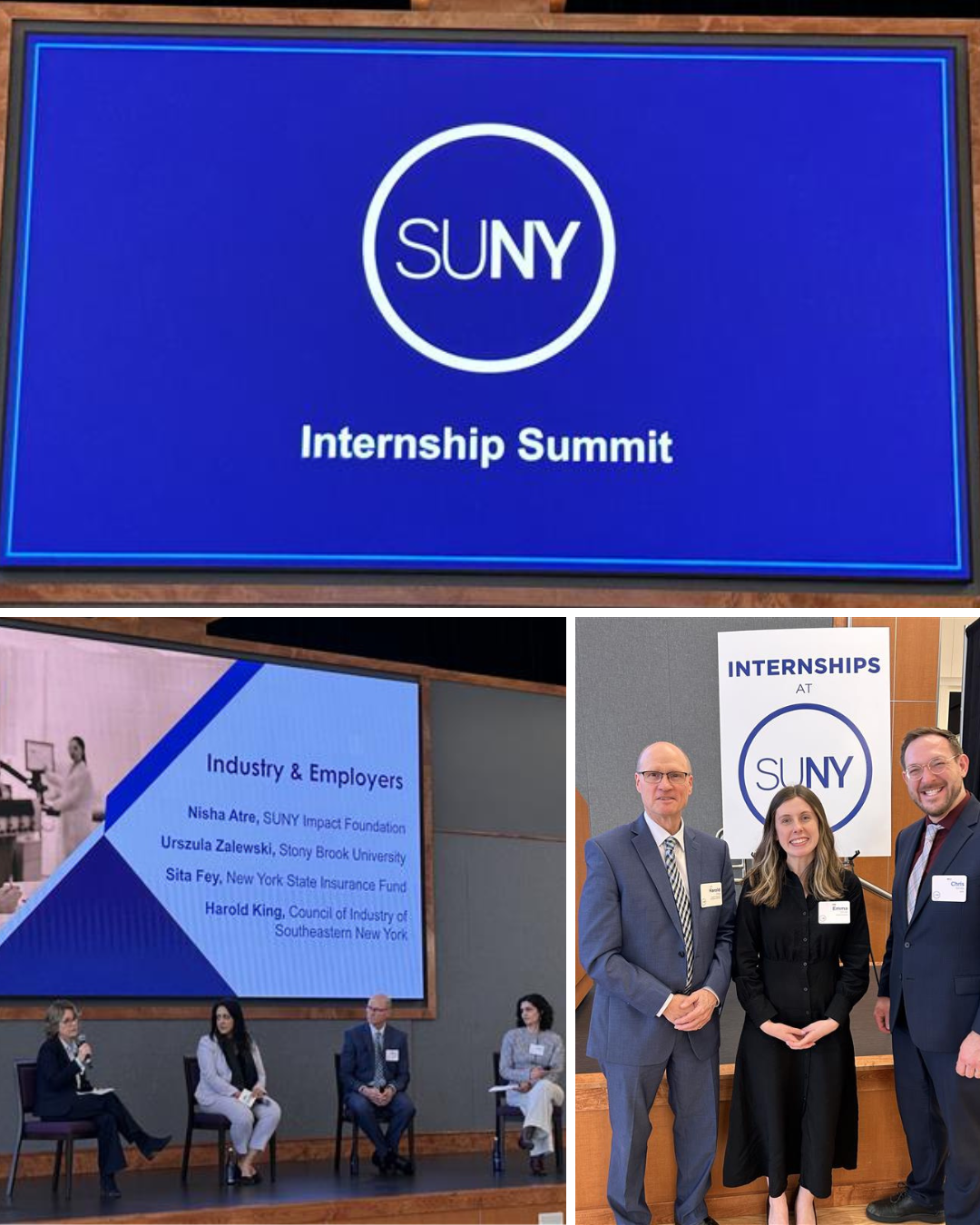
On Monday, President Harold King and Workforce Development Manager Emma Olivet attended SUNY's first ever Internship Summit, in Albany, as the Mid-Hudson Region's newly designated SUNY Internship Intermediary.
The summit featured employers speaking about their excitement and passion for working with SUNY students through their internship experiences to become career ready professionals.
Additionally, Harold King participated in a panel discussion about the importance of employer engagement to create impactful internships.
As the Mid-Hudson region's SUNY Internship Intermediary, the Council is bridging the gap between SUNY’s vast student talent pool and the specific needs of our regional businesses. This partnership isn’t limited to just one field.
We are seeking opportunities for students across all disciplines, including:
· Engineering & Manufacturing
· Management & Operations
· Marketing & Communications
· Accounting & Finance
· Human Resources
· More
If you want to learn more about how to get your company involved in SUNY Internships, or are a Mid-Hudson region SUNY student looking for an internship, reach out to Emma Olivet to get started!
|
|
|
HR Sub-Council Meeting - April 23rd
Our April HR Sub-Council meeting will be held at April 23rd at Ulster BOCES Career Academies at iPark 87.
This Sub-Council is open to business owners, HR professionals, and individuals managing HR responsibilities from manufacturing member companies.
Space is limited, so please register early.
If you are an associate member or part of our extended community, please reach out to Johnnieanne Hansen to discuss possible arrangements.
Register Here
|
|
|
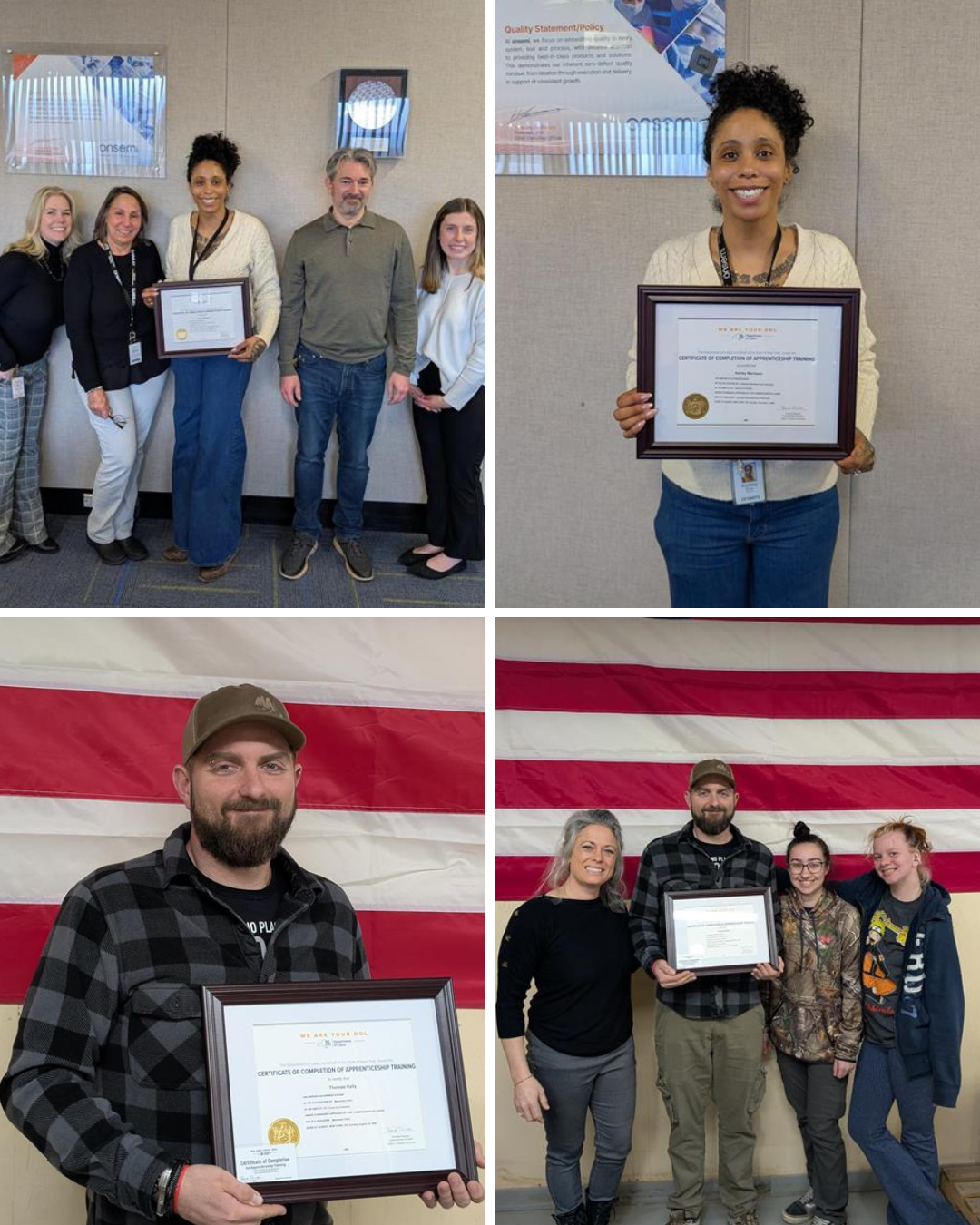
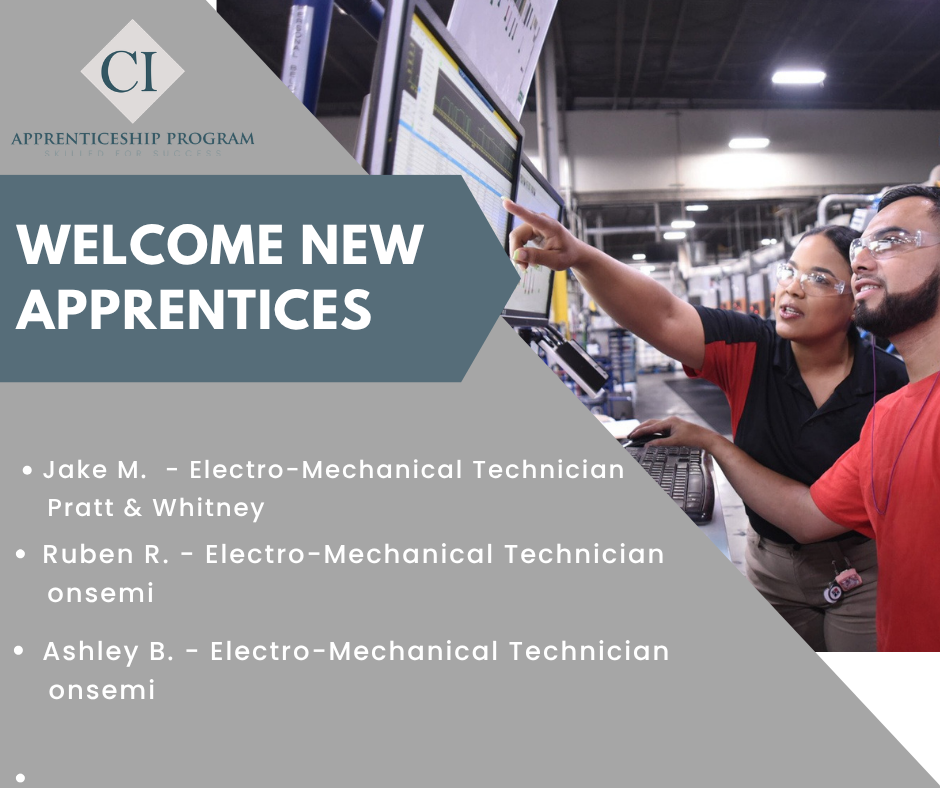
The Council of Industry got to join onsemi, in Dutchess County, and Usheco, Inc., in Ulster County, in celebrating the companies' first apprentices to graduate from the Manufacturing Intermediary Apprenticeship Program, last month.
onsemi's IMT Apprentice, Ashley, was one of onsemi's first apprentices and has paved the way for other apprentices at the company, said Emma Olivet, Workforce Development Manager.
"Ashley is a superstar and has taken advantage of all the opportunities the program has given her," Emma Olivet said. "All of her work has been to better herself at onsemi. She always has a glass half full attitude and we're excited to see how she continues to grow at the company."
Though finishing her IMT Apprenticeship, Ashley is continuing her MIAP Journey, now as an Electro-Mechanical Technician apprentice at onsemi.
Later in the month, the Council joined Usheco Inc. in celebrating their CNC Apprentice Tommy.
While Tommy was Usheco's first apprentice, he won't the company's last, said Alethea Schaeffer, Usheco's Strategy & Communication Coordinator. His hard work over the past four years has shown to be incredibly impactful.
"Tommy is now making complete molds, which we used to outsource, saving us time and money," said Usheco's Strategy & Communication Coordinator, Alethea Schaeffer. "We are now planning to add one or two more CNC Machinist apprentices to keep the pipeline flowing."
Congratulations to both Ashley & Tommy!
|
|
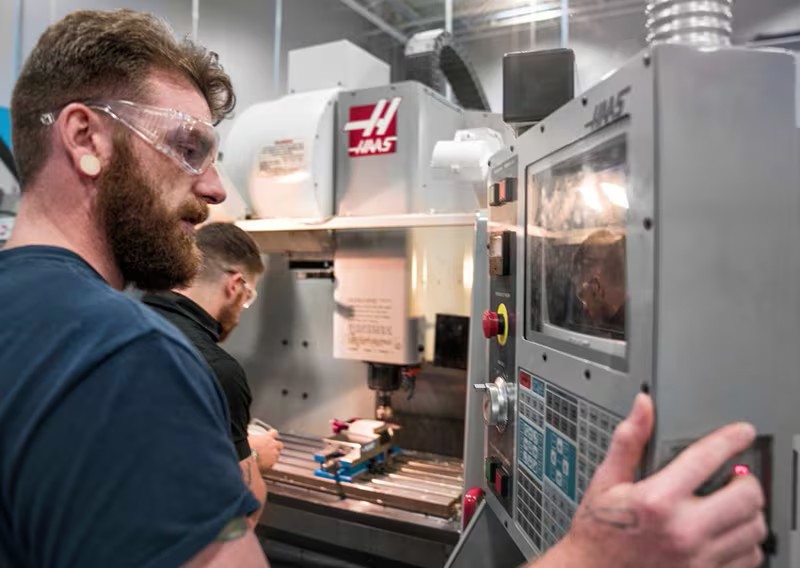
Upskill Your Workforce With CNC Machinist Apprentice Trade
|
|
|
The Council of Industry sponsors 8 manufacturing trades through The Manufacturers Intermediary Apprenticeship Program (MIAP.) These are New York State Department of Labor approved trades ranging in length from 12 months to 4 years. These apprenticeships consist of two pieces: On-the-Job Training (OJT) and Related Instruction (RI).
Machinists use machine tools, such as lathes, milling machines, and grinders, to produce precision metal parts.
· OJT allows an apprentice to learn firsthand from a skilled craftsperson who will demonstrate and share their experience in the field
· In RI, apprentices will learn the theory - and knowledge - based components of the craft. They must complete 144 hours of classroom or online training each year.
CNC machinists must be able to use both manual and CNC machinery. CNC machines control the cutting tool speed and do all necessary cuts to create a part. The machinist determines the cutting path, the speed of the cut, and the feed rate by programming instructions into the CNC machine.
Work Processes (Skills learned on the Job) Approximate Hours for CNC Machinist:
- Foundations of Machining: 2,000 hours
- Principles of CNC Machining: 250 hours
- General Operation CNC Mills/Lathes / Millturns / Grinders: 1,250 hours
- Supervised Setup Mills / Lathes / Millturns / Grinders: 1,500 hours
- CNC Setup and Operate CNC Mills / Lathes / Millturns / Grinders: 2,000 hours
- Writing Basic Programs: 1,000 hours
Total Hours: 8,000
Minimum of 144 Hours of Related Instruction (Classroom Learning) Required for Each Apprentice for Each Year:
- Safety
- Blueprint Reading and Drawing
- Mathematics
- Sexual Harassment Prevention Training
- Trade Theory and Science
- NC/CNC Programming
- Computer Software
- Communications
If you want to know more about this trade and if it might be right you’re your company contact Emma Olivet
|
|
|
Subscribers to the Manufacturing Career Hub can view candidate resumes and contact information by searching the Candidate ID Number in the iCIMS platform.
Not yet a participant of the Career Hub? Contact Emma Olivet directly for additional candidate details or to learn more about the recruiting initiative.
|
|
|
Candidate ID: 43328
Position Interest: Business/Operations/Management Internship
Level: Internship
Skills: Microsoft Excel, PowerPoint, Word; R and RStudio; market research and analysis; data visualization; presentation development; strategic thinking
Education: State University of New York at New Paltz, NY — Bachelor of Science in Management (Expected May 2026)
Dutchess Community College, NY — Associate of Science, General Studies (May 2024)
Availability: Open to Interviews
Location/Commute: Resides in Stormville, NY
Management student with experience in market research, investment analysis, and data-driven decision-making within a real estate environment. Strong communicator with the ability to turn insights into actionable recommendations.
Additional background in customer-facing roles, with a proven track record of reliability, organization, and increasing responsibility. Seeking an internship or entry-level opportunity in finance, real estate, or operations.
|
|
|
Candidate ID: 43329
Position Interest: Computer Engineering
Level: Internship
Skills: C++, C, Python, Java, MATLAB, Verilog; SolidWorks; digital logic and hardware design; testing and troubleshooting; lab equipment (oscilloscope, multimeter, soldering)
Education: State University of New York at New Paltz, NY — Bachelor of Science in Computer Engineering (Expected May 2027)
Availability: Open to Interviews
Location/Commute: Resides in New Paltz, NY
Computer Engineering student with experience in software development, digital systems, and hardware design. Familiar with programming in multiple languages and applying engineering principles to build and test functional systems.
Hands-on project experience includes developing system-based applications, programming FPGA devices, and building circuit-based solutions. Comfortable working both independently and in team-based technical environments. Seeking an internship to apply technical and problem-solving skills in an engineering or technology-focused role.
|
|
Candidate ID: 43331
Position Interest: Electrical Engineering
Level: Internship
Skills: Java, Python, C/C++, MATLAB; SolidWorks, Inventor, Rhino, Blender; PCB design and fabrication (EasyEDA, KiCad, LPKF S103); welding, machining, 3D printing; breadboarding; semiconductor research
Education: State University of New York at New Paltz, NY — Bachelor of Science in Electrical Engineering (Expected May 2026)
Availability: Open to Interviews
Location/Commute: Resides in New Paltz, NY
Electrical Engineering student with hands-on experience in digital and analog circuit design, PCB fabrication, microcontroller systems, and computational modeling. Proven ability to lead technical projects, including chaos-based encryption systems, operational amplifier prototyping, and Arduino-based instrumentation.
Experience includes teaching and mentoring peers in electronics labs, managing student lab resources, and conducting research in computational mathematics and visualization. Recognized for academic achievement (Dean’s List) and presentation of research at professional venues. Seeking an internship to apply engineering, design, and hands-on technical skills in electronics, hardware development, or embedded systems.
|
|
|
News for HR and Workforce Professionals
|
|
|
iCIMS March Insights – More Openings, More Hires, Fewer Applicants. Plus, Frontline Hiring Remains Difficult.
|
|
|
In February, all three talent market indicators continued to rebound from the volatility seen at the end of last year, but they are recovering at different speeds. Openings reported at +10% on the rolling 12-month index, showing the strongest momentum of the three measures. Hires moved upward, reaching +5%, while the month-over-month increase of 6% shows that hiring teams are gradually converting demand into filled roles. Although this gap closed a bit in February, openings are still outpacing hiring, showing employers continue to expand headcount capacity faster than recruiting teams can convert candidates through the funnel. This imbalance may create mounting pressure on recruiting efficiency and suggests that unfilled demand could carry Demand is rising—but candidates are pulling back.
In manufacturing, employers are still leaning into growth, with openings up about 10% even as applications fall roughly 10%. That gap is starting to bite: hires are inching forward, but at only about a 3% gain, suggesting plants are struggling to convert a shrinking pool of candidates.
Frontline jobs are still driving a large share of US job creation, but employers report persistent difficulty filling and keeping these roles even as overall labor market momentum cools, according to our data.
According to the ICIMS State of Frontline Hiring Report, 91% of frontline hiring managers say filling roles is urgent, yet more than half of candidates abandon applications before completion, and 32% drop off at the interview stage.
Read the Report
Learn more about the Council of Industry’s Manufacturing Career Hub Driven By iCIMS
Check out the MIAP Apprentice Program
|
|
|
HR Leaders Are Drowning In Decisions: Here’s How The Best Ones Are Getting Ahead
|
|
|
Two competing forces are currently shaping the work of people leaders at many major businesses. On the one hand, geopolitical uncertainty and economic volatility are leading to a tightening of purse strings, making it harder to retain and attract top talent. At the same time, the requirements of the modern workplace mean that there has never been such a need for workers with the right skills and attitudes to innovate and embrace the potential of AI and other cutting-edge technologies. One of the biggest challenges for people professionals, and one area where the savvy use of technology can really help, is decision-making. Workforce decisions are rarely broken because of poor policy, says Maria Colacurcio, CEO of Syndio, a pay equity software platform. Instead, they often break down in the execution.
This means that it is no longer enough to simply formulate excellent policies once a year and let them go, says Sara Morales, senior vice president for people and communities at Cisco. “Now, with the pace of change, we need to be proactive and reactive. Culturally, what we’re seeing is an evolution of highly structured teams’ organizational decision-making to much more dynamic and fluid ways of making decisions at speed.” “There are 657 things that leaders are trying to work through every day—maybe even every hour,” says Morales. “To move through that with clarity, leaders need to establish what are the few most important things to focus on.” So, what can people leaders do? “You have to start by collaborating differently,” says Morales. “We have to create space, time, and energy for people to learn and think and strategize.”
Read more at Fortune
|
|
|
Frontline Leadership Key To AI Adoption In Manufacturing’s
|
|
In 2025, manufacturing averaged approximately 420,000 job openings, and it may need as many as 3.8 million new workers by 2033. In response, manufacturers are accelerating investment in AI and automation, with 86% of high-growth companies doing so. These investments are reshaping how work is performed more than they’re reducing labor demand. Rather than easing pressure on the frontline, AI often introduces new complexity by changing how decisions are made, how performance is measured, and how work is executed day to day. To examine these dynamics, PwC and the Manufacturing Institute surveyed manufacturing leaders across operations, human resources, and executive roles for this 2026 report.
Despite growing investment in AI, manufacturers have limited confidence in how prepared their frontline leaders are to lead through it. When asked to rate their readiness to lead AI-driven change, 54% of respondents reported low or very low confidence, and none reported high or very high confidence.
Nearly half (45%) of frontline leaders are described as skeptical of AI, even as 50% express excitement about its potential. Frontline workers are earlier on the curve, with 62% viewed as skeptical and just 24% described as excited. That divergence has implications for execution. Frontline leaders may be positioned to drive implementation, but sustained adoption depends on the conviction of the workers responsible for day-to-day execution.
While many manufacturers approach AI readiness primarily as a training issue, current training and development practices for frontline leaders haven’t kept pace with technological change. More than half (52%) provide role-specific development for frontline leaders only once a year, and nearly one in five (17%) never provide it. When it comes to AI specifically, just 19% offer any AI-related training.
Read more at PwC
Learn More about the Council of Industry’s Certificate in Manufacturing Leadership Series for Front Line Supervisors
|
|
Wanted: Head of Human AI Solutions. The New Jobs Being Created by AI
|
|
Artificial intelligence has sparked fears it will become a job killer. It’s also fueling a crop of new careers. AI created 640,000 jobs between 2023 and 2025 in the U.S., according to an analysis by LinkedIn of job posting data, including new white-collar positions such as head of AI and AI engineer. That tally doesn’t include the huge number of temporary construction jobs tied to building the mammoth data centers AI relies on. data show employers are increasingly hiring for AI talent. In 2023, AI-related roles made up only 1.6% of all job postings, according to an AI job tracker co-led by Anil Gupta, professor at the University of Maryland. Two years later that figure had more than doubled to 3.4%, the tracker found.
The fast-emerging new jobs help train AI to improve its performance and take on more tasks, and help train humans to use AI in their work. The jobs run the gamut from high-level careers in AI strategy to hourly work. Many of these new employees work directly for AI companies, but other industries including finance, healthcare and manufacturing are also snapping up such workers as they seek to capitalize on the technology.
Read more at The WSJ
|
|
|
Feds Launch Text-Based “Make America AI-Ready” Training
|
|
|
Americans now have access to a free, one-week AI literacy course offered by the federal government, as part of a strategy to bolster growing employer efforts to train the workforce on AI skills. The “Make America AI-Ready” initiative was recently unveiled by the U.S. Department of Labor, with support by edtech firm Arist. The program offers bite-sized learning—which can be completed in one week, at 10 minutes a day—all via text messaging.
The initiative comes as demand for AI skills soars among employers. The training is based off of the five pillars of AI literacy outlined in the DOL’s recently announced framework, meant to guide workforce and education systems’ AI upskilling efforts. These include: understanding AI principles, exploring AI uses, directing AI effectively, evaluating AI outcomes and using AI responsibly. According to the DOL, participants will receive tailored suggestions following course completion for ongoing skills-building and career-related opportunities.
Read more at HR Executive
|
|
|
When Full-Time Headcount Isn’t the Answer: How Contract Talent Is Closing Execution Gaps
|
|
|
While the fundamentals of hiring haven’t changed much over time, the realities of modern work are pushing HR leaders to think more broadly about how talent gets sourced and deployed — such as considering contract and freelance professionals. Today, many organizations operate with leaner teams — whether due to budget pressures, restructuring or the growing use of productivity tools such as AI. At the same time, roles have expanded as reductions in headcount rarely come with a reduction in responsibilities. When organizations eliminate or consolidate roles, the work itself doesn’t disappear. It simply shifts to whoever remains.
Rather than continuing to compress roles internally, a growing number of organizations are expanding their definition of the workforce itself. Contract and freelance professionals are increasingly being used alongside full-time employees to address workload spikes and specialized needs. ADP research found that 27% of workers hold at least one contingent or short-term position in 2024, signaling that flexible work arrangements are becoming a structural feature of the labor market rather than a temporary workaround. Meanwhile, more than 73 million Americans freelanced in 2025 — representing approximately 44% of the workforce, according to the Freelance Benchmark Report 2026. The talent pool is there. The gap is in how HR plans for it.
Read more at HR Morning
|
|
|
New York Law Prohibiting Employers’ Use of Credit Histories Goes Into Effect Later This Month
|
|
|
Beginning April 18, 2026, employers of all sizes will be prohibited from requesting or using an applicant’s or employee’s consumer credit history or discriminating against them based on that history. Consumer credit history is the applicant’s or employee’s credit information or payment history as reflected in their credit report, credit score, or in details the employer gets directly from the individual about their credit accounts, bankruptcies, judgments, or liens.
There are some exceptions, such as when the employer is required by law to consider credit history or the position requires security clearance. The law does not include a blanket exception for employees who handle customer or employer funds.
Read more at Cornell Institute for Labor Relations
|
|
|
New Graduates Say They Would Sacrifice Pay For Job Stability
|
|
|
Graduates are relatively confident they’ll find a job, but that optimism isn’t as high as it used to be, according to Monster’s 2026 State of the Graduate Report. Although 79% said they were confident they would get a job offer within three months of graduation, that number is down from 83% in 2025. New graduates are prioritizing stability over salary, with 67% saying they would take a lower-paying role in return for more long-term job security. The research found that while graduates are taking a pragmatic approach to job hunting, 68% still said salary was their top consideration when evaluating offers. Job security came in second at 52%, now higher than career growth opportunities (49%)
“Today’s graduates are entering the workforce with ambition, but also realism,” Vicki Salemi, a Monster career expert, said in a statement. “Pay matters, but stability is increasingly shaping early career decisions. Many are weighing long-term security more heavily than rapid advancement.” Meanwhile, 69% of graduates said they were more willing to compromise on their ideal position than they were a year ago, and 75% said they would take a job they intended to leave within a year if it brought them immediate income. In addition to salary and security, graduates’ top priorities when considering a job offer were work-life balance, growth opportunities, benefits such as health insurance and PTO, remote or flexible work and company values.
Read more at HR Dive
|
|
|
OSHA’s New Safety Program Signals A ‘Softer’ Chapter For The Enforcement Agency
|
|
|
Earlier this month, OSHA unveiled its Safety Champions Program, a “cooperative initiative” that the U.S. Department of Labor says encourages employers to proactively reduce the risk of injuries, illness and fatalities. According to the department, the program enables organizations to progress through three stages—Introductory, Intermediate and Advanced—building seven core elements into their safety and health programs. Since the start of President Trump’s second term in office, the administration has shifted the narrative about OSHA’s role in driving workplace safety outcomes.
“Now, it’s more about cooperation and less about more hardline enforcement,” says Jason Mills, partner at Morgan Lewis & Bockius, calling it a “softer” approach than was taken in the Biden administration. “What [the Safety Champions Program] looks like to me is an opportunity to put a stamp on that.” While Mills views the program as “well-intended”—“It’s not meant to be a ‘gotcha,’ ” he says—he does anticipate many employers will be a bit skeptical. “It’s still an enforcement agency,” he says. “Nothing against them, but many employers probably don’t want to invite them into their business.” Given the likely hesitation surrounding participation, Mills says HR leaders will need to partner with safety leaders to thoroughly consider how the program could fit into the organization’s safety strategy.
Read more at HR Executive
|
|
|
Insight Exchange: Expert-Led Video Series for Manufacturers
|
|
|
Insight Exchange: Expert-Led Video Series for Manufacturers
The Insight Exchange is a new video series from the Council of Industry, offering manufacturers expert insights and strategies—accessible anytime. Each session features industry professionals covering key topics like workforce development, regulatory updates, and emerging technologies.
|
|
|
|
Season 1 Episode 7:
Building a Strong Manufacturing Talent Pipeline: Strategies for Hiring & Retaining Employees
- Presented by Insperity
|
|
|
Join Jennifer Libby and Andrell Gautier of Insperity in this Insight Exchange episode, hosted by the Council of Industry, as they share seven actionable strategies to help manufacturers attract and retain top talent in today’s competitive labor market.
From crafting job descriptions that truly resonate with candidates to building a strong employer brand and culture, Jennifer and Andrell offer real-world insights grounded in decades of HR and manufacturing experience. They cover key topics including employee well-being, competitive compensation, training and apprenticeship programs, skills-based hiring, and the role of technology in modernizing the workplace.
Whether you’re in HR or operations, this episode provides practical guidance to help you build a resilient, future-ready workforce.
About Insperity
Since 1986, Insperity has been helping businesses succeed by providing HR support, workforce optimization, compliance guidance, and safety services—tailored to the unique needs of growing companies.
Learn More
Insperity: www.insperity.com.
For more info, visit www.councilofindustry.org
|
|
|
If you’re part of a Council of Industry member company and not yet subscribed, email us. If you’re not a Council member, become one today
|
|
|
|
|