Member Briefing June 8, 2026

Posted By: Harold King Daily Briefing,

U.S. Payrolls Rose By 172,000 In May, Much More Than Expected; Unemployment At 4.3%.

Job growth unexpectedly surged in May as the U.S. labor market continued a solid year of expansion, the Bureau of Labor Statistics reported Friday. Nonfarm payrolls jumped a seasonally adjusted 172,000 for the period, down slightly from the upwardly revised 179,000 in April and far above the Dow Jones consensus estimate for 80,000. The unemployment rate held steady at 4.3%, as expected. Breadth of job gains improved in May, with multiple sectors seeing solid advances.

  • March’s job gains were revised up by 29,000 to 214,000—the largest monthly gain since December 2024. April’s payroll gain was revised up by 64,000 to 179,000
  • Leisure and hospitality led all sectors with 70,000 jobs, well above the 14,000 per month average over the past year.
  • The healthcare sector also created 47,000 new jobs;
  • Manufacturing added 7,000 jobs. (Details below)
  • Employment showed little change over the month in other major industries, including construction, wholesale trade, retail trade, information, professional and business services, and other services.
  • The retail, information and finance sectors lost jobs in May.
  • The labor force participation rate held at 61.8 percent in May.
  • In May, average hourly earnings for all employees on private nonfarm payrolls rose or 0.3 percent, to $37.53. Over the year, average hourly earnings have increased by 3.4 percent.

Read more at the BLS

Manufacturing Industry Gained 7,000 Jobs In May

The manufacturing industry added 7,000 jobs in May, regaining its footing after a lull in April, according to U.S. Bureau of Labor Statistics data released Friday. That’s about a 164% increase over the same time last year, which showed 11,000 job cuts. However, month over month, it’s a 100% improvement from April’s adjusted job data count, which is now at 0. The BLS initially reported 2,000 jobs were cut.

The fabricated metal product sector led the headcount in May, rising about 253% month over month with 6,700 jobs. The transportation equipment sector, which includes trailers and motor vehicle bodies and parts, added the second most workers with 4,900. Miscellaneous, which are products not classified in the other sectors, came in third with an addition of 3,000 jobs. Food manufacturing lost 3,600 employees, followed by wood products at 1,900 cuts and furniture and related products at 1,000 job losses. Manufacturing unemployment fell by 16% to 458,000 workers in May, down from 547,000 a year ago.

Read more at Yahoo Finance

NFIB: Small Business Job Openings Decline In May

NFIB’s May Jobs Report shows little change in the employment market as the Small Business Employment Index remained essentially flat, registering 100.3 in May after measuring 100.4 in April. This is the third consecutive month the Index declined. The current reading is now below the 2025 average of 101.2, but still slightly above the historical average of 100.0.

  • In May, 29% (seasonally adjusted) of small business owners reported job openings they could not fill, down 5 points from April and marking the lowest level since May 2020. Twenty-seven percent have openings for skilled workers (down 2 points), and 9% have openings for unskilled labor (down 4 points).
  • A seasonally adjusted net 9% of owners plan to create new jobs in the next three months, down 4 points from April and marking the lowest level since May 2020. Plans to hire are now below its historical average of a net 11%.
  • Overall, 55% of owners reported hiring or trying to hire in May, up 2 points from April. Forty-six percent of owners (84% of those hiring or trying to hire) reported few or no qualified applicants for the positions they were trying to fill (unchanged).
  • 13% of small business owners cited labor quality as their single most important problem, down 5 points from April and marking the lowest level since December 2016.
  • Reports of labor costs increased to the highest reading in the survey’s history. Fourteen percent of business owners reported labor costs as their single most important problem, up 5 points from April.
  • Seasonally adjusted, a net 31% of small business owners reported raising compensation in May, up 1 point from April. A net 18% (seasonally adjusted) plan to raise compensation in the next three months, unchanged from April.

Read more at the NFIB

Iran and the Middle East

Ukraine

Other World Headlines

Advertisement

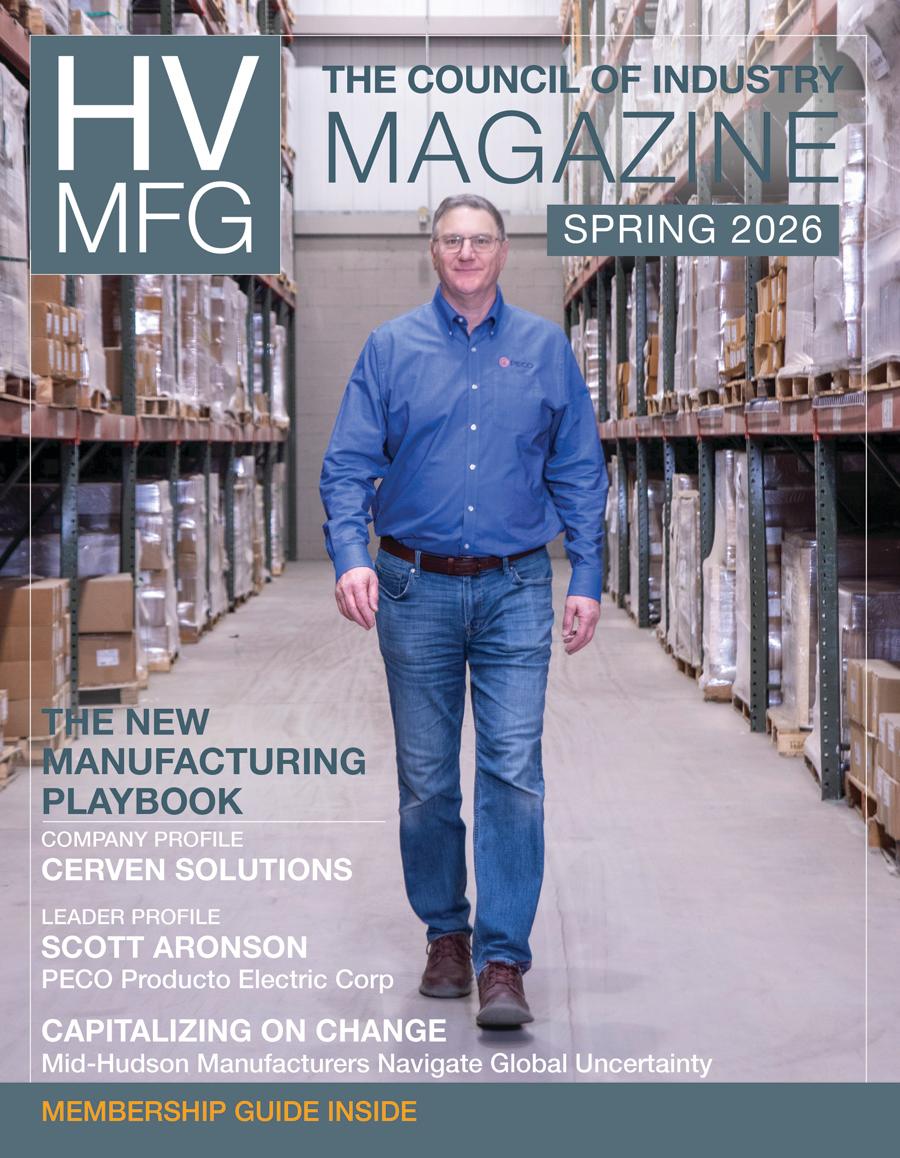
The Spring 2026 Edition of HV Mfg Is Now Available

Your ad here! Contact Harold King to learn more

US Bonds Slide as Hot Jobs Data Fuels Bets on 2026 Fed Hike

Bond traders fully priced in a Federal Reserve interest-rate hike by the end of this year after US job growth topped all forecasts in May, spurring yields higher in the $31 trillion Treasuries market. Interest-rate swaps indicated traders expect a quarter-point increase in the US central bank's target for the federal funds rate by the December policy meeting, with a roughly 60% chance of a move in October.

The selloff in the Treasuries market pushed yields higher across maturities on Friday, with those on two-year notes — most sensitive to changes in US central bank policy — jumping as much as 11 basis points to 4.15%, the highest this year.

Five-year yields rose as much as 10 basis points, 10-year yields as much as seven basis points to 4.53%. The dollar rose. The US government bond market has undergone a profound shift since late February, when the US attack on Iran led to a surge in oil prices and in both actual and expected inflation. That annihilated wagers on Fed rate cuts this year and forged a consensus that the next move will be a hike.

Read more at Yahoo Finance

New York State Legislature Passes 1-Year Data Center Moratorium

In the final scheduled legislative session day, the Democrat-led Legislature passed a first-in-the-nation one-year moratorium on new data center construction as part of an omnibus package intended to regulate the fast-evolving sector. “We’re not saying you can’t build here, but we are saying we want to take a look at all of the aspects and all of the impacts, and that’s what we will do and we will continue to adjust as we move forward,” said Senate Majority Leader Andrea Stewart-Cousins said of the data center moratorium. It will have to be signed by Gov. Kathy Hochul to become law.

The one-year pause has earned pushback from Republicans in the minority but also a range of business, tech and construction groups who oppose a moratorium, arguing it sidelines New York economically and disadvantages upstate specifically. “No one in this chamber wants reckless growth, and the questions around energy, water and all of the other concerns are real questions, but the moratorium is not an answer. It’s a sign hung on the front door of New York that says ‘we’re out to lunch’ for a year. It pauses every region of New York State that is working to attract growth,” said North Country Republican Assemblymember Scott Gray.

Read more at New York State of Politics

2022–2024 R&D Tax Credit Refunds: What Manufacturers Need to Know Before July 6, 2026

If your business incurred costs developing new or improving upon existing products, processes, or building software between 2022 and 2024, there’s a good chance you overpaid taxes and have a limited amount of time to recover that money. That window closes on July 6, 2026. In 2022, Section 174 capitalization rules quietly changed how businesses could deduct research and development expenses. Before 2022, companies could typically deduct qualifying R&D expenses immediately. Once the new Section 174 amortization rules took effect, businesses were instead forced to spread those deductions across multiple years.

Intended as relief for American businesses, the 2025 OBBA included a carve out that enables qualifying businesses file for previously unclaimed 2022-2024 R&D tax credits without the need to amortize any associated research costs. That means businesses can revisit their 2022, 2023, and 2024 returns and seek to secure tax savings opportunities that were previously passed over because of the pre OBBA rules. However, this relief provision came with a catch. July 6, 2026 is the deadline qualifying businesses must file their 2022-2024 R&D tax credit claims in order to take advantage of not also having to amortize their research expenses.

Read more at Onshore or contact  Council Partner Onshore

More Policy and Politics Headlines

Long COVID May Affect 1 In 6 Infected Patients

Long COVID may be affecting far more Americans than current estimates suggest, with a study published last week in JAMA Network Open estimating that roughly one in six people infected with SARS-CoV-2 develop the condition, and nearly 90% go on to experience chronic health problems. The researchers identified long COVID cases by detecting symptoms and conditions that emerged after infection and could not be explained by preexisting conditions.

The team identified 74,560 long-COVID patients, representing 16.3% of COVID patients in the study. The estimate, which translates to roughly 15 million Americans, is far higher than the rate captured by current code-based surveillance systems. Most long-COVID patients (89.3%) identified in the study developed at least one chronic condition requiring ongoing clinical management. The researchers also found evidence that the burden of long COVID continues to grow rather than fade. Long-COVID prevalence increased across all four studied regions through mid-2024.

Read more at The University Minnesota CIDRAP

Upcoming Council Programs

Events

Council of Industry Golf Outing - Monday August 24th 11:30 AM - 7:30 PM. The Powelton Club, Newburgh.

Insight Exchange - On Demand Webinars

C3POA - Key Perpectives on your CMMC Compiance Journey - Presented by Nick DeLena, PKF O'Connor Davies.

CMMC for Legacy Equipment: Securing Specialized Assets with Zero Trust Micro-Enclaves - Presented by Marc Hoover, Trout Software.

See previous episodes here!

Training

Human Resource Management Issues, In Person at iPark 87 in Kingston.  June 10, 8:30 - 4:30.

Effective Business Communication, In Person at iPark 87 in Kingston.  June 24, 8:30 - 4:30.

Risk Management - Environment Health & Safety, In Person at iPark 87 in Kingston.  July 8, 8:30 - 4:30.

Strategies for Managing, Coaching and Dealing with Difficult People, In Person at iPark 87 in Kingston.  July, 15, 8:30 - 4:30.

Lean Six Sigma Yellow Belt, In Person at DCC Fishkill.  October 13, 14, and 15 8:30 - 4:30.

Trade Wars

Oklahoma Attorney General Files To Halt First US Aluminum Smelter Project In 50 Years

Oklahoma’s Attorney General Gentner Drummond on Tuesday filed a petition to block an aluminum smelter from being built at the Port of Inola, citing environmental and public nuisance concerns. The complaint, filed in the Rogers County District Court, targets Emirates Global Aluminum and Century Aluminum, which seek to construct a primary aluminum production complex with a capacity of 750,000-plus metric tons per year — making it the largest smelter in the United States and the first one built since 1980.

The $4 billion project has received hundreds of millions of dollars in federal and state grants and incentives, and was first announced in May 2025. The smelter would occupy 350 acres along the Verdigris River and be within three miles of Inola’s schools, homes and farms, according to the 12-page petition. It is expected to draw more than 1,000 megawatts of continuous electricity and, citing a pending air-quality permit application, be authorized to emit more than a ton of hydrogen fluoride per day. The petition came months after the Oklahoma Department of Environmental Quality began its review of the smelter project. It also came days after President Donald Trump endorsed former state Sen. Mike Massei to be Oklahoma’s governor instead of Drummond.

Read more at Manufacturing Dive

IBM Commits $10 Billion To Fault-Tolerant Quantum Computers By 2029

IBM announced plans to invest more than $10 billion in quantum computing over the next five years, targeting the delivery of the first large-scale, fault-tolerant quantum computer by 2029. According to the company, the funds will be directed toward a range of priorities including R&D, capital expenditure, manufacturing, ecosystem partnerships, and mergers and acquisitions. IBM said the 2029 system, called Starling, will be capable of executing 20,000 times more operations than current systems. A subsequent system, IBM Quantum Blue Jay, is planned to run one billion quantum operations across 2,000 qubits.

Globally, IBM has deployed over 90 quantum systems — a figure the company says exceeds the combined total of every other player in the industry — with more than 340 organizations running real workloads on its machines. Since 2017, the company has signed more than $1.1 billion in contracts with clients, the company said. IBM is set to receive $1 billion from the Commerce Department for a new stand-alone quantum chip foundry called Anderon, to be based in Albany, New York. IBM said it will match that grant with $1 billion of its own cash, along with intellectual property, assets, and staff. The company is planning a roughly 511,000-square-foot facility in Poughkeepsie to assemble and manufacture its next-generation Starling quantum systems.

Read more at Yahoo Finance

Steel Imports Down 30% In 2026 As Tariffs Bolster US Production

The amount of foreign steel entering the United States inched nearly 6% higher in April from the previous month, but remains about 30% lower on a year-to-date basis as Section 232 tariffs continue to disrupt trade flows and support domestic steel production. Total imports for the month reached 1.87 million net tons, driven by increased imports of tin plate, metallic coatings, reinforcing bars and other goods, according to recent Census Bureau data compiled by the American Iron and Steel Institute. That included 1.38 million net tons of finished steel.

The largest supplier countries in April were South Korea, Canada, Brazil, Mexico and Vietnam, in that order, according to census data. From January to April, imports totaled 6.97 million net tons compared to 9.89 million net tons for the same period a year ago. In addition to tariffs, Morningstar analyst Seth Goldstein said disruptions from the Iran war are forcing companies to take on extra costs, such as fuel surcharges, and affecting their sourcing strategies. “We could see some importers of steel and other commodities looking to maybe wait for a resolution, wait ’til supply chains normalize, in order to not basically be buying inventory during what might be uptake pricing for the year,” Goldstein said.

Read more at Manufacturing Dive

GE Completes Ground Test for Hybrid Engine

GE Aerospace reported that it completed ground testing of a megawatt-class hybrid electric engine system it developed through NASA’s Electrified Powertrain Flight Demonstration (EPFD) project, paving the way for flight tests. After more than a decade of testing and refining individual system components and modules, it was the first test to validate the full integrated system, which includes GE Aerospace motor/generators, power converters and inverters, controllers, Dowty propellers, Avio Aero gearboxes, and a GE CT7 engine.

Hybrid electric engine systems combine an electric powertrain with a standard gas turbine to optimize power management during different flight phases. GE notes that hybrid electric systems are compatible with different fuel types and advanced engine architectures, like its Open Fan development. The test at GE’s Peebles (Ohio) Test Operations center involved simulations of various flight phases, including taxi, takeoff, climb, and cruise. The electric powertrain helped power the propeller and generated power to the battery.

Read more at American Machinist

Boeing Eyes Higher F-15EX Production

Boeing defence chief Steve Parker feels that US Air Force (USAF) demand for the F-15EX could go beyond current fleet plans. Demand for the updated version of the F-15 has proven sufficiently strong that Boeing’s F-15EX production line is “effectively sold out through 2034-2035,” says Parker, chief executive of Boeing Defense, Space & Security (BDS). Parker, speaking with FlightGlobal in Singapore recently, estimates that the USAF could end up operating “potentially over 300” examples. The USAF’s F-15EX acquisition plans have fluctuated over the years, falling from 144 aircraft to 80 and then rising up to 104.

Parker adds that that the cost per flight of the F-15EX is lower than for comparable stealth aircraft, with the Pentagon’s Cost Assessment and Program Evaluation office putting this figure at $29,000 per flight hour. Parker, however, stresses that while Boeing’s strategy to modernise the F-15 has borne fruit, programme execution will be key to grow the F-15EX fleet. This will involve changes to the workforce, supply chain, and bringing in a new generation of F-15 production workers. And beyond producing greater numbers of F-15EXs, sustainment will also be a major priority.

Read more at Flight Global

Honeywell Aerospace Rebrands Ahead Of Planned Spin Off

Honeywell Aerospace plans to generate at least $6.5 billion in earnings and $4 billion in cash flow by 2030, executives unveiled at the company’s investor day on Wednesday. To meet its goals, the Airbus and Boeing supplier will focus on scaling and strengthening its manufacturing operations and supply chain, as well as releasing at least 40 retrofit, modification and upgrade products, according to a presentation. Honeywell Aerospace is scheduled to finalize its spinoff from Honeywell on June 29 and will have a listing on the Nasdaq stock exchange under the ticker “HONA,” according to a June 3 press release.

Honeywell Aerospace is focusing on innovation, speed and scale, CEO Jim Currier said. “That means we’re looking at the entire way we manufacture our products going forward,” Currier said. “The focus is really around manufacturability and how do you do that at scale.”  While Currier is “comfortable” with the company investing in technologies across the business, Honeywell Aerospace is “actually now doubling down and tripling down on the manufacturing scale.”

Read more at Manufacturing Dive

Americans Are Keeping Their Cars Longer Than Ever (13 Years) —and Remaking the Auto Industry

Some drivers are squeezing more miles out of their vehicles and eschewing new rides because of sticker shock, high interest rates and economic jitters. Others are hanging on to aging wheels simply because they can. Thanks to advancements in engineering, materials and safety technology, today’s cars last longer than vehicles of generations past. The average vehicle on U.S. roads is about 13 years old, a historic high and a 10% jump from a decade ago. The reality is fundamentally reshaping the economics of buying, selling and fixing vehicles in America.

Automakers, long laser-focused on the new-car market, are now pouring resources into propping up used-car sales, aftermarket parts and maintenance work. Dealers are investing in their repair shops, adding service bays and a phalanx of customer-friendly services once reserved for luxury patrons. All the while, competition for repair work is mounting among mom-and-pop mechanics, big oil-change shops and tire chains vying for a piece of the fix-it business. “If we’re not going to make money on the selling side, we have to make it on the service side,” said Ed Roberts, operating chief of Bozard Ford Lincoln in St. Augustine, Fla. “And everybody is fighting for a piece of that pie.”

Read More at The WSJ

NYPA Issues FAQ for Nuclear Power Plants

The New York Power Authority (NYPA) is pursuing advanced large-scale reactors at 1,000 MW and small modular reactors in the range of 300 MW based Generation III+ or Generation IV designs and technologies. It is expected that the locations of new reactors will be upstate, at shoreline sites on Lake Ontario. Proposals must must demonstrate a credible path to both produce 1.0 GW of energy and start construction before 2033 to ensure Inflation Reduction Act Investment Tax Credit eligibility.

First-of-a-kind (FOAK) and micro modular reactors (MMRs) are outside the scope of this effort. SMRs that are proposed must be already deployed or under construction prior to 2033. First concrete must be proposed to be poured by 2030. This is a two-step process and qualified firms will be invited to participate in a future Request for Proposal (RFP). RFQ closes June 26, 2026 at 4:00 PM EST. The text of the RFQ is here. According to World Nuclear News, the Request for Qualifications (RFQ) follows on from Requests for Information issued by the authority last year, to which more than 30 entities – including 23 potential developers or partners and eight Upstate New York communities – responded.

Read more at Neutron Bytes

Daily Market Update June 5, 2026

The July ’26 natural gas contract is trading down $0.05 at $3.29. The July ‘26 crude oil contract is down $0.79 at $92.25. 

Read more at NRG

Learn more about the Council of Industry Energy Buying Group

Quote of the Day

“The longer I live the more beautiful life becomes. If you foolishly ignore beauty, you will soon find yourself without it. Your life will be impoverished. But if you invest in beauty, it will remain with you all the days of your life.”

Frank Lloyd Wright - American Architect who was born on this day in 1867.

If you’re part of a Council of Industry member company and not yet subscribed, email usIf you’re not a Council member, become one today.

Facebook  Instagram  LinkedIn  X  Youtube