|
The HR Newsletter of the Council of Industry
May 12th, 2026
|
|
|
Council of Industry Celebrates 2026 Manufacturing Champions, Highlights Region's Workforce Development
|
|
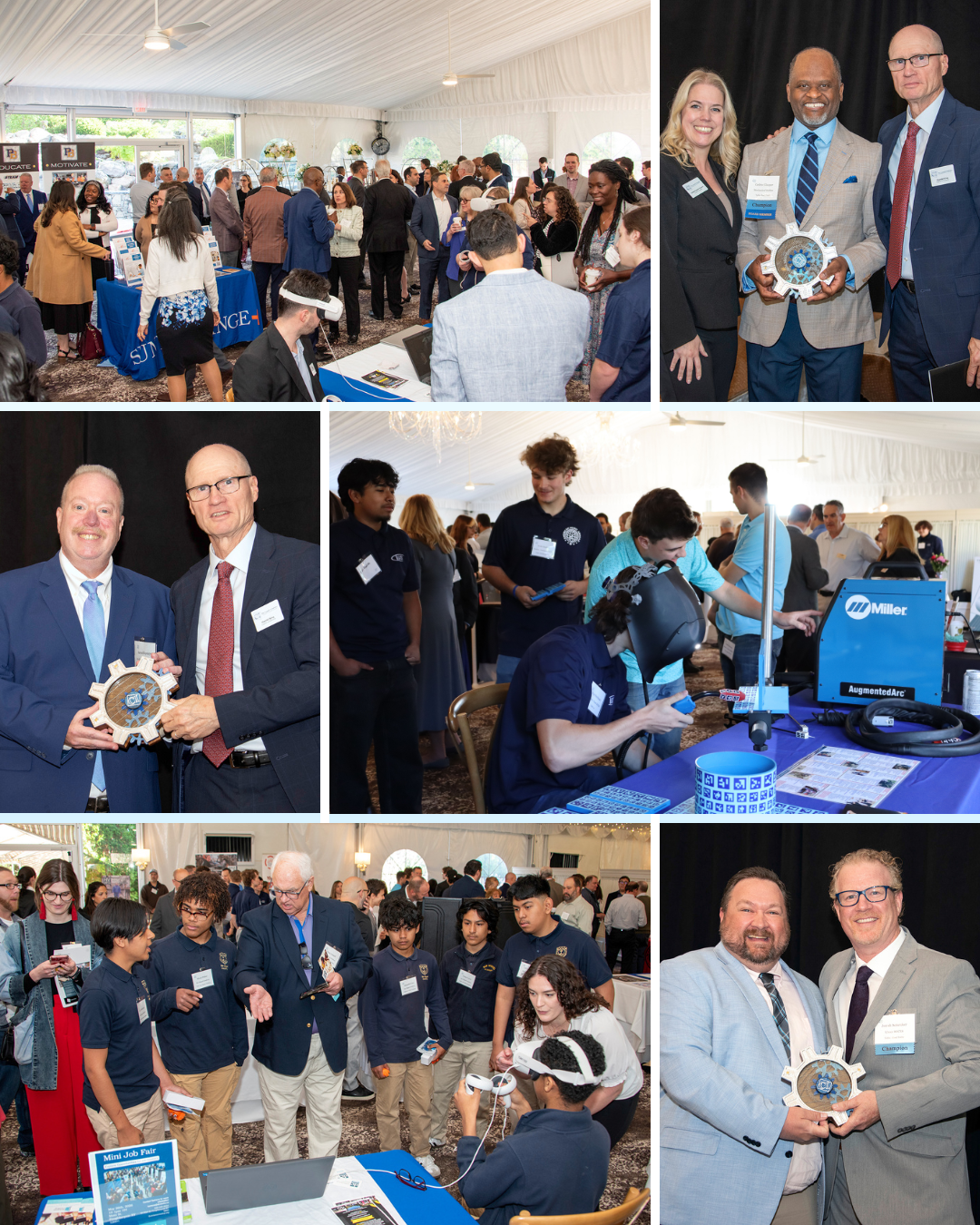
Last week, the Council of Industry held it's 2026 Manufacturing Champions Awards Breakfast & Workforce Expo.
Joined by nearly 300 attendees and 25 Workforce Developers Expo participants -ranging from K-12 students and educators, local college's and trade schools, along with workforce development agencies - the morning was filled with purposeful networking and connection between the current and future manufacturing community.
Following the expo, we celebrated this year's Manufacturing Champions, including Mechanical Rubber's President & CEO, Cedric Glasper, Ulster BOCES' District Superintendent Dr. Jonah Schenker, Star Kay White's President & CEO, Benjamin Katzenstein, and the Gene Haas Foundation.
The Manufacturing Champions Awards Breakfast celebrates the inspiring achievements of this year’s Champions and engage with the region's manufacturing community, along with the people and programs building the region's workforce pipeline.
Thank you again to our Event's Sponsors! This event would not be possible without your continued support. Click here to see some photos from the event!
|
|
|
Annual Golf Outing August 24th at the Powelton Club
|
|
|
The Council of Industry will hold its Annual Golf Outing on the last Monday in August at the Powelton Club in Newburgh. The Powelton is a beautiful course conveniently located just off of Route 9W in Newburgh, NY.
Last year’s event drew 112 golfers from manufacturing firms throughout the Hudson Valley.
Registration and lunch will begin at 11:30 followed by a shotgun start at 12:30. Cocktails and a light dinner will follow at approximately 5:15 p.m.
The fee includes lunch, golf, cart, cocktails, hors-d'oeuvres, dinner, prizes and giveaways. Dinner only option for non-golfers. Sponsorships are available!
Sponsors help make this event possible and one of the most enjoyable of the golfing season. Please support the Council of Industry and Hudson Valley Manufacturing by becoming a sponsor.
Register Here
|
|
|
Lean Overview & Simluation Taking Place May 20th
|
|
|
Continuous improvement starts with understanding the fundamentals.
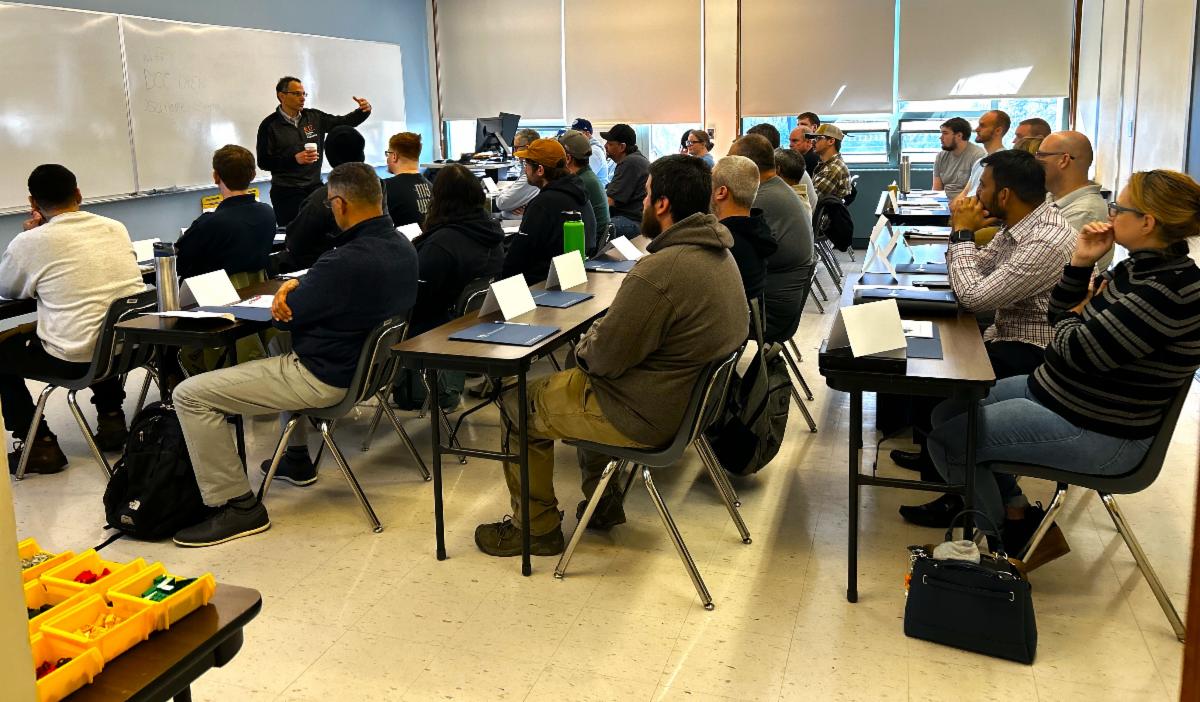
Our full-day Lean Overview & Simulation course on May 20th, at Ulster BOCES Career Academies at iPark 87, in Kingston, offers participants an interactive introduction to Lean principles, tools, and methodologies through hands-on learning and real-world application.
Designed for individuals beginning their Lean journey or exploring Yellow or Green Belt certification, the course demonstrates how Lean practices can help organizations reduce waste, improve efficiency, and create more effective processes across operations. Participants leave with practical insight they can begin applying immediately within their own workplace.
Whether you are looking to strengthen your problem-solving skills or support a culture of operational excellence within your organization, this course is an excellent place to start.
Only a few spots left! Secure your spot today.
|
|
|
Empire State Development Names the Council of Industry the Mid-Hudson Region’s Manufacturing Extension Partner (MEP)
|
|
|
The Council of Industry will be the Mid-Hudson Region’s MEP beginning this Spring.
The Manufacturing Extension Partnership (MEP) is administered by the U.S. Department of Commerce’s National Institute of Standards and Technology (NIST). The program’s primary mission is to strengthen and empower small and medium-sized U.S. manufacturers through state-designated MEP Centers located across the U.S. and in Puerto Rico.
The Council of Industry will use its MEP status and funding to strengthen its programming and build upon its 116-year history serving manufactures in the Mid-Hudson region. It also gives us the resources to help individual manufacturers implement projects such as employee training and upskilling, process improvement, CMMC certification, AI implementation and more.
If you have a project in mind and would like to discuss it with us, contact Harold King.
|
|
|
It's Never Too Late to Hire An Intern
|
|
|
The Council of Industry is supporting SUNY in their effort to provide workplace learning opportunities for all their students.
If you are interested in hiring a student for a summer internship (or just want to learn more) please contact Emma Olivet.
We can discuss candidates, best practices, project ideas and more. If it is too late for the summer we can help you plan for a fall – or even spring semester intern.
|
|
HR Sub-Council Meeting - July 23rd
This Sub-Council is open to business owners, HR professionals, and individuals managing HR responsibilities from manufacturing member companies.
More information about our July meeting To Be Announced.
Space is limited, so please register early.
If you are an associate member or part of our extended community, please reach out to Johnnieanne Hansen to discuss possible arrangements.
Register Here
|
|
|
DOL Apprentice Visits Later This Month
|
|
|
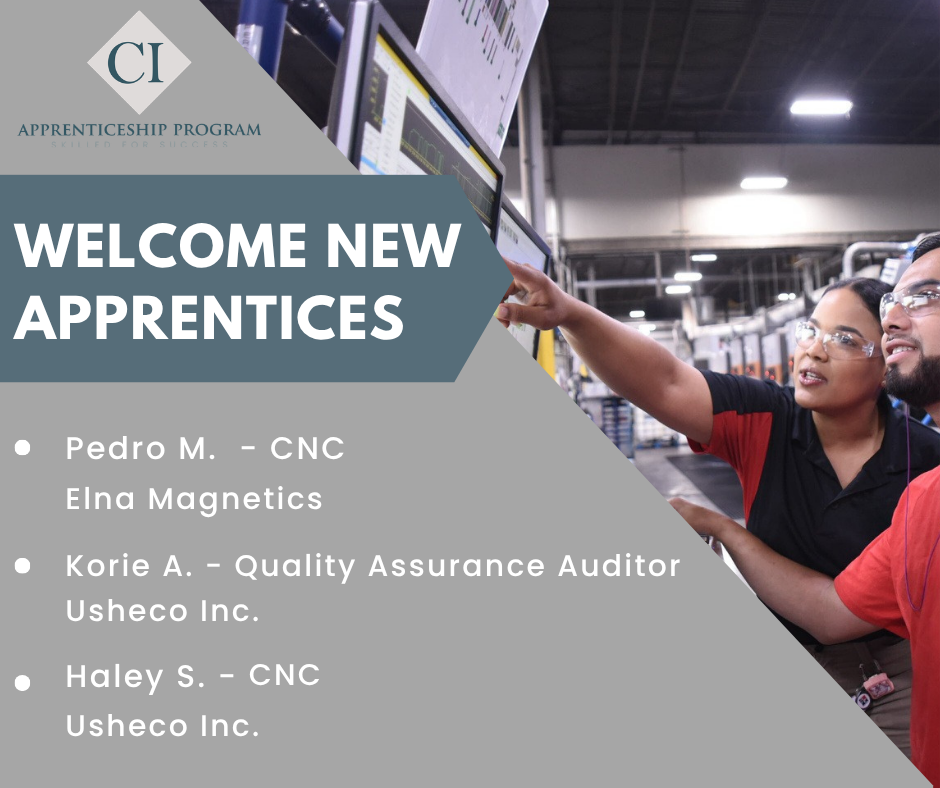
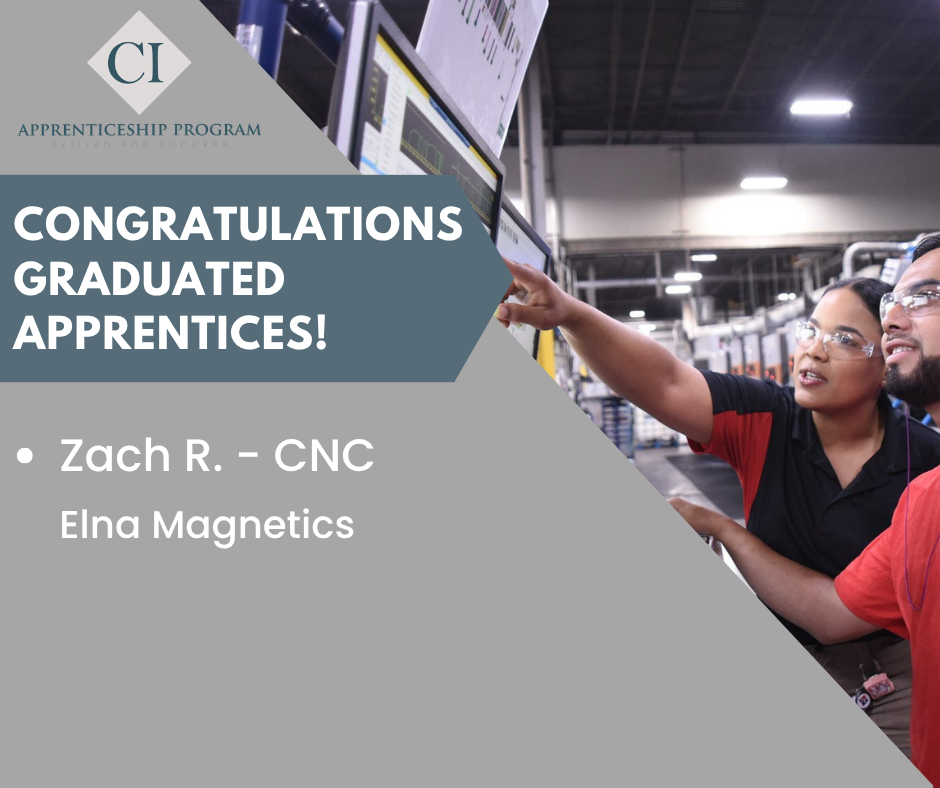
The Council of Industry will visit manufacturers throughout the Mid-Hudson Region on May 21 to further one of the Council’s signature workforce development initiatives: the Manufacturers Alliance Intermediary Apprenticeship Program.
Apprentices at partnering manufacturers and the Council will come together to show the New York State Department of Labor that participants are on track and in compliance with regulation standards. The reviews by the Council and DOL, which are conducted once to twice a year, are a requirement.
The Manufacturers Alliance Intermediary Apprenticeship Program gives participants up to 8,000 hours of on-the-job training from seasoned journey-level workers. Apprentices must also complete 144 hours of outside training each year, including a combination of online and in-classroom training.
Partnering with local SUNY community colleges and Tooling U, the Council facilitates customized training designed to meet the apprenticeship requirements.
|
|
|
Companies With Registered Apprentices Are Eligible For Substantial Tax Credits
|
|
|
To encourage participation in Registered Apprentice Programs and to mitigate some of the costs associated with managing apprentices, New York State provides tax credits of up to $8,000 per apprentice.
To be eligible for the credit apprentices need to be
registered as of June 30th (the registration process can take 3-4 weeks).
Interested in registering an apprentice or learning more about the program? Contact Emma Olivet
|
|
Toolmaker Is Among the Most Challenging – and Important - Apprentice Trade Offered Through the Council
|
|
|
Perhaps the most skilled of the trades offered through the MIAP apprentice program toolmakers are also the rarest. This challenging trade is essential to many operations and, as one member recently put it “A good Toolmakers is worth their weight in gold!”
Tool and die makers construct precision tools or metal forms, called dies, that are used to cut, shape, and form metal and other materials. They produce jigs and fixtures as well and gauges and other measuring devices. Tool and die makers use CAD to develop products and parts. They enter designs into computer programs that produce blueprints for the required tools and dies.
Work Processes (Skills learned on the Job) Approximate Hours for Toolmaker:
Toolmaking and Workplace Fundamentals: 1,000 hours
· Saws: 100 hours
· Drills: 200 hours
· Turning: 2,000 hours
· CNC Milling Machine: 2,000 hours
· Surface Grinder: 300 hours
· Universal Grinder, Cylindrical Grinder, Cutter Grinder, Electrical Discharge Machining (EMD) (optional)**: 300 hours
· Advanced Toolmaking: 2,100 hours
Total Hours: 8,000
Minimum of 144 Hours of Related Instruction (Classroom Learning) Required for Each Apprentice for Each Year:
· Safety
· Blueprint Reading and Drawing
· Mathematics
· Sexual Harassment Prevention Training
· Trade Theory and Science
· NC/CNC Programming
· Computer Software
· Communications
If you want to know more about this trade and if it might be right you’re your company contact Emma Olivet
|
|
|
Subscribers to the Manufacturing Career Hub can view candidate resumes and contact information by searching the Candidate ID Number in the iCIMS platform.
Not yet a participant of the Career Hub? Contact Emma Olivet directly for additional candidate details or to learn more about the recruiting initiative.
|
|
|
Candidate ID: 43601
Position Interest: Mechanical Engineering / Mechatronics Engineering
Level: Internship
Skills:
Excel, MATLAB, Simulink, Studio 5000; AutoCAD, Fusion360, SolidWorks; Altium, Multisim, Quartus Prime; Python, C++; machining experience including lathes, vertical and horizontal mills, bandsaws, soldering, and power tools; CasaXPS; Rockwell Hardness Tester; Tensile Tester; automation control systems; manufacturing processes; microcontroller systems
Education:
Rochester Institute of Technology — Bachelor of Science in Mechatronics Engineering Technology (Expected May 2029)
Hudson Valley Community College — Associate Degree in Independent Studies (Aug. 2024)
Availability: Available for Summer 2026 Internship Opportunities (Mid-May through Early August)
Location/Commute: Resides in New York State
Mechatronics Engineering Technology student with hands-on experience in manufacturing processes, automation systems, machining, CAD design, and engineering software applications. Skilled in SolidWorks, MATLAB, AutoCAD, Python, C++, and circuit design tools, with practical experience operating machine tools, conducting material testing, and supporting engineering coursework. Additional experience includes semiconductor industry exposure through a technical internship, academic support roles in engineering and calculus courses, and customer-facing work environments that strengthened communication and teamwork skills. Strong academic performance with consistent Dean’s List recognition at Rochester Institute of Technology.
|
|
|
Candidate ID: 43383
Position Interest: Chemical Engineering / Process Sciences
Level: Entry-Level / Full-Time
Skills: Chromatography process development (AKTA); HPLC operation and analysis; experimental design; statistical data analysis; laboratory techniques and general lab operations; GMP documentation, protocols, and SOPs; tech transfer and process scale-up; Microsoft Excel, Word, JMP, and LIMS; effective communication; accountability; time management
Education: Rensselaer Polytechnic Institute, Troy, NY — Bachelor of Science in Chemical Engineering (May 2024)
Availability: Open to Interviews
Location/Commute: Resides in the Capital Region, NY (Willing to relocate)
Chemical Engineering graduate with experience in GMP-regulated process sciences supporting downstream chromatography purification studies for monoclonal antibodies (mAbs). Skilled in chromatography process development, HPLC analysis, statistical data analysis, laboratory operations, GMP documentation, and operation of AKTA systems and related instrumentation. Experience includes resin lifetime studies, process characterization, protocol and SOP development, and cross-functional technical support. Strong foundation in chemical engineering principles through coursework, undergraduate research, and capstone design projects, with additional leadership and time management experience gained through NCAA Division III athletics.
|
|
|
News for HR and Workforce Professionals
|
|
|
iCIMS April Insights – Openings Increase But Hiring Cannot Keep Up
|
|
|
March data shows a market where demand is heating up faster than the talent supply. Job openings were 14% higher than last March and rose 17% month-over-month, continuing the upward trend that started in December with only a small dip in February.
Hiring is moving in the right direction but at a slower pace, up 3% year-over-year,
Applications are 6% below last year even though they improved from February.
Hires increased 14% month-over-month, yet the growth in openings is still out in front.
With fewer roles in market and more candidates per opening, the advantage shifts to companies that can focus on priority hires and move them through the process without delay.
69% of companies report that they are currently using AI in some capacity within talent acquisition.
AI is most commonly used in screening, communication, and sourcing.
Read the Report
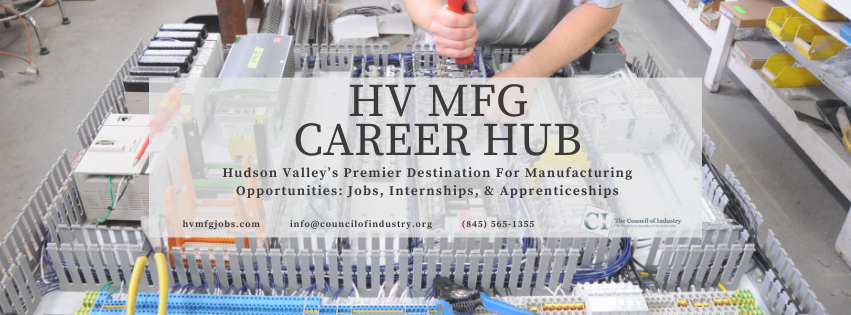
Learn more about the Council of Industry’s Manufacturing Career Hub Driven By iCIMS
Check out the MIAP Apprentice Program
|
|
|
Job Market Is ‘Increasingly Selective’ Despite Growth, Economists Say
|
|
|
Total nonfarm payroll rose by 115,000 in April, and the unemployment rate remained at 4.3%, according to the U.S. Bureau of Labor Statistics, beating economists’ expectations despite being considered a slowdown compared to March. The numbers point to a market becoming “increasingly selective,” Ger Doyle, regional president, North America, at ManpowerGroup, said in a statement. Despite topline resilience, job seekers are having a harder time finding jobs, particularly those at the entry level, Doyle noted.
“Employers currently hold more leverage in the labor market and are hiring with greater precision, concentrating demand in senior, specialized, and execution‑ready roles,” Doyle said. Notably, labor force participation continued to fall, meaning there are now fewer jobs needed to maintain stable unemployment, ZipRecruiter Economist Nicole Bachaud said in a statement. “An aging population, reduction in immigration, and a low birth rate are all contributing factors to the pull back in labor supply,” Bachaud said. “This demographic shift will recalibrate how labor market health is measured.”
Read more at Fortune
|
|
|
HR In An AI Era: Focus On Job Goals, Not Job Titles
|
|
AI is the greatest business efficiency tool in a generation, and workers are understandably nervous. The big question in the office is: Will AI kill my job? The most likely answer is: No. But AI will take jobs apart and put them together in a new way. How executive leaders manage the workforce transition to AI is the most urgent and consequential management decision of our time. The most promising AI targets for any company are the tasks that are boring, repeatable and predictable—the grunt work. But when you automate these tasks, you don’t eliminate the need for people. You free up their time and energy for more valuable work. The main job of executive leadership is to change the internal discussion from “checking daily routine boxes” to focusing on big-picture goals and what the company is actually trying to achieve.
AI is speeding up how quickly skills become important—and how quickly they become outdated. This makes skills much more critical than job titles or years of experience. Your organization needs a new mindset and new tools for developing your team. Learning can’t be a one-time course you take for a new job. In a new world of AI where the priority is on higher-level thinking, continuing education is key. Employers should encourage and support retraining and upskilling through existing tuition programs to help workers earn new credentials.
Read more at HR Executive
|
|
How to Scale Your Talent Pool with Innovative Recruitment Strategies
|
|
The hunt for top-tier talent is moving away from the computer screen and into the real world. Many hiring managers now realize that the best people for their teams are not always browsing job boards. These individuals, known as passive candidates, are often already employed and not looking for a new role. To find them, companies must adopt innovative recruitment strategies that prioritize human connection over digital filters. By meeting people where they naturally gather, organizations can build a more diverse talent pool and find skills that a resume might never fully capture.
Why Finding Passive Candidates Requires a New Playbook - A person managing a complex social event or handling a difficult situation at a local shop might have the exact soft skills your team needs.
Using Employee Referrals to Strengthen Your Talent Pool - Your current team is one of your most powerful tools for finding new hires. Employee referrals are a cornerstone of innovative recruitment strategies because they come with a built-in level of trust. Employees generally only recommend people they believe will reflect well on them.
The Role of Social Media Recruitment in Modern Hiring - While physical locations are great for meeting people, social media recruitment provides a digital bridge to the same goal. It is no longer about just posting a job link on LinkedIn. Modern social media recruitment involves sharing the company’s daily life on platforms like Instagram or TikTok.
Building a Resilient Talent Pool for the Future - A healthy talent pool is never static. It requires constant nurturing through networking and outreach. Using innovative recruitment strategies means you are always “on.” You aren’t just a recruiter during business hours; you are a brand ambassador.
Read more at HR Digest
|
|
|
Mismatch: Workers Want $33K More Than Employers Are Offering
|
|
|
A recent study finds that, amid employees and employers both facing rising costs, the gap between what the workforce expects in terms of salary and what organizations can realistically pay is wide. The report from JobLeads analyzed more than 800,000 job postings and salary expectation data from 245,000 candidates, finding that, globally, candidates expect $10,411 more than employers pay. The U.S. has the biggest gap of all countries studied: $33,332.
Greater levels of pay transparency may start closing some of these chasms. The momentum for greater visibility into pay has spurred scores of cities and states to adopt pay transparency laws in recent years. Pay transparency is becoming an increasing expectation among the public. New research from Monster found that 60% of job seekers say they won’t even apply to a job if it doesn’t offer a salary range. More than half of the candidates surveyed cited a lack of salary information as the top red flag that could discourage them from applying. “Candidates increasingly expect clear pay information, straightforward job descriptions and efficient hiring processes before they commit their time,” researchers say.
Read more at HR Executive
|
|
|
5 Work Conflicts, 5 Strategies for Bosses to Address Them
|
|
|
Conflicts crop up all the time in the workplace. So it’s critical for business leaders and workers at all levels to know how to respond when conflicts occur, either within or between organizations. Below, faculty at Northwestern University’s Kellogg School offer strategies for handling different types of work conflict, based on their research and expertise.
1. When there’s a cross-cultural conflict - In an increasingly globalized world, working with people from different cultures is an everyday reality for many businesses. And with these differences arises the potential for conflict, from issues of fluency and language to differences in how to make decisions.
2. When people feel slighted - Some of the most intractable workplace conflicts involve misconduct between two or more people. Cynthia Wang, a clinical professor of management and organizations at Kellogg, and her colleagues examined hundreds of studies about workplace misconduct that showed how people responded to negative behavior.What stood out to Wang and her colleagues most was a noticeable tendency toward reciprocal, eye-for-an-eye forms of retaliation across all the different aspects of misconduct they studied. This surprised her.
3. When bosses overlook inequity - People in positions of structural power report less inequity in their organizations than other employees, according to a series of studies led by Maryam Kouchaki, a professor of management and organizations at Kellogg. But there is a way to get them to see past their own biases and take steps to address potential discriminatory conflicts.
4. When bad news breeds bad behavior - Niko Matouschek, a professor of strategy at Kellogg, and his colleague developed a model to study this kind of dilemma. They found that workers were maximally productive after being paid a bonus—and assured of yet another bonus. But when they were denied a bonus, they punished their managers by gradually lowering productivity. When companies were tight on liquidity, managers had an especially tough time navigating the conflict, and at times lost their workers.
5. When you are competing against your former team - To understand what happens when people compete against their old teams or former teammates, Brian Uzzi and Noshir Contractor, both professors of management and organizations at Kellogg, along with their colleagues, analyzed data from over eight seasons of the Indian Premier League’s cricket players, teams, and match outcomes. They found that when a team was familiar with more players on the opposing team that its opponent, it was significantly more likely to win a match against that team. “It shows that winning isn’t just driven by individual talent or team spirit,” Uzzi says. “It also has to do with how much experience players have with teams they’re competing against.”
Read more at IndustryWeek
|
|
|
Marijuana Reclassification: What Are The Most Immediate Employer Impacts?
|
|
|
In a major policy shift last month, the Trump administration reclassified some forms of marijuana as less dangerous, significantly easing restrictions while creating new questions around compliance for employers. The order does not specify potential workplace impacts, note Littler attorneys Nancy North Delogu and Jen Chierek Znosko in a post about the move. “As a practical matter, however,” they write, “impacts may be substantial, at least in states with medical marijuana programs with broad application.”
Specifically, they say, “many more individuals will be authorized to use marijuana for medical reasons in a manner that complies with federal law than do now”—to the tune of 6 million Americans, who have state-issued certifications from one of the 40 states where the drug is approved for medical use. “Employers certainly may continue to prohibit individuals from working while impaired,” Delogu and Znosko say, “and to impose workplace rules prohibiting the use and possession of marijuana and marijuana products for other than medical reasons by their workers.” Yet, they say, get ready for accommodations requests. Claims under the Americans with Disabilities Act will likely rise. Employers should expect more workers to allege they faced adverse action because of medical marijuana use or failed to meet their requests for accommodations. Typically, courts have sided with employers on such issues because medical marijuana was still considered a Schedule I drug. That reasoning will be challenged under the new framework.
Read more at HR Executive
|
|
|
4 Things Leaders Need to Know to Support Working Moms
|
|
|
Labor force participation among mothers with young children (ages 0-4) is at an all-time high. Currently, more than 70% of mothers of children younger than age 5 and about 80% of mothers of children ages 5-18 are working. This high level of participation emphasizes the insight and productivity mothers bring to work each day. Data indicate four key insights business owners and leaders need to know to support mothers and those who depend on them.
1. "Working Mother" Is a Job Unlike Any Other - Managing both work and motherhood simultaneously comes with unique challenges and rewards. Working mothers juggle work-related responsibilities alongside child care duties. While balancing both roles can be tricky in the best of circumstances, working mothers also bear the brunt of disruptions like child care coverage issues or children’s illnesses.
2. Some Working Mothers Want to Work -- Some Need To - Enabling women to join the labor force has been a hallmark of the women’s rights movement, but increased labor force participation among mothers is a reflection of financial realities and freedoms. When asked about their ideal work arrangement, if money were not a factor, working full time was the least popular option among mothers in Idaho. Many mothers reported a preference for a more even split between work and motherhood. Among mothers who currently work full time, 41% chose part-time work as their preference.
3. Access to Good, Affordable Child Care Is a Major Pain Point - Despite the vital role of mothers in the workforce, more than 80% of working mothers raising children in their home say that it is somewhat or very difficult to access affordable child care. Not surprisingly, among those who wish they could work more (i.e., would like to transition from part-time to full-time work or enter the workforce instead of being a homemaker), 49% cite financial reasons, and 70% cite family obligations as major obstacles.
4. Workplace Culture Is Not Working for Mothers - National data indicate that only 39% of women strongly agree that their organization provides the flexibility needed to manage child care responsibilities. Organizations offering this flexibility have employees who are nearly three times as likely to be engaged, about half as likely to be burned out, and 30% less likely to be actively looking or watching for another job opportunity than organizations that do not have flexibility.
Read more at Gallup
|
|
|
Insight Exchange: Expert-Led Video Series for Manufacturers
|
|
|
Insight Exchange: Expert-Led Video Series for Manufacturers
The Insight Exchange is a new video series from the Council of Industry, offering manufacturers expert insights and strategies—accessible anytime. Each session features industry professionals covering key topics like workforce development, regulatory updates, and emerging technologies.
|
|
|
|
C3PAO's Perspective
Key Aspects of Your Compliance Journey
- Presented by Nick DeLena, PKF O'Connor Davies
|
|
|
In this episode of Insight Exchange, Nick DeLena, Partner of PKF O’Connor Davies, provides an overview of CMMC and what it means for manufacturers and contractors handling sensitive government information. He explains how the framework builds on existing requirements while introducing third-party certification, outlines the different CMMC levels, and breaks down what organizations need to know about protecting CUI.
The discussion also covers the rollout timeline, common challenges companies face in achieving compliance, the risks of falling short, and the key steps organizations can take to prepare—from documentation to cloud and emerging technology considerations.
About PKF O'Connor Davies
PKF O’Connor Davies is a top-tier accounting, tax and advisory practice with a long history of serving domestic and international clients. “Know Greater Value” speaks to the confidence and guidance that our clients realize when they work with us. It reinforces our commitment to delivering the highest levels of value, expertise and service in everything we do.
Learn More
PKF O'Connor Davies: www.pkfod.com
For more info, visit www.councilofindustry.org
|
|
|
If you’re part of a Council of Industry member company and not yet subscribed, email us. If you’re not a Council member, become one today
|
|
|
|
|