|
The Monthly Newsletter of the Council of Industry
July 21st, 2026
|
|
|
Annual Luncheon November 20th to Feature Keynote From IBM’s Neal Moriarty on Quantum Computing
|
|
|
The Council of Industry is pleased to announce that Neal Moriarty, IBM's Innovation Studio Leader, will be the Keynote Speaker at our 2026 Annual Luncheon on Friday, November 20, at the Grandview in Poughkeepsie.
Neal Moriarty is a technology strategist with expertise in emerging technologies, artificial intelligence, cybersecurity, and quantum computing. Throughout his career, he has worked with organizations to better understand the practical applications of new technologies and their potential impact on business and industry.
At this year's luncheon, Neal Moriarty will discuss the current state of quantum computing and what manufacturers should know as the technology continues to develop.
Join us for the Council of Industry's Annual Luncheon & Member/Associate Member Expo, one of our signature events bringing manufacturers and industry partners together to connect, network, and celebrate.
The event features our Member/Associate Member Expo, along with the recognition of our 2026 graduates of our Certificate in Manufacturing Leadership Series. Expo participation is complimentary with the purchase of two luncheon seats.
Learn more here
|
|
|
Spring Certificate in Manufacturing Leadership Cohort Ends, Fall begins September 16th
|
|
|
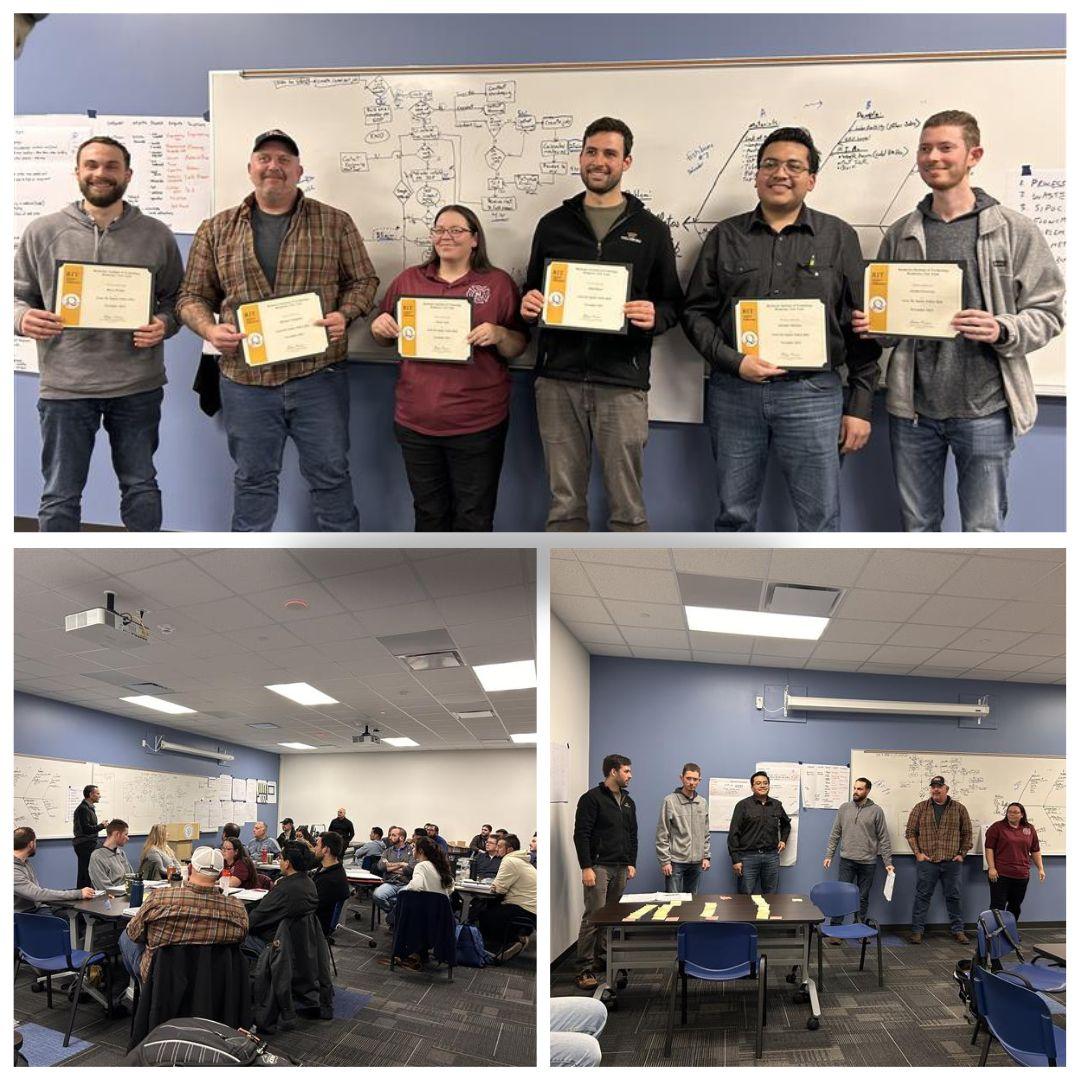
Our Spring 2026 Certificate in Manufacturing Leadership cohort has officially wrapped up!
Over the course of the program, more than 15 employees from 10 Hudson Valley manufacturers came together to build practical leadership skills, share experiences, and strengthen the future of manufacturing in the Hudson Valley.
Thank you to the employers who continue to invest in their people and to all of the participants for their engagement throughout the series. An additional thank you to our cohort's hosts, Ulster BOCES.
Looking ahead? Registration is now open for our Fall 2026 Certificate in Manufacturing Leadership program, which begins September 16. If you're looking to develop current and emerging leaders within your organization, now is the time to register.
Secure your spot here
|
|
|
Council of Industry, DCC and RIT Team up to Provide Lean Six Sigma Yellow Belt Training in October
|
|
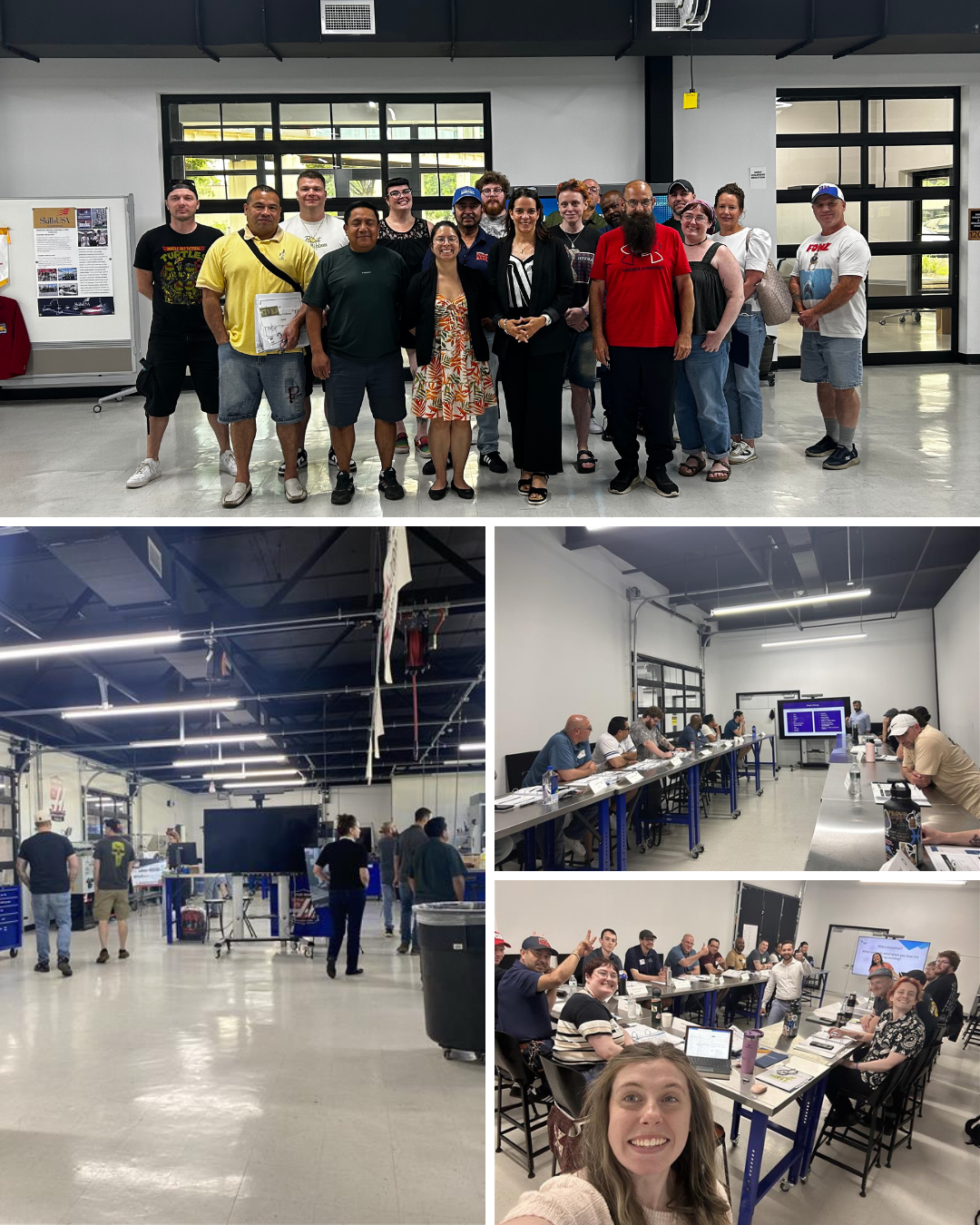
The Council of Industry is pleased to be offering Lean Six Sigma: Yellow Belt this Fall! Attendees will be introduced to the Define, Measure, Analyze, Improve, and Control improvement process and some of the tools associated with each stage.
The following topics will be focused on during the training:
- Resistance to Change
- 5-S and Visual Controls
- Team Building
- Problem Solving Process
- Statistical Thinking
During this interactive Yellow Belt training, each group of participants will identify opportunities within their respective work areas and ways to improve those areas utilizing the taught problem-solving tools. The teams will present their identified work area opportunity and suggested solutions.
When: October 13th, 14th and 15th, 8:30 - 4:00 PM
Where: DCC @ Fishkill
Contact Emma Olivet for more information.
|
|
The Council of Industry has long been a leader in consortium-based training for Mid-Hudson manufacturers. Our model of bringing a small numbers of employees from multiple companies together benefits from the diverse experiences of the participants and has proven to be very cost effective.
While we will continue to deliver training via this model we now also have the resources to deliver customized training to individual manufacturers as well.
Through collaboration with our education and consulting partners we can deliver a wide range of training courses including, but not limited to:
- Leadership
- Lean
- Project Management
- Blueprint reading
- SolidWorks and other design software
- Supply chain management
- And more!
Want to know more? Contact Harold King
|
|
New York State 2026 CFA Grant Program – New York State has opened the Consolidated Funding Application (CFA) for 2026. The CFA allows for applicants to access multiple State funding sources through one application. The Mid-Hudson Regional Economic Development Council is hosting Information Session on the CFA process. Applications Due July 31, 2026 by 4:00 PM. Go to the Application Portal.
USDA Grants for ISO9001 and AS9100 Certification (Up to $3,000) - Eligible companies will meet the USDA criteria for rural-based companies. Visit the USDA rural map tool and enter in your business address. Once you've checked your rural eligibility, visit the New York MEP website to submit an application for funding.
NYSEG/RG&E’s Economic Development Grant Programs – NYSEG is accepting new applications for projects that will be completed today and beyond. Visit the grant portal at to complete a pre-application to determine your eligibility. Or contact Harold King to learn more
Central Hudson Economic Development Grants - Central Hudson offers a suite of economic development grants designed to support and grow the manufacturing sector in the Hudson Valley. By focusing on manufacturing, these programs help strengthen a critical regional industry—one that consistently creates well‑paying jobs and long‑term economic opportunity for local communities. Visit the website or contact Harold King to learn more.
|
|
Upcoming CI Trainings & Events
|
|
Manufacturing Industry News
|
|
Pentagon Suspends CMMC Phase Two Requirements, Launches Review Of Program
|
|
The Pentagon is suspending the ramp up of new Cybersecurity Maturity Model Certification third-party assessment requirements, while also launching a sweeping review of the CMMC program that once again calls into question the future of the contractor cyber compliance regime. In a July 13 announcement, the Defense Department said it is suspending plans to introduce phase two of the CMMC requirements. That would have involved DoD requiring third-party cybersecurity assessments across all contracts involving sensitive but unclassified information starting Nov. 10, 2026.
DoD says the phase one requirements for applicable contracts to require a CMMC self-assessment, which went into effect last November, remain in force. But the Pentagon is now launching a 60-day, “top-to-bottom” review of the certification program, according to a July 13 memo signed out by DoD Chief Information Officer Kirsten Davies. Davies has tasked the 60-day “CMMC Reform Task Force” with providing recommendations on a framework that “prioritizes speed to capability, lowers barriers for small, medium, and non-traditional businesses, and replaces prohibitive, third-party compliance models with scalable, realistic security measures.”
Read more at Federal News Network
|
|
PPWR is Arriving: How to Navigate the New Packaging Rules Without Panic or Waste
|
|
The European Union is fundamentally changing the rules of the game for packaging. The new PPWR (Packaging and Packaging Waste Regulation) introduces a unified framework that is directly binding for all EU member states, significantly impacting manufacturers, distributors, retail, and e-commerce alike. The regulations will begin to apply across the board on August 12, 2026—and companies should not delay their preparations. The PPWR is not just another administrative burden; it fundamentally alters packaging design, material selection, data logging, and day-to-day operations across entire organizations. Yet, many companies today still lack a clear overview of which obligations will actually apply to them, or whether their current packaging will withstand future requirements.
August 2026 does not bring the full scope of the PPWR, but rather a first wave with strict deadlines:
Declaration of Conformity (DoC): Every piece of packaging placed on the EU market must be accompanied by a Declaration of Conformity—a legally binding statement by the manufacturer confirming compliance with PPWR requirements—alongside the relevant technical documentation. The DoC is no mere formality. Without high-quality data regarding materials, composition, or recyclability, it will be impossible to reliably compile this documentation.
PFAS Ban in Food Contact Materials: A ban on PFAS (per- and polyfluoroalkyl substances) in packaging intended to come into contact with food takes effect. To date, these substances have been commonly used in paper cups, fast-food wrapping, or pizza boxes. This ban applies with zero transitional period.
Import Restrictions: For imports from third countries, the absence of proper documentation may result in delays or an outright ban on placing the goods on the market by supervisory authorities.
Read more at Grant Thorton
|
|
|
Redesigning Your Marketing Organization for the Agentic Age
|
|
|
AI delivered its easiest and most measurable gains in engineering and data workflows, so enterprise adoption has concentrated there. Research from Anthropic suggests that software engineering now accounts for nearly 50% of all agentic activity. As a result, product-development cycles are now faster, with teams shipping continuously rather than quarterly—a shift that has expanded both the volume and velocity of launches that marketing must handle. At the same time, AI is expanding the areas that marketing must support across segments, channels, and markets.
Successful organizations do something fundamentally different: Instead of layering AI into existing workflows, they’re introducing a new model built for human-agent collaboration, combining autonomous workflows with a shared foundation of intelligence. They’re creating what we call the agentic marketing organization. At the core of this model is the brand code—a machine-readable knowledge base in which vital information about brand strategy, product experience, customer insights, and business rules is codified in a consistent format that people and AI agents can readily understand and act on. The brand code is foundational. It determines how decisions are made, how content is generated, and how experiences are shaped across touchpoints. Think of it as the always-on onboarding documentation that both people and agents need to be successful at their job. With this foundation in place, agents can execute and coordinate work while people focus on strategy, judgement and governance, designing and guiding the system rather than managing it step by step.
Read more at Harvard Business Review
|
|
|
AI Kaizens: Three Successful Examples Of AI-Based Manufacturing Technology Generating Real Gains.
|
|
|
Jim Tobojka, chief operating officer and senior vice president for global operations at electronic component manufacturer TE Connectivity, is responsible for operations, supply chain strategy, health and safety, global procurement, logistics, several centers of excellence and the company’s strategy for incorporating AI for operations into the company’s networks. He wouldn’t call the company “AI first.” It does, however, host “AI kaizens” at its plants, to at least always consider AI as one possible solution to any problem.
TE Connectivity adopted AI at enterprise scale over concerns about falling behind, but also due to early engagement by engineers and operational leaders. The company saw “heavy engagement” from the plants to try new AI technologies. The “AI kaizen” events held by TE Connectivity don’t prioritize AI over other approaches. They’re meant to make sure plants don’t miss out on easy wins fueled by AI. In this case, Tobojka shared three practical examples from three different plants.
1. At one TE Connectivity plant, design engineers embraced no-code, AI-based crimping-tool design software to cut through mundane, manual tasks. Any concerns over AI taking a task out of human hands evaporated to large degree when the utility of the software clearly evinced itself with around $380,000 in savings from one business unit.
2. At a plant in Xiamen, China, engineers designed a defect-detection system that employs cameras and vision system algorithms (venerable technology as far as AI goes). The system is 99.99% accurate at detecting errors, according to Tobojka, and the plant saves around $90,000 per annum per machine on the line as a result.
3. At a plant in Suzhou, China, engineers developed an AI-based closed loop control system to optimize stitching speed, using real-time machine data. Cycle time reduced by 10% once the system came online.
Read more at IndustryWeek
|
|
|
Is Your Supply Chain Risk Register Flying Blind? Cascade Mapping Can Help
|
|
|
In 2011, floodwater in central Thailand did not just damage factories. It interrupted hard-drive production in one of the world's most concentrated centers for that component, squeezed global electronics supply and sent prices sharply upward. This forced manufacturers far from the floodplain to confront a risk they had never scored as "weather exposure" at all. Traditional risk registers often focus on the initial trigger, neglecting the cascading shocks that can cause widespread disruptions.
Cascade mapping reveals how impact crosses organizational boundaries, highlighting gaps in ownership and control that can amplify risks. A cascade is a sequence of effects in which each step hands force to the next, often crossing a domain boundary as it goes. The pattern is familiar once you see it. A ransomware attack on a pipeline becomes a fuel shortage, becomes a run on gas stations. A flood becomes a component shortage, becomes a production halt two continents away.
Read more at Industry Week
|
|
|
Celebrating One of America's Oldest Manufacturing Companies
|
|
|
I’m hoping you know your American history well enough to know the story of Paul Revere. He’s best remembered for his midnight ride in April 1775 to warn the American colonists that the British were coming. If you’re especially fond of your history of the American founding, you may also be aware that Revere was a well-regarded silversmith at the time, who worked in gold as well. A few years after the Revolutionary War ended, he branched out into other metals too, building a foundry in Boston’s North End in 1787. There, he produced iron products, including everything from window weights to cannons, and he eventually began working in copper.
The company our patriot Founding Father would establish from those efforts is still in operation today. Revere Copper in the small upstate New York community of Rome, just a bit northwest of Utica, traces its lineage right back to Paul Revere’s earliest commercial endeavors. “Prior to the late 1980s, Revere was called Revere Copper and Brass, and it was a publicly traded company, and it declared bankruptcy in the late 80s,” said Amy O’Shaughnessy, the company's vice president of sales and marketing. Mike O’Shaughnessy, Amy’s husband, is Revere’s CEO. Mike’s father, Brian O'Shaughnessy—now the company’s chairman—worked his way up from the copper mines and was asked by a group of investors to help run the company while they wound it down.
Read more at IndustryWeek
|
|
|
The Baby Boomer Business Transfer Is Coming
|
|
|
Construction company RJ Zavoral & Sons is one of 6 million small and medium-sized businesses expected to change hands over the next decade as Baby Boomers move into retirement, according to the McKinsey Institute for Economic Mobility. The generation accounts for more than half of the country’s total wealth, and their transition away from work will have deep implications for the economy. “There’s going to be an oversupply of businesses that are going to be available,” said Nick Noel, a senior fellow at the McKinsey Institute for Economic Mobility. “And if they can’t find folks that are willing to buy those businesses that are otherwise viable, [they] will have to shut down.”
Noel expects 1.5 million viable businesses will disappear. And in states like Montana, Vermont, and Maine, small and medium-sized businesses make up half of total employment. “It really does become a crisis for economic development, for community vitality, employment, and economic mobility in those places,” he said, unless new buyers emerge. Even if businesses do find buyers, it’s not an easy transition. It takes a lot of preparation to get a company ready for sale. Kris Schumacher, co-founder of New Majority Capital, a nonprofit that helps connect aging business owners and new entrepreneurs, ran into this issue a handful of years ago when he bought a company that makes garden trellises.
Read more at Marketplace
Contact Johnnieanne Hansen to learn about Council of Industry Succession Planning resources
|
|
|
Energy Markets Face Coming Stress If No New US-Iran Deal Reached: Analysts
|
|
|
Oil, refined products and LNG markets will face mounting stress into the fall absent a significant change in the conflict between the US and Iran that leads to a lasting reopening of the Strait of Hormuz, energy and geopolitical analysts said at a July 16 International Crisis Group webinar. Should the conflict stay confined to shipping rather than energy infrastructure, Robin Mills, CEO of Qamar Energy predicted a slower-burning crisis biting between September and year-end. Bypass routes — Saudi Arabia's East-West line to Yanbu, the UAE's lines to Fujairah, and proposed Iraqi options via Syria or Turkey — will erode the strait's leverage over time, but the next UAE pipeline is not due until 2027, and most others run two to four years out.
A prolonged conflict would durably raise prices while cutting revenues for the GCC, Iraq and Iran alike, Mills said, accelerating a structural shift toward renewables, EVs and nuclear. "This really changes a bit the zeitgeist of let's say a couple of years ago, when people started saying, 'Oh, we were too hasty on net zero,'" Mills said. "Actually, we do need oil and gas for energy security, they're reliable, and so on. That narrative has been given a severe kick by this war, because now this clearly shows that oil and gas are not as reliable as many people thought."
Read more at E&E News from Politico
|
|
|
NOAA Predicts Below-Normal 2026 Atlantic Hurricane Season
|
|
|
Forecasters with NOAA’s National Weather Service are predicting a below-normal hurricane season for the Atlantic basin this year. NOAA’s outlook for the 2026 Atlantic hurricane season, which runs June 1 to November 30, predicts a 35% chance of a near-normal season, a 10% chance of an above-normal season, and a 55% chance of a below-normal season. NOAA’s outlook is for overall seasonal activity based on large-scale weather and climate patterns. It does not indicate where or when any storms may affect land as that is determined by short-term and variable weather patterns. The outlook is not a landfall forecast.
The agency is forecasting a total of 8-14 named storms (winds of 39 mph or higher). Of those, 3-6 are forecast to become hurricanes (winds of 74 mph or higher), including 1-3 major hurricanes (category 3, 4 or 5 with winds of 111 mph or higher). NOAA has a 70% confidence in these ranges. An average season has 14 named storms with seven hurricanes, including three major hurricanes.
Read more at NOAA
See NRG’s New York Energy Market Webinar
Learn more about the Council of Industry’s energy consortium (where you can lock in a fixed price to avoid price spikes)
|
|
|
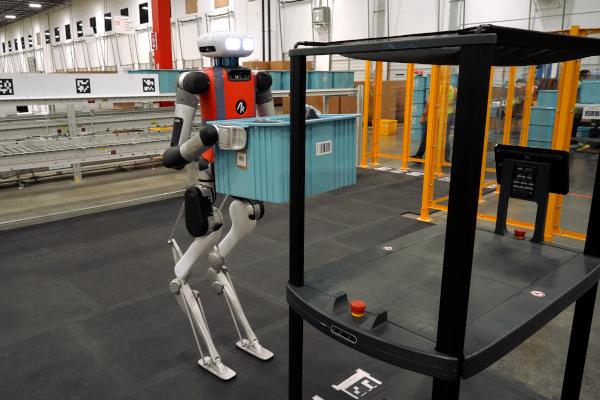
Humanoid Robot Lands Head-High Kick During ‘World’s First Freestyle’ Fighting In China
|
|
|
A humanoid robot landed a head-high kick to defeat its opponent at what organizers described as the world’s first free humanoid robot fighting tournament in China. The event marked the debut of the Ultimate Robot Knock-out Legend (URKL), a freestyle combat competition for full-sized humanoid robots organized by Shenzhen-based EngineAI. A total of 32 teams from around the world took part, with all competitors using the company’s standardized T800 humanoid robot platform. The contest featured robots delivering punches, kicks and recovery moves, with some continuing to fight despite losing heads during bouts, highlighting advances in humanoid mobility, balance and impact resilience under competitive conditions.
The EngineAI T800 robot is designed to match the size and weight of an adult human. The robot is capable of executing advanced combat movements, including uppercuts, spinning kicks, and rapid recovery after falls. It is equipped with posture control, dynamic perception, and shock-absorbing systems that enable it to withstand repeated impacts while maintaining balance during high-intensity matches. Unlike traditional combat sports, the competition was designed to evaluate a broader range of robotic capabilities rather than simply determining a winner through knockouts. Robots were assessed on effective striking accuracy, body stability, defensive and evasive performance, and overall durability throughout each bout.
Read more, Watch the at Interesting Engineering
|
|
|
The Council of Industry focuses on advancing manufacturing excellence, workforce innovation, advocacy, and strategically positioning its members within the Hudson Valley region and beyond. It is the premier manufacturers' association for Southeastern New York, representing over 160 member firms. Grow, Train, and Succeed with the Council of Industry.
|
|
|
If you’re part of a Council of Industry member company and not yet subscribed, email us. If you’re not a Council member, become one today
|
|
|
|
|